While conventional High-Intensity Interval Training (HIIT) utilizes submaximal efforts (80–95% of peak heart rate), SIT demands absolute, all-out power output.
Sprint interval training contrasts with continuous low-intensity, steady-state cardio (LISS), which relies almost exclusively on aerobic oxidative pathways over long durations.
By taxing the ATP-PC system and fast glycolysis, SIT triggers immediate cellular, vascular, and metabolic adaptations in a fraction of the time.
| Core Benefit Category | Time Investment Required | Primary Physiological Systems & Mechanisms Activated | Target Health Outcomes |
|---|---|---|---|
| Cardiovascular Health | 10–20 minutes per session | Increased cardiac output, stroke volume, and arterial compliance | Lower blood pressure, improved heart health, higher VO₂ max and aerobic fitness |
| Metabolic Optimization | 2–3 sessions per week | Enhanced GLUT4 translocation, PGC-1α activation, and EPOC (afterburn effect) | Better insulin sensitivity, improved glucose control, and reduced visceral fat |
| Neuro-Cognitive Health | Integrated into a weekly fitness routine | Increased BDNF production and myokine signaling (IL-6) | Improved neuroplasticity, mood, cognitive performance, and stress resilience |
| Cellular Longevity | Less than 60 minutes total per week | Stimulated autophagy and mitochondrial biogenesis | Reduced all-cause mortality risk, healthier aging, and extended healthspan |
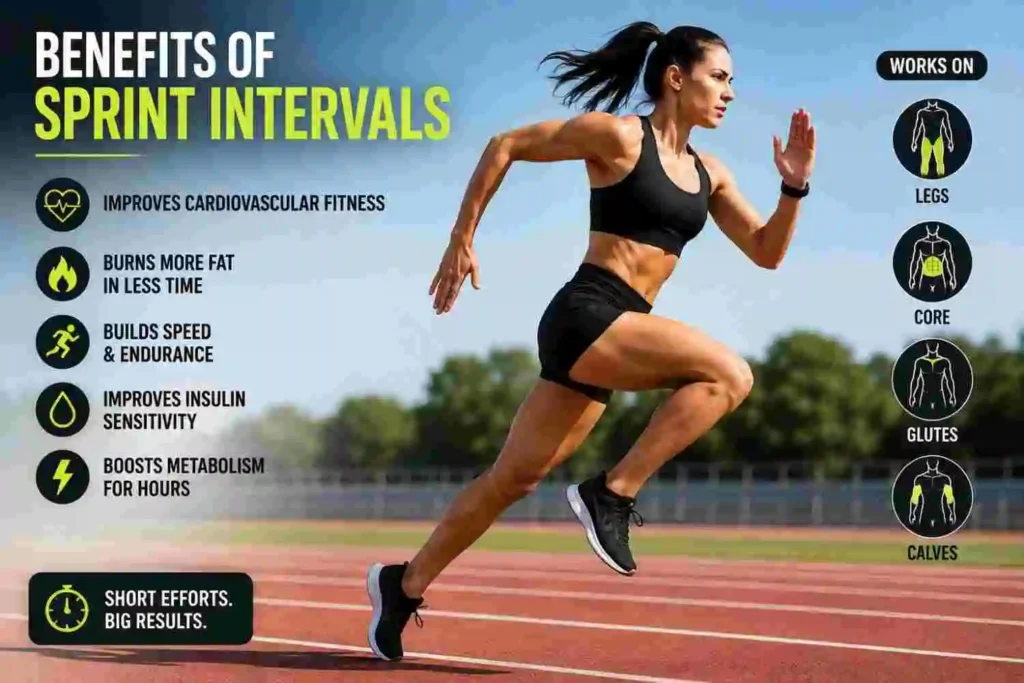
Benefits of Sprint Interval Training
(1). Cellular & Molecular Mechanisms
Maximum-effort sprint training initiates a cascade of intracellular signals that trigger rapid mitochondrial biogenesis and metabolic adaptation. The extreme energetic demand rapidly depletes intracellular adenosine triphosphate (ATP) and phosphocreatine stores. This acute energy stress activates cellular energy sensors that signal systemic structural remodeling.
The master driver of this physiological adaptation is peroxisome proliferator-activated receptor gamma coactivator 1-alpha (PGC-1α). PGC-1α coordinates the gene transcription required to build denser, highly efficient mitochondria. Mitochondria serve as cellular powerhouses responsible for oxidizing fats and carbohydrates into usable cellular energy.
Concurrently, sprint training generates a pronounced Excess Post-Exercise Oxygen Consumption (EPOC) effect, commonly known as the post-burn effect. EPOC reflects the oxygen and metabolic energy required to restore homeostatic balance after high-intensity mechanical work.
The body must resynthesize phosphocreatine, clear metabolite accumulation, cool core body temperature, and re-oxygenate tissue. This process keeps your metabolic rate elevated, allowing you to burn calories and sustain caloric burn for hours following session completion.
(2). Cardiovascular & Respiratory Adaptations
Sprint intervals drive profound cardiovascular remodeling, dramatically elevating aerobic capacity and arterial compliance. The intense surge in venous blood return during all-out sprinting places a controlled volume load on cardiac chambers. This stimulus increases left ventricular wall elasticity and end-diastolic volume.
Traditional HIIT vs. Sprint Interval Training (SIT)
| HIIT (Submaximal) | SIT (Maximal Effort) |
|---|---|
| 80–95% peak heart rate | ≥100% VO₂ max effort |
| Work intervals: 1–4 minutes | Work intervals: 10–30 seconds |
| Primarily aerobic energy demand | Primarily anaerobic energy demand |
| Moderate structural strain | High neuromuscular stress |
These structural enhancements boost stroke volume—the precise volume of blood ejected by the left ventricle per beat. As stroke volume increases, baseline resting heart rate naturally declines, reducing chronic mechanical stress on the heart.
- VO2 Max Elevation: Accelerates maximal oxygen uptake capacity, improving global stamina.
- Arterial Flexibility: Reduces arterial stiffness by inducing endothelial nitric oxide synthase activity.
- Blood Pressure Regulation: Reduces systemic peripheral vascular resistance, stabilizing resting blood pressure.
- Capillary Density: Expands skeletal muscle microvasculature to optimize oxygen delivery and metabolic byproduct clearance.
Furthermore, sprint intervals push the body past its anaerobic threshold, training it to manage temporary lactic acid accumulation. Over time, buffering capacity increases, elevating athletic performance and functional cardiovascular health.
(3). Metabolic Health & Visceral Fat Reduction
Sprint training transforms metabolic flexibility by directly increasing insulin sensitivity and accelerating visceral adipose tissue reduction. The intense physical demand of sprinting rapidly depletes intramuscular glycogen stores. This acute depletion forces muscle cells to extract glucose from the bloodstream to replenish internal energy reserves.
This glucose uptake occurs via non-insulin-dependent GLUT4 translocation, where GLUT4 glucose transporter proteins migrate directly to muscle cell membranes. Consequently, sprint training offers potent protection against insulin resistance, metabolic dysfunction, and type 2 diabetes.
SIT also drives targeted visceral fat reduction. Deep abdominal fat is highly responsive to the surge of catecholamines (epinephrine and norepinephrine) produced during maximal effort.
The activation of abdominal beta-adrenergic receptors accelerates lipolysis (fat breakdown). This process lowers deep abdominal fat stores while preserving lean muscle mass, significantly enhancing overall body composition.
(4). Neurological & Brain Health Impacts
Sprint interval training stimulates brain-derived neurotrophic factor (BDNF) production, enhancing cognitive function and structural neuroplasticity. High-intensity exertion prompts contracting skeletal muscles to release specialized signaling proteins called myokines, primarily interleukin-6 (IL-6).
These muscle-derived cytokines cross the blood-brain barrier, where they upregulate the synthesis of BDNF within the hippocampus—the brain’s primary region for learning, memory, and emotional processing.
In addition to supporting structural neuroplasticity, SIT acts as a physiological stress buffer. Acute sympathetic nervous system activation during maximal exertion conditions the body’s autonomic stress response.
Over time, this repeated exposure recalibrates the hypothalamic-pituitary-adrenal (HPA) axis. The result is lower baseline cortisol levels, improved mood regulation, and enhanced psychological resilience under stress.
(5). Cellular Longevity & Anti-Aging Pathways
Sprint intervals activate critical cellular repair pathways that support cellular quality control and slow physiological aging. The acute energy crisis generated by sprinting turns on the metabolic master regulator adenosine monophosphate-activated protein kinase (AMPK). At the same time, it downregulates nutrient-sensing pathways like mTOR.
This physiological transition shifts cells into a state of cellular autophagy—an internal housekeeping process that breaks down and recycles damaged mitochondria, misfolded proteins, and senescent cellular structures.
Autophagy Up-regulation: Clears dysfunctional cellular debris to prevent premature cellular aging.
Telomere Protection: Associated with maintained telomere length within leukocyte populations, preserving cellular replication capacity.
Systemic Inflammation Reduction: Lowers chronic baseline inflammatory markers through post-exercise anti-inflammatory myokine surges.
All-Cause Mortality: Significantly reduces all-cause mortality risk by preserving cardiorespiratory fitness and muscle metabolic function.
Integrating targeted physiological stress through controlled rest intervals and sprint workouts helps preserve functional capacity well into advanced age.
Evidence-Based SIT Protocols
| Target Fitness Level | Work Duration | Intensity | Rest Duration & Type |
|---|---|---|---|
| Advanced / Elite | 30 seconds | 100% maximal effort | 4 minutes (active recovery) |
| Intermediate | 10–15 seconds | Maximal effort | 1–2 minutes (passive walk/rest) |
| Beginner / Rehabilitation | 8–10 seconds | Near-maximal effort | 60 seconds (gentle pedaling) |
How Often Should You Do Sprint Interval Training?
You should perform Sprint Interval Training (SIT) 2 to 3 times per week, allowing at least 48 hours of recovery between sessions.
Because SIT requires 100% maximal effort, it places heavy demands on your central nervous system, muscle fibers, and metabolic stores. Exercising at this intensity without adequate rest increases the risk of overtraining, elevated baseline cortisol levels, and soft-tissue injuries.
- Beginners (1–2 sessions per week): Focus on building a baseline aerobic foundation using low-impact modalities like stationary exercise bikes or rowing machines. Allow 48 to 72 hours of recovery between workouts.
- Intermediate to Advanced (2–3 sessions per week): Ideal for maximizing VO2 max, driving visceral fat reduction, and boosting metabolic flexibility without compromising performance or joint health.
- Elite Athletes (Up to 3 sessions per week): High-frequency SIT is paired with strategic active recovery days, structured mobility work, and nutrition to support optimal central nervous system recovery.
Who Should Avoid Sprint Interval Training?
Sprint Interval Training (SIT) should be avoided by individuals with unmanaged cardiovascular conditions, acute musculoskeletal injuries, severe uncontrolled hypertension, or those recovering from recent surgery without medical clearance.
Because SIT requires immediate, 100% maximal exertion, it places an extreme, sudden workload on both the heart and mechanical joints.
High-Risk Groups Who Should Exercise Caution
- Individuals with Heart Conditions: Anyone with a history of unstable angina, past heart attacks, arrhythmias, or diagnosed coronary artery disease should avoid SIT due to the sudden spike in heart rate and blood pressure.
- People with Severe Hypertension: Uncontrolled high blood pressure can dangerously surge during all-out exertion, increasing the risk of cardiovascular events.
- Those with Acute Joint or Muscle Injuries: Sprinting produces heavy ground-reaction forces. Individuals with active hamstring tears, Achilles tendinopathy, severe knee osteoarthritis, or acute lower-back issues risk worsening their injuries.
- Complete Fitness Beginners & Deconditioned Individuals: Jumping directly into maximal-effort sprinting without a baseline aerobic foundation or proper movement mechanics dramatically increases muscle strain and injury risks.
- Pregnant Individuals (Late-Stage or High-Risk): While moderate exercise is beneficial, all-out anaerobic sprints can cause unnecessary physical trauma, abdominal intra-pressure, and overheating.
Injury Prevention, Safety, and Safe Progression
Safely implementing sprint interval training requires structured progression, proper biomechanics, and adequate recovery periods. Running sprints generate high kinetic forces across hamstrings, Achilles tendons, and calf complexes. Without proper preparation, these mechanical demands increase the risk of acute soft tissue strains.
To decrease injury risk, always prioritize a dedicated dynamic warm-up prior to explosive work. Dynamic movements increase muscle tissue temperature, improve joint range of motion, and prime neuromuscular firing patterns.
- Warm-Up Focus: Perform dynamic stretches, leg swings, and stride-outs before undertaking maximal efforts.
- Form and Sprint Technique: Maintain an upright torso, land with foot contact directly under your center of mass, and avoid over-striding.
- Low-Impact Alternatives: Utilize air bikes, rowing machines, or swimming to achieve maximal aerobic intensity without high ground impact.
Monitoring Recovery: Track heart rate recovery rates to evaluate autonomic adaptation and prevent systemic overtraining.
- Contraindications: Individuals with unstable cardiovascular disease, active musculoskeletal injuries, or uncontrolled hypertension should obtain medical clearance prior to initiating SIT.
Allow at least 48 hours of structural post-workout recovery between sprint sessions to permit central nervous system and tissue repair.
Conclusion
Sprint interval training is the ultimate efficiency tool for modern health and fitness. By trading long, time-consuming workouts for brief, maximum-effort bursts, the benefits of sprint interval training range from boosting VO2 max and driving visceral fat reduction to stimulating BDNF for brain health and activating cellular autophagy for anti-aging longevity.
Unlocking these benefits does not require exhausting daily effort; just two to three targeted sessions a week can completely transform your cardiovascular resilience, metabolic flexibility, and athletic stamina.
Frequently Asked Questions
- What is Sprint Interval Training (SIT)?SIT consists of short, 10- to 30-second bursts of 100% maximum exertion followed by recovery.
- How is SIT different from standard HIIT?HIIT uses 80–95% effort over 1 to 4 minutes. SIT demands absolute 100% peak effort in much shorter bursts.
- How does SIT target deep visceral fat?All-out exertion triggers a sharp release of adrenaline and noradrenaline, which directly activate fat breakdown in deep abdominal tissue. The post-workout "afterburn effect" (EPOC) keeps calorie burn elevated long after the workout ends.
- Does sprinting actually support brain health?Yes. Intense muscle contractions release proteins called myokines into the bloodstream. These signals cross into the brain to boost Brain-Derived Neurotrophic Factor (BDNF), supporting memory, focus, and mood.
- How often should you do sprint intervals?Aim for 2 to 3 sessions per week with at least 48 hours of rest in between to allow muscle and nervous system recovery.
- What Are the Benefits of Sprint Interval Training?Sprint interval training (SIT) can improve cardiovascular fitness, VO₂ max, sprint performance, insulin sensitivity, and metabolic health.
Medical & Expert Disclaimer: This content is strictly for educational and informational purposes. It is grounded in sports medicine and exercise physiology principles. It does not replace individualized medical advice, clinical diagnosis, or treatment. Always consult a qualified healthcare professional or sports physician before initiating high-intensity regimens like Sprint Interval Training (SIT), particularly if you have pre-existing cardiovascular or musculoskeletal conditions.
Author: Nikhil Kumar
Nutrition & Fitness Writer | Health Enthusiast
Nikhil Kumar writes about health, nutrition, and fitness with a focus on making science-based information simple and practical. He has completed a nutrition certification through Coursera and regularly keeps up with current research in nutrition, exercise, weight management, and overall wellness. His goal is to provide clear, reliable, and evidence-based guidance that readers can easily apply to their everyday lives.