Early Signs of Alzheimer’s You Should Never Ignore in 2026

Source: Keck School of Medicine of USC via ScienceDaily
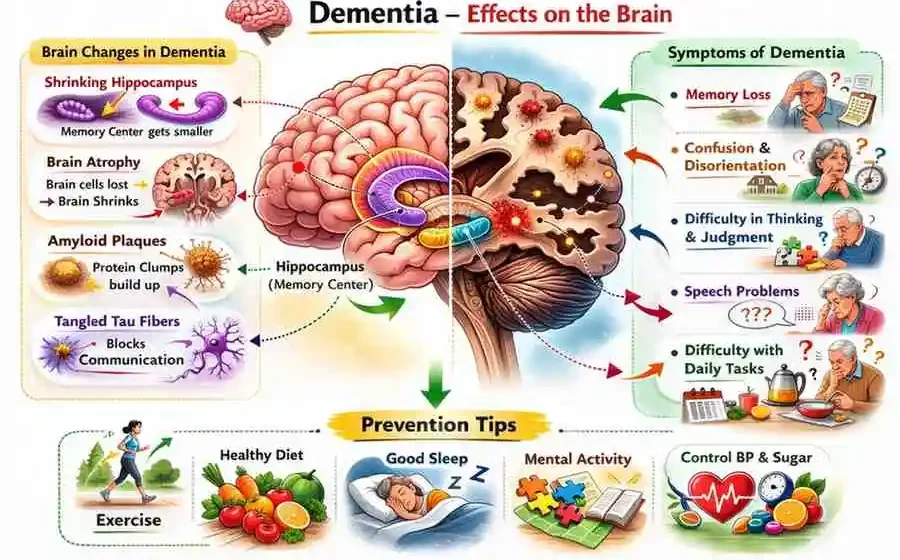
Alzheimer’s slowly damages memory, thinking, and behavior in the brain. Scientists first linked it to amyloid plaques and tau proteins, but new research shows poor blood flow to the brain can also harm it. When the brain doesn’t get enough oxygen and nutrients, memory gets weaker faster. This matters to you because protecting your brain today means protecting your memories, dreams, and the people you love tomorrow.
Table of Contents
ToggleCurrent Alzheimer’s Research in 2026
According to a recent study conducted at the Keck School of Medicine of USC, small changes in blood flow and oxygen levels in the brain are closely associated with the early symptoms of Alzheimer’s disease. The study was conducted on older adults with and without memory issues. They found that individuals with healthier blood flow in the brain had:
- Lower amyloid plaque buildup.
- Larger hippocampus (memory center of the brain).
- Better mental health.
This means Alzheimer’s may start with small problems in brain blood flow even before memory loss begins.
How Brain Blood Flow Affects Memory?
The brain requires a steady supply of oxygen and nutrients via blood. If the blood flow becomes weak, then:
Brain cells don’t get enough oxygen: When brain cells do not get sufficient oxygen, it is referred to as Hypoxia. Brain cells require oxygen all the time to produce energy. When they do not get sufficient oxygen, they are not able to function properly, and the ability to remember, think, and concentrate begins to weaken.
- First, brain cells start slowing down due to the lack of sufficient energy. You may feel tired, confused, dizzy, or forget small things. When the brain cells do not get sufficient oxygen for a prolonged period, they may get damaged or die, which may lead to serious problems such as Alzheimer’s disease, stroke, or any memory disorder.
Memory centers shrink: The memory centers in the brain are the regions that are responsible for storing memories, particularly the Hippocampus region of the brain. When the memory centers shrink, it means that the brain cells in that region are being damaged or dying. This is often the case with people who have Alzheimer’s disease, are under chronic stress, have poor sleep habits, are aging, or have poor blood flow to the brain
- When the memory centers shrink, people may begin to forget things that happened recently, people’s names, or things they are supposed to do. Learning new things becomes difficult, and people have trouble concentrating. They may also become confused because the regions of the brain that shrink are linked to a person’s behavior and thinking.
Harmful plaques may build up: In Alzheimer’s disease, sticky proteins called Amyloid plaques build up between brain cells. These plaques block signals between cells, damage memory areas like the Hippocampus, and make thinking slower. Over time, brain cells get weak or die, which causes memory loss and confusion.
Alzheimer’s Tests Used in the Study
Transcranial Doppler Ultrasound
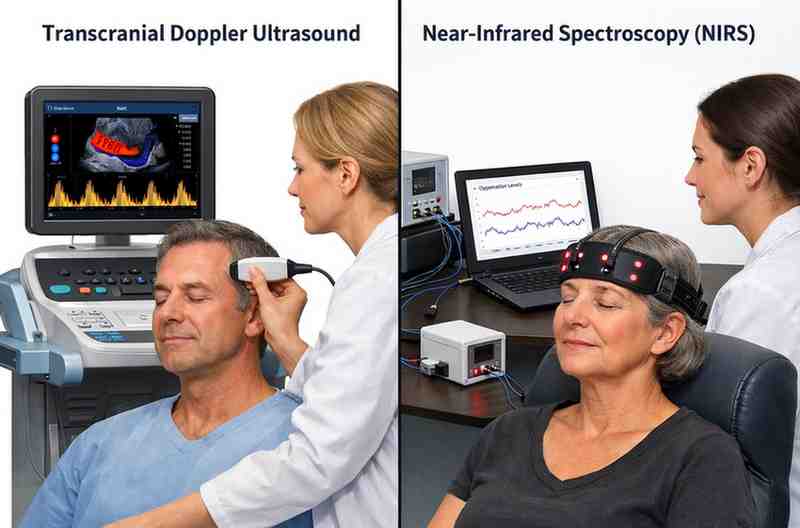
Transcranial Doppler Ultrasound is a safe and painless procedure that employs sound waves to measure blood flow in the brain. A small sensor is placed on thin areas of the skull, and it indicates the speed of blood flow in the brain’s arteries.It is used by doctors to check the risk of stroke, blocked arteries, or poor blood circulation in the brain, and in Alzheimer’s studies, it helps understand how low blood flow affects memory. It is fast, has no radiation, and can be repeated easily, making it ideal for checking brain health.
Near-Infrared Spectroscopy
Near-Infrared Spectroscopy (NIRS) is a radiation-free, painless, and harmless procedure that uses light to check the oxygen level and blood flow in the brain. The procedure involves placing sensors on the head, and the device shows how much oxygen the brain is getting. This procedure is employed by medical practitioners and researchers to investigate the activity of the brain, the risk of stroke, and Alzheimer’s disease.
Early Signs Linked With Blood Flow Problems
The study showed that people with weaker brain blood circulation often had:
Mild Cognitive Impairment:
(MCI) is when a person has a little more memory or thinking problems than people with normal aging, but it is not as serious as dementia.A person with MCI may have trouble remembering names, dates, or appointments, or have trouble concentrating sometimes. But they can still do their daily tasks, such as studying, cooking, shopping, or managing money without too many issues.It is as if the brain is working a little slower than it used to, but everything else is normal.
Dementia symptoms:
It include memory loss, confusion, and problems remembering recent events or people’s names. Individuals may have trouble with speech, thinking, or making simple decisions. They may also become lost easily, experience changes in mood, or have problems with everyday activities such as cooking or handling finances.
Smaller Hippocampus:
A smaller Hippocampus means that the center of memory in the brain has reduced in size because the brain cells in that part of the brain are damaged or dying. This is normally due to old age, poor blood flow to the brain, stress in the brain, lack of sleep, or conditions such as Alzheimer’s disease.
Amyloid plaques:
Amyloid plaques are sticky protein clumps that accumulate between brain cells in some memory-related brain diseases. They are made up of amyloid-beta proteins that fail to break down and accumulate in the brain. The plaques act as barriers between brain cells, causing inflammation and damage to the brain’s memory centers, such as the hippocampus. Eventually, brain cells weaken and die, resulting in memory loss, confusion, and difficulty with thinking.
This helps to confirm that the health of blood vessels is a part of Alzheimer’s disease.
Why Early Detection Is Important
The symptoms of Alzheimer’s disease develop very slowly, over many years. If doctors can identify risk factors early, they may be able to:
- Start treatment earlier.
- Recommend lifestyle modifications.
- Slow down memory loss.
Simple tests of blood flow to the brain could be helpful in large-scale screening in the future.
Can Better Blood Flow Reduce Alzheimer’s Risk?
The study is not yet at the stage of proving cause and effect,but improving vascular health may help brain health.Include healthy habits in your daily life.
- Regular exercise.
- Good sleep.
- Balanced diet.
- Blood pressure control.
- Stress management.
Since you are interested in fitness, exercising your heart with cardio activities such as jogging, cycling, or rope skipping can also improve blood flow to your brain.
Conclusion:
This research reveals that Alzheimer’s is not just about brain plaques but also about blood vessel health. Taking care of your heart, sleep, and fitness today may protect your brain in the future.
FAQ
- What is first sign of dementia?
One of the earliest and most noticeable signs of dementia is trouble with memory. This often shows up as forgetting recent conversations, appointments, or repeating questions.
- What are the 10 warning signs of dementia?
Like names, recent talks, or asking the same question many times.
Trouble thinking or solving simple problems
Like handling money or following a simple plan.Difficulty doing daily work
Like cooking, using phone, or finding the way home.Getting confused about time or place
Forgetting dates, day, or where they are.Problem speaking or finding words
Stopping in middle of sentence or forgetting easy words.Losing things often
Putting items in wrong places and not remembering.Bad decisions
Like giving money to strangers or wearing wrong clothes for weather.Losing interest in things they liked
Not wanting to meet friends, study, or do hobbies.Mood changes
Becoming angry, sad, scared, or confused without reason.Problem seeing or judging distance
Trouble reading, walking stairs, or driving.
- What is the 2 finger test in dementia?In the two-finger test, the physician holds up two fingers and asks the person to count or identify them, where “identify” means saying what the object is (like “two fingers” or “two”).
- What is the 5 word test for alzheimer's?The 5-word test for Alzheimer’s is a simple memory test where the doctor will say five easy words, ask the patient to repeat them, and then after a few minutes ask the patient to remember the words again.If the patient is not able to remember the words even when given clues, it could indicate memory loss due to Alzheimer’s, but it is not a conclusive diagnosis.
- What common habit is linked to dementia?One common habit that can increase the risk of dementia is chronic sleep deprivation—sleeping 4–5 hours a night or staying up late all the time can be harmful to the brain’s repair, memory, and blood flow over the years

Health & Wellness Researcher
Nikhil Bhardwaj is a health researcher dedicated to breaking down the latest medical studies into actionable wellness insights. He specializes in the intersection of mental health and physical fitness.
Follow Me

[…] Lower risk of developing dementia. […]