Last updated: November 1, 2026
The health benefits of watermelon smoothie come mainly from three things: water, lycopene, and L-citrulline. These may help with hydration, blood flow, and muscle recovery after workouts. Most research is small and uses juice or extracts, so treat a smoothie as a useful food, not a treatment.
Below, you’ll see what each benefit looks like, how much a smoothie actually gives you, and who should be careful.
🍉 Key Takeaways
- 💪 Boosts Workout Performance – Improves blood flow, oxygen delivery, and muscle pumps during exercise.
- 🏃 Reduces Muscle Soreness – Helps ease post-workout pain and supports faster recovery.
- ⚡ Fights Exercise Fatigue – Helps clear ammonia buildup that can make muscles feel tired.
- ❤️ Lowers Blood Pressure – Supports healthy circulation by helping blood vessels relax.
- 🛡️ Improves Lycopene Absorption – Blending makes watermelon antioxidants easier for your body to absorb.
- 🫀 Protects Heart Health – Supports healthy blood vessels and helps reduce inflammation.
- 👨 Supports Prostate Health – Rich in lycopene, a nutrient linked to men's health.
- ⚖️ Controls Hunger & Weight – Low in calories and naturally filling, helping you stay satisfied longer.
- 👁️ Supports Eye Health – Antioxidants help protect vision and eye tissues from damage.
- 🥩 Improves Protein Metabolism – Vitamin B6 helps your body use dietary protein more efficiently.
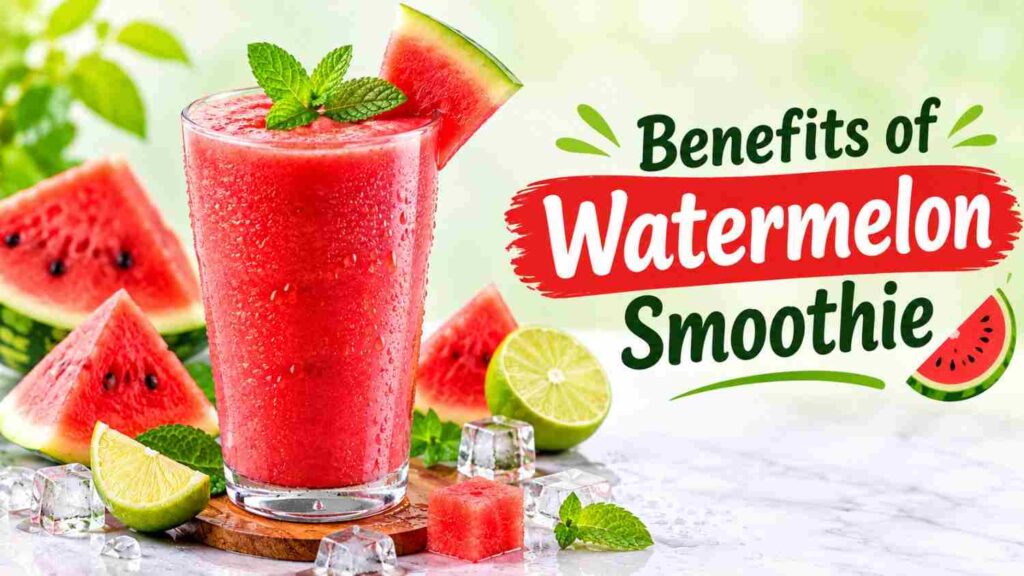
What Are the Health Benefits of Watermelon Smoothie?
1. L-Citrulline for Natural Pre-Workout Pumps
Watermelon is the richest whole-food source of the non-essential amino acid L-citrulline. When you drink a watermelon smoothie, your kidneys convert L-citrulline into L-arginine, which then stimulates nitric oxide production. Nitric oxide relaxes and widens blood vessels—a process called vasodilation—allowing your working muscles to receive more oxygen and nutrients during exercise.
Watermelon is also an excellent source of citrulline. Studies suggest that this amino acid may assist with muscle protein synthesis while also improving muscle mass and overall exercise performance, with benefits particularly notable in older adults.
2. Reducing Muscle Soreness
L-citrulline from watermelon may reduce muscle soreness, but the evidence is modest and depends on dose. In one study, athletes who drank 500 ml of watermelon juice before exercise reported less soreness after 24 hours. A study on half-marathon runners used L-citrulline-enriched juice, not a plain smoothie. A standard smoothie contains much less citrulline than these studies used, so expect a small effect at best.
3. Help Reduce Exercise Fatigue
L-citrulline may help the body clear ammonia through the urea cycle, but evidence that watermelon reduces fatigue in real workouts is limited. Studies mostly used 3 to 6 g of citrulline, while 1 cup of watermelon has about 0.25 g. Treat watermelon as a supportive food, not a performance supplement.
4. May Help Lowers Blood Pressure
Watermelon may help lower blood pressure slightly, but the evidence comes from small trials. Studies of 4 to 6 weeks in adults with prehypertension or hypertension used watermelon extract supplements providing about 6 g of L-citrulline and L-arginine, not smoothies. A smoothie delivers far less. It does not replace blood pressure medication.
5. Lycopene Absorption
Watermelon lycopene is well-absorbed by the body, while its absorption can be improved by combining it with fat. The process of blending breaks down the plant cell wall, but this is only effective to a certain extent because watermelon lycopene is fat-soluble.
6. Lycopene and Heart Health
Lycopene is linked to better heart health in observational studies, but it is not proven to prevent heart disease. Higher lycopene intake and blood levels are associated with lower cardiovascular risk, and lycopene acts as an antioxidant that may reduce inflammation and improve blood vessel function.
7. May Support Prostate Health
Lycopene is linked to prostate health in some studies, but evidence that it prevents prostate cancer is mixed. Large reviews show inconsistent results, and no trial proves a smoothie lowers risk. Eating lycopene-rich foods is reasonable, but it does not replace screening.
8. Helps You Feel Full and Controls Appetite
A watermelon smoothie can reduce hunger for a short time because of its water and volume, but it is not strongly filling. One cup has about 46 calories, only about 0.6 g of fiber, and almost no protein. Add protein and fiber, such as Greek yogurt or chia seeds, for longer fullness.
9. Protects Eyes from Age-Related Macular Degeneration
Many people think of carrots when it comes to eye health, but a watermelon smoothie can also support healthy vision. That's because watermelon is rich in lycopene, a powerful antioxidant that helps protect the eyes from damage caused by free radicals.
Research published in the EXCLI Journal suggests that lycopene may help support long-term eye health and may play a role in reducing the risk of age-related macular problems. These protective effects are linked to lycopene's ability to fight oxidative stress, one of the major factors involved in eye aging.
10. Provides Vitamin B6
Watermelon provides a small amount of vitamin B6 (about 4% DV per cup), which helps the body use protein. It is a minor benefit, not a main reason to drink it.
11. Watermelon Smoothie for Weight Management and Diabetes
Watermelon can fit into a weight-management or diabetes-friendly diet in controlled portions, but it does not treat either condition. It is low in calories, and its glycemic load is low in normal servings, but evidence that it improves insulin sensitivity or lowers BMI is limited. People with diabetes should check portion size and blood sugar response.
12. Brain Health (Neuroprotective)
Watermelon contains antioxidants (lycopene, flavonoids, phenolic compounds) that may protect brain cells, but most evidence comes from animal and lab studies. No strong human trials show that watermelon improves memory or prevents cognitive decline.
What Is L-Citrulline in Watermelon?
L-citrulline is a natural nutrient in watermelon that improves blood flow and lowers blood pressure. When you drink a watermelon smoothie, your body changes this nutrient into a gas called nitric oxide, which widens your blood vessels to boost energy and stop muscle soreness.
To understand why a watermelon smoothie is so good for your health, you need to know about a special nutrient inside it called L-citrulline (pronounced sit-rul-een).
L-citrulline is an amino acid. Amino acids are just the natural building blocks that your body uses to function. Your body can make some on its own, but watermelon is the absolute best food source in the world to get it.
Is a Watermelon Smoothie Good for Weight Loss?
A watermelon smoothie can support weight loss because it is low in calories (about 46 kcal per cup) and high in water (about 91%), so it adds volume without many calories. It does not burn fat by itself.
Does a Watermelon Smoothie Hydrate You?
Yes, the watermelon smoothie does hydrate very effectively since watermelon has 91% of its volume made up of water and has potassium as one of the electrolytes. Watermelon also has traces of magnesium, and some electrolyte support without sodium.
🍉 Final Thoughts
A watermelon smoothie is more than just a refreshing drink. It delivers hydration, lycopene, L-citrulline, vitamins, and antioxidants that may support heart health, muscle recovery, healthy blood pressure, weight management, and eye health.
Easy to make, naturally low in calories, and backed by scientific research, a watermelon smoothie is a simple and delicious way to add more nutrition to your daily routine.
Frequently Asked Questions
- Does a watermelon smoothie help with muscle soreness after a workout?Yes, it does. Drinking a watermelon smoothie before or after exercise can significantly reduce the stiff, achy feeling you get the next day (known as DOMS).
- Can drinking a watermelon smoothie naturally lower blood pressure?Yes, research shows it can. Consistently drinking watermelon smoothies helps take the strain off your heart and naturally brings blood pressure down.
- Is a watermelon smoothie better for you than eating raw tomatoes?When it comes to absorbing lycopene, yes. While tomatoes are famous for lycopene (an antioxidant that protects your heart), watermelon actually contains more of it per cup—and blending it makes it even better.
- Will a watermelon smoothie help me lose weight?Yes, it is an excellent tool for weight loss. It keeps you feeling full and satisfied without packing on extra calories.
- What exactly is L-citrulline in watermelon?L-citrulline is a natural amino acid that acts as a powerful blood flow booster. Watermelon is the single best food source in the world to get it naturally.
- Are watermelon seeds good for the body?Yes, watermelon seeds are good for the body. They're rich in magnesium, protein, zinc, and iron, supporting heart health, muscle repair, immunity, and prevention of anemia. Roasted seeds are easier to digest than raw ones.
Disclaimer: This article is for general information only and is not medical advice. Talk to your doctor before making changes to your diet, especially if you have diabetes, kidney disease, or high blood pressure, or take regular medication.
About the Author
Nikhil is a health, fitness, and nutrition writer dedicated to turning complex science into simple, actionable wellness advice. He holds a Nutrition Certification from Coursera and continuously studies the latest research on healthy eating, exercise, and lifestyle habits. Through evidence-based content, he helps readers make informed decisions that support their long-term health and fitness goals.
Sources and References
- Blenderized watermelon and satiety in adolescents (Metabolism Open, 2025)
- Lycopene and cancer: systematic review (Nutrients, 2022)
- Lycopene and vascular health (Frontiers in Pharmacology, 2018)
- Watermelon lycopene and allied health claims (EXCLI Journal, 2014)
Pingback: The Best Watermelon Mint Cooler Recipe for Instant Refreshment