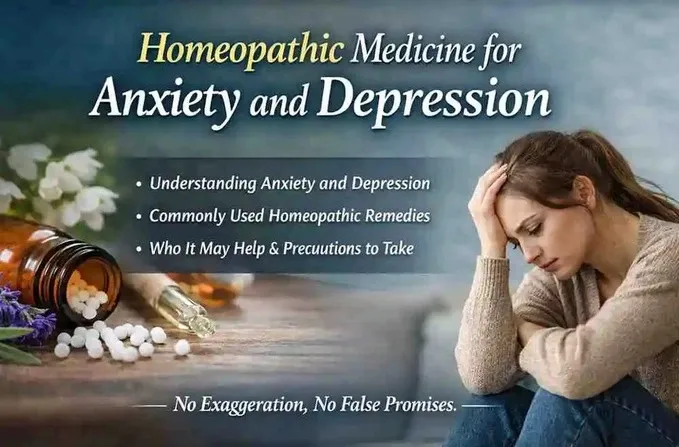
Homeopathic medicine for anxiety and depression

Some mornings, the weight isn’t on your body, it’s on your mind.
You look tired even if you slept well last night. Little problems look big, and your chest feels tight and constricted for no particular reason. You put on a smile when you’re around people, but inside, you just don’t feel right.
Anxiety and depression are not only “mental issues.” They can directly affect your sleep patterns, your digestive system, how much energy you have, your attitude toward yourself and the world, and even your physical well-being! You might be tired most of the time, overanalyze everything, or feel like you have no interest in anything or are worried for no reason.
Although modern medicine certainly is of great use in this regard, some individuals may be looking for a gentler and more natural form of aid, and in this way, homeopathy is sometimes brought up as a solution.Anxiety and depression are explained in this blog: how homeopathy approaches them, commonly used remedies, who it may help, and important precautions-no exaggeration, no false promises.
Table of Contents
ToggleUnderstanding Anxiety and Depression
Anxiety is a constant feeling of fear, worry, or restlessness, even when nothing is clearly wrong.
Depression is more than sadness—it includes low mood, lack of motivation, hopelessness, and emotional numbness that lasts for weeks or months.
Common symptoms include:
- Constant worrying or racing thoughts.
- Feeling sad, empty, or emotionally heavy.
- Poor sleep or sleeping too much.
- Loss of appetite or overeating.
- Low confidence and self-doubt.
- Physical symptoms like headaches, stomach issues, or fatigue.
(1). Ignatia Amara
Ignatia Amara is usually talked about when emotional pain comes from grief, heartbreak, or a sudden loss. People who may need this remedy often look calm and strong on the outside, but inside they feel very sensitive and hurt. Their mood can change quickly—they may feel fine one moment and suddenly become sad or irritated the next.
It is often mentioned for people who keep their feelings inside instead of talking about them. Crying alone, sudden waves of sadness, or anxiety that starts after an emotional shock are situations where Ignatia Amara is commonly considered.
(2). Arsenicum Album
Arsenicum Album is generally associated with individuals who are anxious and restless. Such individuals often overthink, especially about their health, money, or safety. They might feel uncomfortable most of the time and often feel worse at night when everything has quieted down. Cases of fear about the future and fear of being alone are common. This remedy is often discussed for panic attacks, constant worry, and people with a perfectionist nature; they feel stressed if things are not in control.
(3).Natrum Muraticum
Natrum Muraticum is often linked to quiet or hidden depression. People who may need this remedy usually do not like sharing their feelings with others. They prefer to stay alone and handle their emotions by themselves.
Even though they seem strong and calm from the outside, they are very sensitive inside. They can be deeply hurt by disappointment, rejection, or heartbreak, and these feelings may stay with them for a long time. They may appear tough, but emotionally, they feel things very deeply.
(4). Aconitum Napellus
Aconitum Napellus is typically discussed when anxiety and/or panic strike suddenly, often as a reaction to a strong shock, fear, or a deeply disturbing experience, such as after an automobile accident, shocking news, or any strong emotional event that deeply scares a person.
(5). Kali Phosphoricum
Kali Phosphoricum usually enters the scene when a person feels mentally exhausted or emotionally very weak. It is primarily indicated when there is anxiety due to mental pressure, overworking, or long periods of stress.
Typical individuals who may require this remedy are those who are always tired, even when they are resting. They often feel as though their minds are drained. Their focus is poor, they have trouble remembering things, and they are not able to think clearly. These individuals also tend to feel nervous and lack confidence. This remedy is frequently indicated for people who feel burned out, especially due to continuous stress over a long time without proper rest.
Best foods to reduce anxiety
Foods rich in magnesium, omega-3s, and antioxidants—like leafy greens, nuts, seeds, fatty fish, yogurt, and berries—can help calm the nervous system. Whole foods that support gut health also play an important role in reducing anxiety.
Conclusion:
Anxiety and depression impact daily life deeply. Homeopathy may provide gentle, individualized support for some people, but it should not replace medical or psychological care. Seeking proper guidance and professional help is essential for long-term emotional well-being.
Disclaimer:
The information shared in this blog is meant only for general awareness and learning. It does not replace medical advice or professional mental health care. Before starting any treatment, it is important to consult a qualified healthcare professional, especially if symptoms are serious or long-lasting.
FAQ
- How to deal with extreme stress and anxiety?Stop and breathe slowly and deeply, relaxing your body; then, focus on only what you can control at this very moment.If you find yourself constantly overwhelmed by stress, talk to a friend, a person you trust, or a mental health specialist.
- What is the best treatment for severe anxiety?The most effective treatment for anxiety disorders is a combination of therapy and medication,guided by a mental health professional.Cognitive Behavioral Therapy (CBT) helps retrain anxious thinking, and medicines (when needed) calm the brain so recovery is possible.
- What to eat to calm anxiety?Eat fruits, leafy veggies, nuts, whole grains, and yogurt to keep your body and mind calm.Limit the consumption of too much caffeine, sugar, and junk food, which can cause anxiety.
- what vitamin helps relieve anxiety?Vitamin B Complex, especially Vitamin B6 and B12, calm the nervous system. It helps calm the anxiety.Also, Vitamin D and Magnesium improve moods. They enable the body handle with stress.
- What drinks calm anxiety?Warm drinks such as chamomile tea, green tea, and milk are good for relaxing the nervous system.

Health & Wellness Researcher
Nikhil Bhardwaj is a health researcher dedicated to breaking down the latest medical studies into actionable wellness insights. He specializes in the intersection of mental health and physical fitness.
Follow Me