Is 4 Hours of Sleep Enough for Students

No, four hours of sleep is not enough for students. According to health experts, students require a lot more sleep. For example, the American Academy of Sleep Medicine recommends 8 to 10 hours of sleep per night for teenagers aged 13 to 18 years. The Centers for Disease Control and Prevention also provide the same recommendations: children aged 6 to 12 years require 9 to 12 hours of sleep. But it’s not just about how many hours you sleep — studies show that sleeping at the right time of night is just as critical as sleep duration for memory consolidation and hormonal balance in students.
Table of Contents
ToggleSleep deprivation symptoms
Sleeping only four hours a night can cause problems very quickly. Many people have experienced headaches, feeling tired, and having “brain fog” after only two nights of very little sleep. Research has shown that headaches and migraines are strongly associated with poor sleep. People who do not get enough sleep are much more likely to have migraines, and even tension headaches can be caused by lack of sleep.
If you get very little sleep, your moods can turn quickly.In one study, teens who didn’t sleep for 36 hours reported feeling sadder, angrier, more anxious, confused, and very tired.In real life, students who get only 4 to 5 hours of sleep often feel irritable, have trouble concentrating, and feel depressed.Young children and teens who don’t get enough sleep can also act very hyper, have trouble staying focused, and have behavior problems.
Importance of sleep during exams
Sleeping is very essential during the days of exams because it enables your brain to function properly. When you sleep properly, your brain retains all that you have been studying, and as such, you will be able to answer questions easily in the exam. When you don’t sleep properly, you might feel tired, stressed, forget things, make silly mistakes, and even get headaches.
How Sleep Helps You Remember
Sleep is also helpful because your brain is using this time to store what you have learned. When you are studying, the information is first stored in your short-term memory, which is like a scratch note. During sleep, your brain is going over this information, and it is being transferred from short-term to long-term memory, where it will stay longer.
Why Tiny Sleep Breaks Are Dangerous in Exams
Micro-sleeps are short moments of sleep that last for a few seconds, and they can occur when you are very tired. Your brain will shut down for a moment without you even realizing it. During this time, you might miss a question, read something incorrectly, or make foolish mistakes such as answering incorrectly or missing an entire page.
Effects of sleep deprivation on students
- Focus and Memory: Sleep deprivation is really bad for students. It affects a students focus and memory in a way. When students do not get sleep their brain has a hard time storing new information. This makes it very difficult to understand what is being shared in class remember things for exams. Pay attention in class and that can make academic performance suffer.
- Mental and emotional health : It is also bad, for emotional health. Students who do not get sleep often feel really stressed they get irritated easily they feel anxious or they even get depressed. Not getting sleep can make students less motivated they get mood swings and they feel burned out especially when they have exams or when they have to study a lot.
- Physical health and daily energy: Sleep deprivation also affects health and daily energy levels. Students may feel tired all the time they get headaches their immune system is weak. They get sick more often. Over time not getting sleep can lead to weight gain students become less fit and they can have long term health problems, which makes it harder for students to stay active and be productive.
What happens if you drink coffee during exams to avoid sleep?
Students believe that coffee or energy drinks can be an alternative to sleep during exams, but that is not the case. Caffeine may give you the feeling of being alert for some time, but it does not give your brain actual rest. It only temporarily hides the sensation of tiredness. Your brain is still slow, your memory is still weak, and you may still make mistakes.
Sleep has some very important functions that caffeine cannot perform. When you sleep, your brain stores what you have learned, fixes tired brain cells, and flushes out stress hormones. Coffee cannot perform any of these functions. That’s why, even after consuming coffee, you may feel jittery, nervous, and confused, and you may also forget the answers to questions in the exam.
How Much Sleep Do You Need During Exams?
You should have at least 7-8 hours of sleep before the exam, and the minimum is 6 hours. If you have less than 6 hours of sleep, it can affect your memory, concentration, and processing speed, and your performance in the exam can go down
Why Am I Still Tired After 8 Hours of Sleep?
Most people think that sleeping for 7 to 8 hours is enough to prove that you have slept well. However, this is not true since the quality of sleep is also important. If your sleep cycles are constantly interrupted during the night, your brain may not have enough time to recover completely.
Sleep is divided into different stages: NREM and REM sleep. A full sleep cycle takes about 90 minutes. Your body needs 4 to 5 full sleep cycles every night.
Deep Sleep (NREM Stage 3)
Deep sleep, or slow-wave sleep, is one of the most important parts of the sleep cycle. It normally occurs during the first half of the night. This is the time of the sleep cycle in which the body does most of its physical repair.
REM Sleep (Rapid Eye Movement)
It occurs later in the night and happens multiple times during the sleep cycle. During this time, the brain activity increases significantly, almost similar to when you are awake.
It has to be noted that sleep cycles function best when the sleep is continuous. The sleep cycle takes 90 minutes to complete. The human body requires 4 to 5 continuous sleep cycles to undergo complete recovery. This means that the human body requires 7 to 7.5 hours of continuous sleep to allow the brain to go through the stages of light sleep, deep sleep, and REM sleep. If you wake up too often during the night, you may have to start the sleep cycle from the beginning. This means that even if you sleep for 8 hours, you may not be able to complete the sleep cycle, and you may wake up feeling tired and lacking energy.
Best Sleep Routine for Students
A good night routine for students can start at 10:00 PM by stopping heavy or difficult study topics so the brain can relax. At 10:15 PM, avoid using your phone or any screens to reduce mental stress and help your body prepare for sleep. Around 10:30 PM, do light reading or simple meditation to calm your mind, which can help support memory during exams. Then go to bed by 11:00 PM and aim to wake up between 6:00 AM.which gives your body enough rest and helps you feel fresh and focused for the next day.
Can I sleep only 4 hours a night for 4–5 days during exams
It is not a good practice to sleep only for four hours at night for four to five days during exams. Although you will get more time to study, your brain will be too tired to remember things. Sleeping less can cause poor concentration, headaches, stress, irritability, and silly mistakes in the exam. It is generally recommended that most students need to sleep for seven to nine hours at night to think clearly and perform their best. It is better to sleep well, study for short focused periods, and take a nap if needed, since sleeping well helps you remember more and perform better in exams.
Recommended Sleep Duration by Age
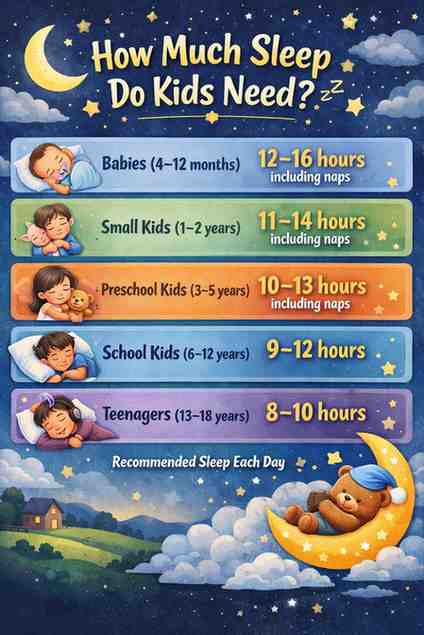
| Age Group | Sleep Needed Each Day |
|---|---|
| Babies (4–12 months) | 12–16 hours, including naps |
| Small kids (1–2 years) | 11–14 hours, including naps |
| Preschool kids (3–5 years) | 10–13 hours, including naps |
| School kids (6–12 years) | 9–12 hours |
| Teenagers (13–18 years) | 8–10 hours |
There are some simple sleepexercises that can help you fall asleep faster.
- Cognitive shuffling involves thinking of random words from one letter and picturing them in your mind.
- Slow breathing involves inhaling 5 seconds and exhaling 5 seconds for a few minutes to relax your body.
- Military body shutdown involves relaxing your face, shoulders, arms, and legs slowly while thinking of one peaceful scene.
Conclusion:
Sleeping is not a waste of time when you are taking exams—it is one of the most essential tools for success. Staying up all night studying, getting only a few hours of sleep, can be detrimental to your memory, concentration, mood, and performance during exams. Coffee or energy drinks may give you a temporary boost to stay awake, but they cannot substitute the actual benefits of sleep. Sleep helps your brain retain what you have learned, stay calm, and think clearly.
Frequently Asked Questions
- Is 4 or 5 hours of sleep better?For students, getting 5 hours of sleep is a bit better than just 4 hours. However, neither amount is sufficient for their health or overall performance. It's clear that more sleep is essential for doing well.
- How much sleep should a 17-year-old get?
A seventeen year old needs to get eight to ten hours of sleep every night. The Centers for Disease Control and Prevention and American Academy of Sleep Medicine say so. These sleep experts think that sleep is really important, for a seventeen year old.
- Why did einstein sleep 10 hours a day?Albert Einstein slept, around 10 hours because the Albert Einstein brain needed rest after doing a lot of deep thinking and solving big problems. The amount of sleep that Albert Einstein needed does not mean that everyone needs 10 hours. Most students only need 7 to 9 hours of sleep to stay healthy and focused.
- How unhealty is 4 hours of sleep?Sleeping only 4 hours regularly is very unhealthy because it harms memory, focus, mood, immunity, and overall energy.
- Is 12am to 7am enough sleep?
Sleeping from 12 a.m. To 7 a.m. Gives you 7 hours of sleep. Most adults need to sleep for 7 to 9 hours.. Some people need to sleep for 8 or 9 hours to feel fully rested. This is because the amount of sleep you need naturally depends on what your body needs and the quality of your sleep.

Health & Wellness Researcher
Nikhil Bhardwaj is a health researcher dedicated to breaking down the latest medical studies into actionable wellness insights. He specializes in the intersection of mental health and physical fitness.
Follow Me