Last updated: November 7, 2026
Sirloin is the healthiest of the three steaks for most people.
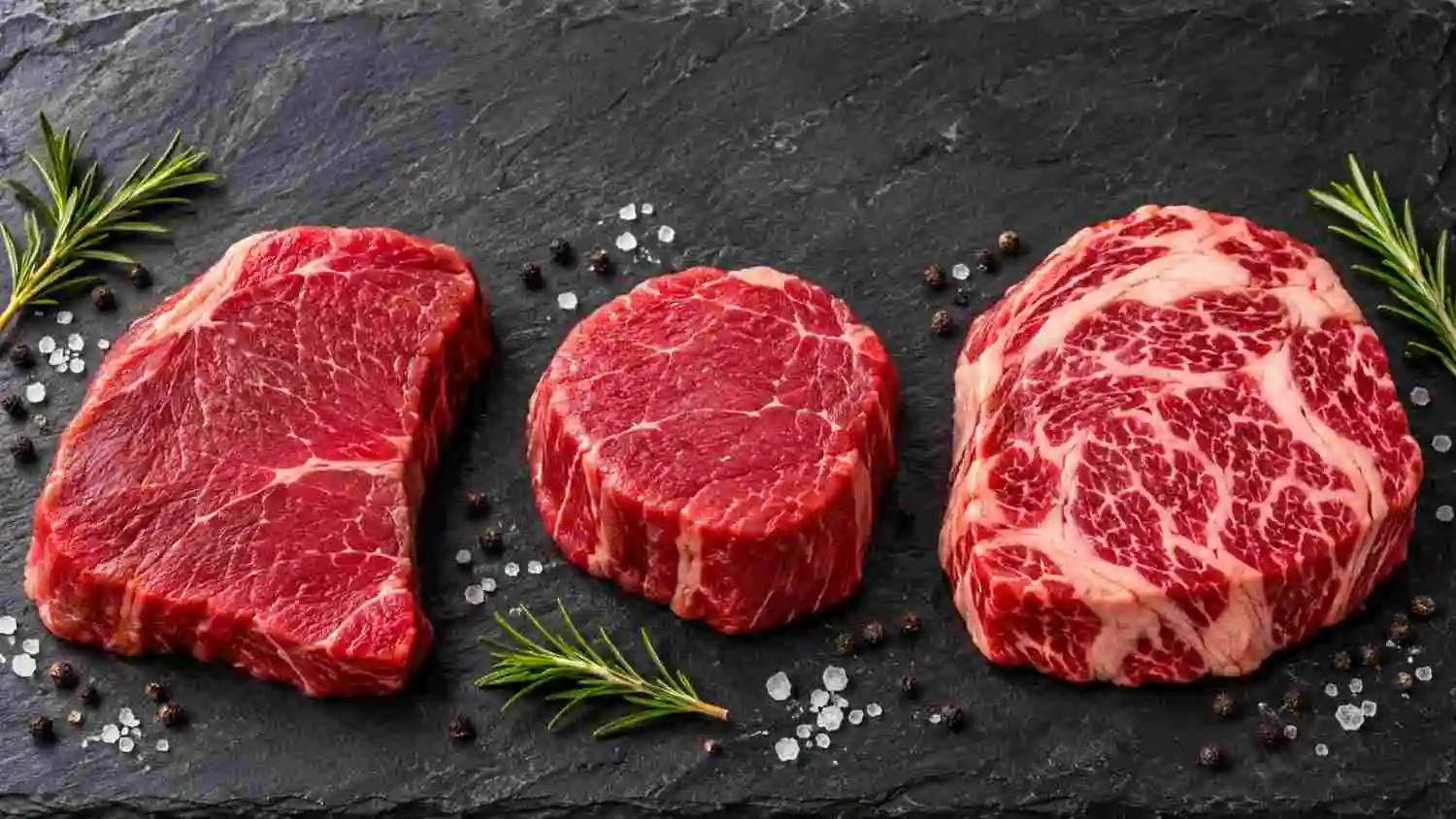
Sirloin vs ribeye comes down to fat: sirloin will be the lowest in fat, while ribeye has the highest amount of fat. Filet mignon sits in the middle. Choosing which steak to eat, for your heart, waistline, and protein goals, will affect how many calories and saturated fat you’re consuming more than most people would expect.
Key Takeaways
- Sirloin will typically be the healthiest choice, with the least amount of fat and saturated fat per portion.
- Filet mignon is relatively lean, and whilst it is tender and mild, it is much more expensive than Sirloin with very similar nutritional benefits.
- Ribeye has the highest amount of marbling meaning more flavour. There are also more calories and around double the amount of saturated fat compared to Sirloin.
Where Each Steak Comes From
Each steak comes from a different part of the cow, and that location decides how much fat it carries. Muscles that work harder have less fat and more chew. Muscles that rest more have more fat and more tenderness.
Sirloin: The sirloin section of the animal is located at the back end of the animal just before the round. This lean cut of meat has a firm texture and strong beef flavour. The top sirloin is the most common cut found in the grocery store and butchers shop.
Ribeye: The ribeye comes from the rib section of the animal. It has the most marbling of the three cuts. Marbling refers to the thin white veins of fat found inside the muscle. During cooking this fat will melt resulting in a rich, juicy steak.
Filet Mignon: Filet mignon is a cut of beef taken from the tenderloin, a small muscle that does very little work. That is why it is the most tender cut of beef, though its flavor is mild. It has little marbling (fat inside the meat), so cooks often wrap it in bacon or finish it with butter to add richness back.
Sirloin vs Ribeye vs Filet Mignon: Nutrition Compared
This meat nutrition comparison uses USDA FoodData Central values for cooked steak. The outer fat is trimmed off, but the marbling inside the meat is still counted, which is why ribeye shows so much more fat. The first table is for a 3 oz (85 g) cooked portion.
| Nutrient | Top Sirloin | Filet Mignon | Ribeye |
|---|---|---|---|
| Calories | about 180 | about 179 | about 230 |
| Protein | about 25 g | about 26 g | about 21 g |
| Total fat | about 8 g | about 7.6 g | about 16 g |
| Saturated fat | about 3.2 g | about 3 g | about 7.2 g |
| Texture | Firm, beefy | Very tender, mild | Soft, rich, juicy |
| Typical price | Lowest | Highest | Mid to high |
Same cuts per 100 g cooked
| Nutrient | Top Sirloin | Filet Mignon | Ribeye |
|---|---|---|---|
| Calories | 212 | 211 | 271 |
| Protein | 29.3 g | 30.5 g | 24.8 g |
| Total fat | 9.7 g | 8.9 g | 19.0 g |
| Saturated fat | 3.8 g | 3.5 g | 8.4 g |
| Texture | Firm, beefy | Very tender, mild | Soft, rich, juicy |
| Typical price | Lowest | Highest | Mid to high |
Sirloin has the lowest calories and fat, filet mignon is not far off. Ribeye is significantly higher in fat (and flavour).
Sirloin vs Ribeye: Fat, Marbling, and Heart Health
In a 3 oz serving, ribeye has about 7 g of saturated fat, while sirloin has about 3 g. That makes ribeye’s saturated fat more than double that of sirloin.
The American Heart Association recommends limiting saturated fat to support heart health. If steak is a regular part of your meals, sirloin or filet mignon is the easier fit. Ribeye works better as an occasional treat or in a smaller portion.
Ribeye vs Filet Mignon: Flavor, Tenderness, and Value
Ribeye vs filet mignon comes down to taste and texture rather than a big health gap. Filet mignon has less saturated fat than ribeye, but the difference shrinks when cooks add butter or bacon. Ribeye brings a stronger flavor profile because its fat carries the taste.
Filet mignon is the pick for people who want a soft bite and a lighter, milder steak. It is also the most expensive per pound. If you want lean beef on a budget, sirloin gives you almost the same protein for much less money.
Where does New York Strip fit in?
New York Strip sits right between Top Sirloin and Ribeye in terms of fat and flavor. It offers more rich marbling than a lean sirloin, but has less total fat and fewer calories than a heavily marbled ribeye.
Protein and Micronutrients in Steak
All three of the cuts are excellent sources of complete proteins, providing all the essential amino acids needed.
- Heme iron from red meat. Easier for your body to absorb than plant based iron.
- Zinc. Essential for the immune system and wound healing.
- Vitamin B12. Essential for proper functioning of nerves and red blood cells.
- Niacin and B6. Help with energy metabolism.
Leaner cuts will provide this with fewer calories. Therefore sirloin and filet mignon are slightly better for those keeping an eye on their calorie intake.
How do sirloin and ribeye compare in taste and tenderness?
Ribeye is a richer cut of meat and is softer. The marbling in ribeye will melt whilst cooking, leaving you with a juicy, tender and buttery piece of meat. Sirloin has less fat so will be much chewier and taste much more like beef.
What is the difference between top sirloin and bottom sirloin?
Top sirloin is the tender and lean cut of sirloin steak you see every day. Bottom sirloin is a tougher and chewier cut that includes tri-tip and ball tip. Top sirloin is good for grilling quickly, while bottom sirloin is best when marinated and sliced thinly across the grain.
What USDA Research Says About Steak Tenderization
A study by the USDA on food safety looked at the effects of blade-tenderizing on bacterial contamination in top sirloin steaks. It was found that some E. coli O157 bacteria can migrate from the surface of meat to the inside during tenderizing. Cooking the meat properly is also an important factor in reducing bacterial contamination.
How Cooking Method Changes How Healthy Your Steak Is
The method of cooking your steak can have just as much impact as the cut of steak you choose. Cooking steaks using high heats and lots of charring creates compounds known as heterocyclic amines and polycyclic aromatic hydrocarbons. These are formed during high temperature cooking of muscle meats and have been linked to cancer risk in laboratory studies (National Cancer Institute).
You can lower that exposure with a few simple habits:
- Marinate your steak. Using an herb, citrus or vinegar marinade can help reduce HCA.
- Turn frequently. Turn your steak regularly (every minute or so) to prevent a thick layer of char from forming on the outside.
- Don’t over-char. Remove any charred pieces.
- Try using a gentler cooking method. Sous-vide, roasting in the oven or using a cast iron pan on a medium heat are all great options.
- Use a heart friendly oil. Avocado oil handles high heat well and has about 1.6 g of saturated fat per tablespoon, compared with about 7 g in butter.
- Use a meat thermometer to avoid under and over cooking.
According to USDA guidelines whole cuts of beef should be cooked to an internal temperature of 145°F/63°C. After cooking to this temperature they should be left to rest for 3 minutes. Ground beef should be cooked to 160°F/71°C. Cooking foods to these temperatures greatly reduces the risk of food poisoning whilst keeping the meat moist.
What Steak Is Similar to Filet Mignon?
Center-cut top sirloin and flat iron steak are the closest budget options, since both stay tender when cooked to medium rare and sliced correctly. If you want more flavor than filet mignon’s mild taste, New York strip and ribeye are good swaps.
Portion Size and Smart Pairings
A healthy portion of steak is around 3-4oz which would be much like a deck of cards. However, steaks served in restaurants are often around 10-16 oz which means you could easily be eating 3 or 4 portions in one steak. To easily reduce this, simply share with someone, or take half home in a box.
Side dishes such as grilled vegetables, leafy salad, roasted sweet potato and steamed broccoli will add fibre and vitamins to your meal. However, creamy sauces, loaded potatoes and buttery toppings will add a lot more calories to your meal and double your portion.
Which Steak Should You Choose?
Your best steak depends on your health goal.
- Heart healthy or low cholesterol: Sirloin steaks are a good option to eat small portions of.
- Low calorie/weight management: Sirloin or filet mignon will provide high protein without many calories.
- Special occasion: Ribeye or filet mignon as an occasional treat.
- Low budget: Sirloin is the most nutritious for your money.
- Most tender: Filet mignon without any extra butter.
Common Myths, Risks, and Safety Considerations
Steak can fit into a healthy diet, but a few myths and risks deserve a clear look.
Myth 1: Filet Mignon Is Always the Healthiest Steak
Although filet mignon are lean, sirloin can have similar amounts or even less fat. If you cook it with bacon or baste it in butter then it’s no longer a healthy option. It depends on how it’s cooked.
Myth 2: Grass-Fed or Aged Beef Is Automatically Low in Fat
Grass fed beef may have a slightly different fat content but is not necessarily low in fat. Just like standard cuts of beef, the fat content will depend on the cut. A grass fed ribeye will still be high in fat and very well marbled.
The dry aging process will affect the taste and tenderness but won’t really affect the calorie content. Descriptions such as antibiotic free refer to the way the animal was cared for rather than the fat content of the steak.
Myth 3: Red Meat Is Harmful in Any Amount
There isn’t a clear answer from research looking at this. Red meat was classified as probably carcinogenic to humans (group 2A) by the International Agency for Research on Cancer in 2015, mainly due to an association with colorectal cancer. It seems that larger portions and more frequent consumption increase your risk so having it in moderation and smaller portions is key.
Talk to a doctor first if you:
- Have high LDL cholesterol, heart disease, or diabetes.
- Have gout, since red meat is high in purines.
- Have kidney disease and follow a protein limit.
- Have hemochromatosis, a condition of iron overload.
- Are pregnant, since undercooked beef raises infection risk.
Conclusion
The sirloin vs ribeye choice is simple: sirloin and filet mignon are the leaner options, and ribeye gives you the most flavor with the most fat. Between sirloin and filet mignon, the nutrition is nearly the same, so choose by budget and texture. For regular meals, pick sirloin for value or filet mignon for tenderness. Save ribeye for occasions when taste matters most.
Frequently Asked Questions
- Which steak has less fat, sirloin or ribeye?Sirloin has less fat than ribeye. A 3 oz cooked serving of top sirloin has about 8 g of fat, while ribeye has about 16 g.
- Which steak cut is best for a beginner cook?Ribeye steak is the best steak option for beginners. Ribeye’s high marbling allows it to remain juicy and flavoursome even if cooked a minute or two longer than intended.
- How do ribeye and sirloin compare for grilling?Grilling ribeye is easy. Sirloin is leaner and cheaper. The fat in ribeye will melt when cooked at high temperature to leave a juicy steak, even if slightly overcooked. Sirloin contains less fat and will dry out quicker however, it has a dense beefy texture.
- Can I cook filet mignon without drying it out?Yes, you can. Filet mignon is lean, so the key is not to overcook it. Sear it in a hot pan, then finish it on lower heat until it hits medium rare, about 130 to 135°F. Rest it for a few minutes, and add butter or wrap it in bacon for extra moisture.
- Do experts recommend a budget steak cut for weeknights?Yes, many cooks recommend budget cuts like top sirloin for weeknights. It is lean, cooks fast, and costs much less than ribeye or filet mignon.
- What are the differences between boneless ribeye and bone-in sirloin?Boneless ribeye is richer and softer because of its heavy marbling, while bone-in sirloin is leaner and firmer with a stronger beefy taste. The bone makes bone-in cuts a little slower to cook, but it does not change the fat content.
- Why Does Ribeye Taste Richer Than Sirloin?Ribeye tastes richer because of its marbling. The thin streaks of fat inside the muscle melt as it cooks, which makes the meat juicy and buttery and carries more beef flavor.
Medical Disclaimer: The information contained within this article does not constitute medical advice and should not be used as such. If you are suffering from any heart conditions, diabetes, kidney disease, gout or otherwise, please consult your doctor or a registered dietitian before making any dietary changes. Nutritional information is approximate and will vary depending on cutting, grading, trimming, and cooking methods. For accurate data please refer to the USDA FoodData Central database.
Author: Nikhil Kumar
Nutrition & Fitness Writer | Health Enthusiast
Nikhil Kumar is a Nutrition & Fitness Writer passionate about making evidence-based wellness simple and actionable. After completing a nutrition certification via Coursera, he continuously follows the latest research on food, movement, and longevity. His mission is to provide trustworthy, practical guidance that helps readers achieve their health goals confidently.
Source&References: https://fdc.nal.usda.gov/
Pingback: Food Nutrition Comparison: 6 Guides to Protein, Calories & Price