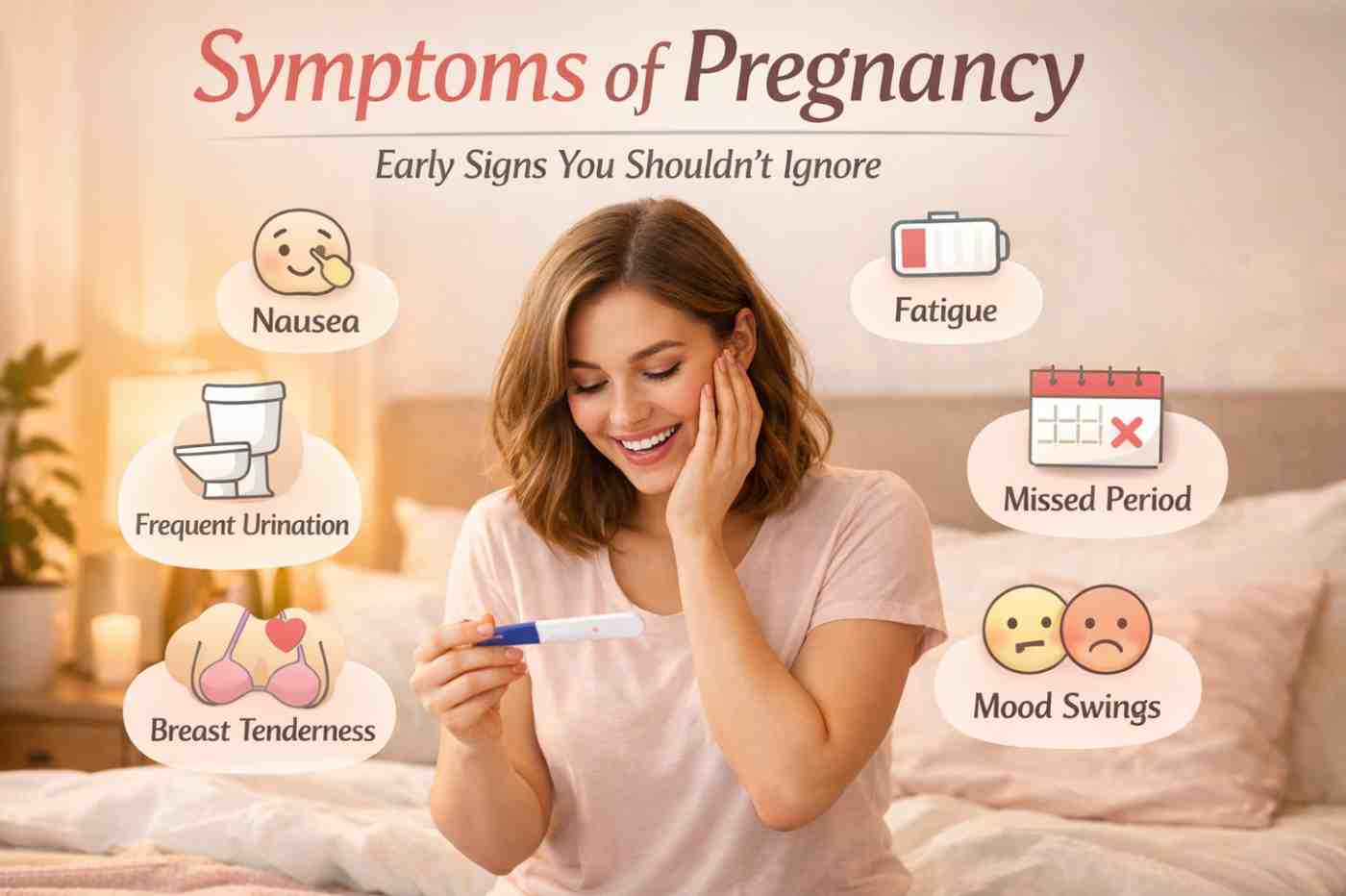

In the first 1-2 weeks following a missing menstruation, pregnancy symptoms typically start to show. Bloating, mood changes, morning sickness, exhaustion, light spotting, sensitive breasts, and frequent urination are typical symptoms. Increased pregnancy hormones are the cause of these alterations. Given that each woman’s biology is unique, the answer to the question of what are the symptoms of pregnancy to expect during pregnancy might also varies; some women may experience severe morning sickness, while others may experience very slight or nonexistent alterations. For confirmation and appropriate prenatal treatment, anyone exhibiting these early symptoms should speak with

What are the Symptoms of Pregnancy ?
The seriousness of morning sickness, the stage of pregnancy, and the onset of pregnancy symptoms are some of the specific factors that affect pregnancy symptoms. Some people could have terrible morning sickness, while others don’t notice any bodily changes at all. Hormonal changes in the fetus that take place quickly after fertilization are the cause of pregnancy symptoms, which include a variety of physical changes. The following signs of pregnancy may be observed by those who are experiencing them.
Commonly Known Symptoms
1. Missing Period
One of the first signs of pregnancy for women who become pregnant is missing their period. This occurs after the sperm and egg have fully fertilized and the body begins to create hCG (human chorionic gonadotropin), a hormone that is produced in the placenta 8–10 days after fertilization to support the growth of the fetus. The result is a temporary lack of menstruation when the body stops ovulation. However, stress, hormonal imbalances, severe dieting, PMS symptoms, or intense exercise can also result in missed periods. A pregnancy test should be performed on anyone who detects pregnancy at this early stage in order to identify the presence of the hCG hormone and confirm the pregnancy.
2. Vomiting, Nausea, and Morning sickness
The majority of pregnant women experience morning sickness, which is one of the first signs and symptoms of pregnancy and typically appears two to eight weeks after conception. Morning sickness usually strikes in the morning, though some people may have symptoms all day. It is characterized by nausea, vomiting, and loss of appetite, along with headaches and dizziness. By the 12th week of pregnancy, morning sickness may have disappeared, only to reappear in the 32nd week prior to delivery. Dehydration, intense exhaustion, and fainting can result from severe morning sickness (Hyperemesis gravidarum), which can also produce nausea and vomiting severe nausea and vomiting sufferers should get medical help right once for an in-depth evaluation. However, depending on each person’s physical condition, only a small percentage of pregnant women have no symptoms at all.
3. Breast alterations, Enlarged breasts, or Painful breasts
Two to three days after becoming pregnant, the first signs and symptoms of pregnancy include breast changes, swollen breasts, and tender breasts. The symptoms, which include breast tingling and a feeling of fullness, will resemble those that occur prior to menstruation. The bra will feel tighter as the breasts swell. In addition, the breast skin hardens, the blood vessels become clearer and the areola—the pigmented skin surrounding the nipple—darkens. Breast changes, enlarged breasts, or sensitive breasts usually happen after pregnancy. Breast change sensations will progressively go away in three months as the body adjusts to the increased hormone activity that comes with pregnancy.
4. Regular Urination
One of the early pregnancy signs that can be identified after a missing menstruation is frequent urination. Pregnancy causes the body to produce more blood and fluid to support the growing fetus, which puts more strain on the kidneys to filter larger amounts of blood and eliminate waste into the urine, increasing the frequency of urination. A deeper color, such as orange or brown, may be seen in the urine. Furthermore, the uterus enlarges with the growth of the fetus, placing pressure on the bladder and requiring more frequent urination, especially at night.
5. Fatigue
One pregnancy symptom that may appear in the first week following fertilization is fatigue. The body creates a lot of hormone during pregnancy in order to support the fetus’s growth. However, the metabolic process can be slowed down by the increased hormone. Pregnant women may feel more exhausted and frequently experience cramping as a result of the body using more energy on the entire digestion process. However, anemia brought on by iron deficiency and pregnancy spotting can result in lethargy and exhaustion during pregnancy.
What are the early Symptoms of Pregnancy ?
Before the embryo develops and fertilization between the egg and sperm takes place, early pregnancy symptoms can be identified two to three weeks after the last ovulation and sexual activity without birth control. At this point, the sperm and egg have fully fertilized one another. The body creates large amounts of the hormone hCG during this period, which results in several bodily changes that are visible in the urine. Accurate results are typically obtained when taking a pregnancy test during this time. The following symptoms are among the early indicators and symptoms of pregnancy:
Light Vaginal Bleeding and Spotting
During the first period, spotting, also known as mild vaginal bleeding, is a symptom of early pregnancy. The embryo implants into the uterine wall following fertilization, causing vaginal bleeding or spotting throughout pregnancy without cramping or pain in the abdomen. However, not all pregnant women have light vaginal bleeding or this spotting. Constant bleeding and cramping in the abdomen might be signs of a miscarriage, bleeding out blood clots from the baby’s placenta (subchorionic hematoma), or an unintended pregnancy (ectopic pregnancy). To assess the symptoms, it is imperative to seek medical assistance.
7. Dizziness and Headache
Early pregnancy symptoms include headache and lightheadedness, which are brought on by the body’s hormonal changes and increased blood flow. Depending on individual physical condition, pregnancy-related headaches and dizziness may manifest more or less unevenly. Stress, lack of sleep, hormonal changes, and caffeine withdrawal are some possible contributing factors. For a comprehensive evaluation, pregnant women who experience chronic headaches should speak with a healthcare provider.
8. Bloating
Pregnant women frequently suffer bloating, which is caused by an increase in the progesterone hormone and interferes with the digestive system’s ability to function. This change causes the stomach to produce more gas, which causes bloating and feelings of fullness. Similar to premenstrual symptoms, symptoms may include bloating, pain, and fullness in the abdomen. There may also be frequent gas passages.
9. Cramping
One of the earliest indications of pregnancy is cramping, which happens one to two weeks after fertilization. Similar to menstruation cramps (dysmenorrhea), there will be pain, acute pain, or cramping in the lower abdomen close to the uterus. This results from the uterus expanding in unison with the baby’s growth and the body producing hormones more quickly to support the growing embryo. Lower abdominal ache or cramping usually lasts two to three days before going away. However, an ectopic pregnancy or other issues may be the source of significant lower abdomen pain or cramping on only one side. To assess the symptoms, it’s critical to get medical help.
10. Food fears and Desires
Pregnant women who experience food aversion, also known as food cravings, may notice changes in their appetite, such as constant hunger, as well as unexplained cravings or an unwillingness to eat certain foods, like sour food or sour fruit, or an unexplained desire to eat strange foods or non-food items, like paper or soil. People may discover that they like or dislike foods that they didn’t previously find appealing or preferred. In order to boost their energy and calcium levels, some pregnant women may also have cravings for items that give them quick energy, like milk or dairy products
11. A powerful Sense of Smell
Due to hormonal changes, one of the earliest indications of pregnancy is an acute sense of smell. Similar to how food tastes, a pregnant woman’s sense of smell will change or become more sensitive to scents quickly. Even if they did not previously display signs like feeling nauseous or having trouble tolerating familiar fragrances, they may be particularly sensitive to certain odors. Additionally, certain scents, such as those of food, perfume, or household items, might cause nausea, vomiting, and dizziness in some pregnant women.
Other Symptoms of Pregnancy
12. Vaginal Discharge
An increase in estrogen in a pregnant woman’s body causes excessive vaginal secretions, moisture, and the buildup of bacteria or vaginal yeast infection in the birth canal, which results in abnormal amounts of vaginal discharge rather than menstruation. This is why vaginal discharge is a sign and symptom of pregnancy. Vaginal discharge during pregnancy is a clear, odorless, hazy, white mucus that doesn’t itch. To rule out any symptoms, people who have irregular vaginal discharge with odor and itching should see a doctor.
13. Constipation
Constipation is a typical pregnancy sign and symptom that is brought on by the same hormone that causes bloating, excessive progesterone, which causes the body to slow down the digestive system’s motility. Additionally, intestinal peristalsis is impacted by the uterus’s extension in response to the baby’s growth, which delays the passage of food or liquids through the digestive tract and causes bloating or constipation. Drinking extra water, eating foods high in fiber, and doing mild exercise like yoga, swimming, or walking can all help reduce constipation during pregnancy. Pregnant women who experience constipation should seek out a laxative medication prescribed by their doctor rather than self-medicating.
14. Breathlessness
Breathlessness is a symptom of pregnancy brought on by the hormone progesterone, which causes the lungs to enlarge so the growing fetus can take in more oxygen. Shortness of breath in pregnant women also accelerates the removal of carbon dioxide from the mother’s and the fetus’s bodies. Furthermore, as pregnancy goes on, the expanding baby may put pressure on the diaphragm, making it difficult for expectant mothers to breathe easily. Deeper breaths are required or the respiratory rate is raised as a result.
15. Mood Shifts
Mood swings are pregnancy symptoms and indicators that are linked to changes in hormone levels in the body. Unpredictable mood swings, emotional rollercoasters, increased irritability, sensitivity, and frequent wrath are all caused by these hormonal changes. On the other hand, the production of chemicals in the brain that include pleasant emotions may cause some pregnant women to feel happy, delighted, and satisfied. However, hormonal imbalances or a lack of pregnancy readiness may cause some pregnant women to feel depressed, anxious, or depressed. People who are depressed should get help from a doctor for a thorough assessment or get a depression test.
16. The “3 PM Wall” of Exhaustion — Why You Feel So Tired
Feeling extremely sleepy or tired in the afternoon during pregnancy is very common. It’s not just normal tiredness — it’s that heavy, can’t-keep-your-eyes-open kind of fatigue.
Here’s what’s really happening:
Your body is doing something amazing — it’s busy building the placenta, which is like the baby’s food and oxygen supply system. This takes a lot of your energy, even if you’re not doing much physically.
At the same time, your body is making more of a hormone called progesterone. This hormone helps protect your pregnancy, but it also makes you feel sleepy and relaxed, almost like nature’s way of telling you to rest.
So when that afternoon crash hits, don’t fight it. It’s your body’s way of saying, “I need a break.”
Try to:
- Take a short nap if possible.
- Drink plenty of water.
- Eat small, healthy snacks to keep your energy steady.
Remember — this tiredness is normal. It’s your body’s way of taking care of both you and your baby.
17. The Waddle: How Your Body Adjusts for Birth
As your pregnancy moves into the later stages, your body starts making a special hormone called relaxin. Its main job is to loosen up your joints and ligaments, especially around your pelvis, so your body can easily make space for your baby and get ready for childbirth.
Because of this loosening, your walk may change — that side-to-side “pregnancy waddle” many moms notice. It’s totally normal! However, this flexibility can sometimes make you feel a bit unsteady or cause back or hip pain.
Think of it like your body gently reshaping itself to support and deliver your baby safely. A little extra care — such as wearing supportive shoes, moving slowly, and doing light stretching — can help you stay comfortable during this beautiful adjustment phase.
The Inner Map: Dreams and “Pregnancy Brain”
During pregnancy, many women notice that their dreams become more vivid, emotional, or even strange. This isn’t your imagination — it’s your body’s chemistry at work. Hormonal changes, lighter sleep, and the emotional ups and downs of pregnancy can all make your dreams feel more real and intense.
You might also experience what people call “pregnancy brain” — moments of forgetfulness or feeling a bit foggy. Don’t worry, it’s completely normal. Research shows that pregnancy actually changes parts of the brain, especially the gray matter, which helps with understanding emotions and bonding.
Take a Pregnancy Test
Missed periods may not always indicate pregnancy because a menstrual cycle (amenorrhea) might be brought on by stress or hormone imbalances, while nausea, dizziness, or vomiting can be brought on by an intestine or stomach illness that needs a doctor’s careful evaluation. Getting a pregnancy test at the hospital under the supervision of a qualified gynecologist or other medical professional is the most reliable method of confirming pregnancy. The pregnancy test can confirm the results with 100% accuracy and can give results in as little as one to two hours. Following confirmation, the expectant mother can start prenatal care to get advice, top tips, and prenatal instructions for managing her health and the health of her unborn child to guarantee a safe and easy pregnancy.