
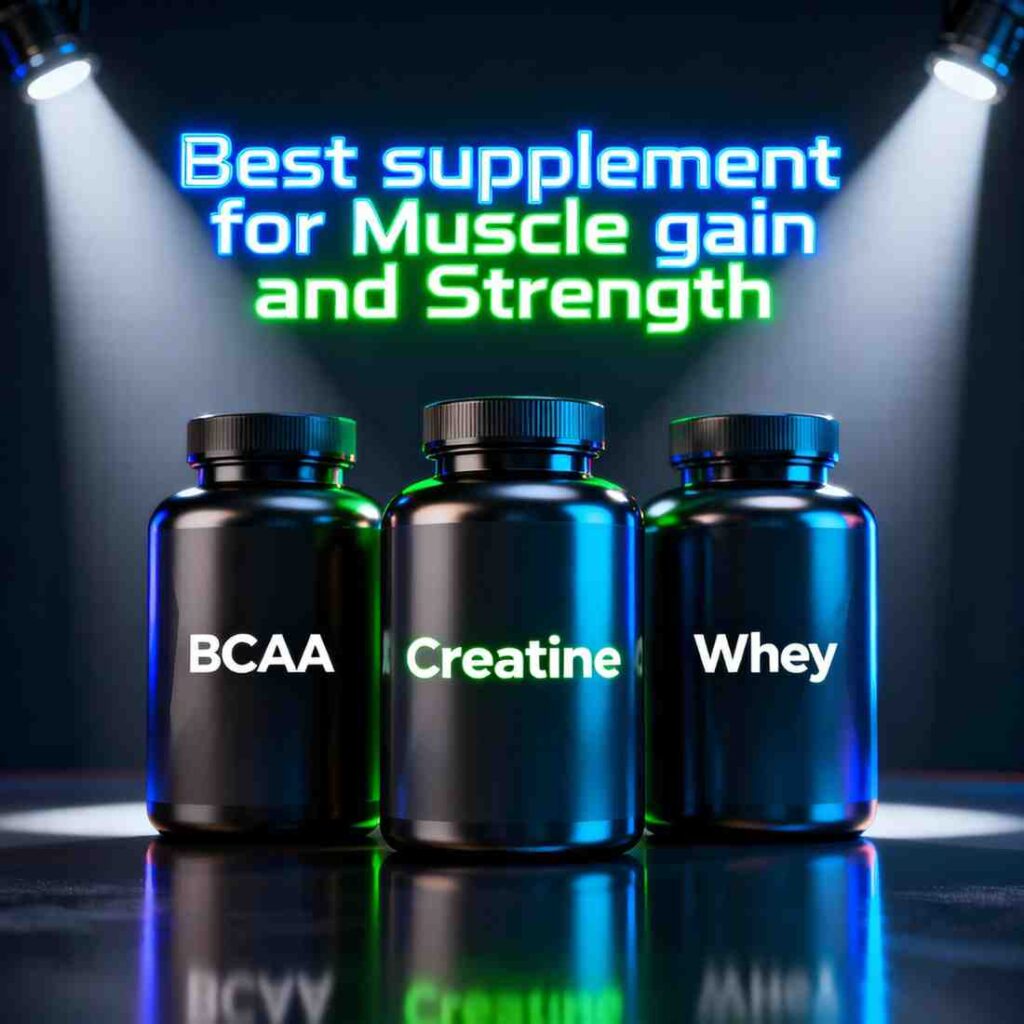
Selecting the Best Supplement for Muscle Gain and Strength can also have a significant impact on your ability to gain muscle and strength. Nowadays, more people are looking for safe and efficient methods to increase performance, enhance recovery and fast muscle growth. To help you achieve your fitness objectives more quickly and with greater confidence, we’ll go over all you need to know about the Best Supplement for Muscle Gain and Strength in this guide.
1. Carnitine
- The liver, kidneys, and brain all naturally produce the chemical carnitine.Energy metabolism involves carnitine. According to research, it can boost power production and oxygen intake during exercise.6.
- Additionally, studies have shown that eating carnitine helps muscles recover after an exercise by repairing the damaged cells that produce pain. Consuming carnitine has also been shown in numerous trials to enhance muscular growth.
- Carnitine can be found in fish, red meats, and some plants. It is also available as a powder supplement, pill, or capsule. For a maximum of one year, dosages vary from one to four grams each day. Fish-like smells, nausea, diarrhea, and stomach cramps are common side effects of carnitine.
2. Creatine
- Your body naturally produces the chemical creatine. It gives your muscles and other tissues energy.
- Muscle creatine content can be raised by up to 40% when taken as a dietary supplement.
- Creatine promotes muscular growth by influencing muscle cells and workout performance. Indeed, numerous studies have demonstrated that creatine increases muscle strength .
- If you’re looking to put on muscle, this is fantastic news. Being stronger enables you to work out more effectively, which eventually results in greater gains in muscle growth.
- Additionally, creatine might raise the amount of water in your muscle cells. Your muscle cells may somewhat enlarge as a result, sending out signals for muscle growth.
- Additionally, this supplement might raise levels of IGF-1 and other hormones linked to muscular building.
- Additionally, some studies suggest that creatine may lessen the rate at which your muscles break down proteins.
- One thing is certain from the numerous studies that have been conducted on the relationship between exercise and creatine supplements: creatine can aid in the growth of muscle mass.
- Additionally, creatine has a good safety record.
3. Supplementing with creatine in females
- Males and females have different creatine properties.
- A 2021 analysis found that women’s creatine holdings are 70% to 80% lower than men’s. Additionally, scientists observe that women metabolize creatine in a different way. Hormone-related changes like menstruation, pregnancy, and menopause can cause a decrease in creatine reserves.
- Supplementing with creatine may therefore be particularly crucial prior to, during, and following these estrogen-related events.
- Researchers find that taking creatine supplements can help women’s muscular size, strength, and exercise performance.
- Creatine may also benefit bone density when used in conjunction with resistance training.
- Supplementing with creatine may also improve mood, sleep, and cognitive function.
- According to researchers, women can use the same dosage techniques that are advised for men.
- However, before beginning any supplementation regimen, it’s usually a good idea to consult a doctor. In order to establish the appropriate dosage and ensure that there are no adverse interactions with any medications you may be taking, they will take into consideration your medical history.
4. Whey Protein
- Whey is a milk protein that has all of the key amino acids needed to build muscle. Compared to other protein products like casein or soy, whey digests more quickly. Leucine, an amino acid that aids in muscle growth, is also frequently included in greater amounts.
- Strength and muscle growth may be enhanced by regularly consuming whey protein together with exercise. Lower dosages or less frequent consumption of whey protein do not appear to improve athletic performance.Dairy products, particularly milk, are the best dietary source of whey protein. Whey protein is also available as supplements in the shape of smoothies, bars, and powders. Up to 30 grams of whey protein have been used safely in studies for a maximum of six months. Each scoop or serving of the majority of whey protein powders contains 20–30 grams of protein. The protein may cause nausea, thirst, diarrhea, and bloating as adverse effects.
- Whey protein should be avoided if you have a known milk allergy. Additionally, the protein might interact with the Parkinson’s disease drug levodopa.
4. BCAA (Branched-Chain Amino Acids)
- The three amino acids leucine, isoleucine, and valine make up branched-chain amino acids (BCAAs). Most protein sources, especially those derived from animals, such as meat, poultry, eggs, , and fish, include them.
- Since they make up about 35% of the amino acids in your muscles, BCAAs are vital for muscle building.
- Although BCAAs are found in almost everyone’s diet on a daily basis, taking BCAA supplements is also fairly common.
- According to a small 2016 study including male resistance-trained volunteers, BCAAs may enhance muscle growth or decrease muscle loss when compared to a placebo.
- But according to a larger 2021 study that included both male and female participants, BCAAs might not help persons who are on a weight loss program maintain their lean body mass.
- It’s possible that taking BCAA supplements can only help you if your diet is lacking in sufficient amounts of high-quality protein.
- Before BCAAs are suggested as the go-to supplement for muscle gain, further research is required, even though they might be helpful if your diet is deficient.
BCAA in Females
- According to a modest 2020 study, 8 weeks of resistance exercise increased the strength and muscular mass of postmenopausal women. Adding BCAA supplements, however, did not result in any notable improvements.
5. Beta-hydroxy beta-methylbutyrate
- When your body breaks down the amino acid leucine, a compound known as beta-hydroxy beta-methylbutyrate (HMB) is created.
- Some of the positive benefits of leucine and protein in the diet are caused by HMB. It might be particularly helpful for reducing the rate at which muscle proteins break down.
- Although your body produces HMB naturally, taking a supplement enables larger amounts and may help your muscles.
- A 2017 analysis of research indicated that consuming 3–6 g of HMB daily can enhance the lean body mass increases from weight training in persons who had never used the supplement before.
- But according to a 2018 assessment, sportsmen and people who have previously lifted weights are unlikely to gain muscle mass with comparable HMB dosages.
- It is possible that HMB works best for those who are just starting to exercise or who are working out harder.
6. Glutamine
- Your muscles and blood contain glutamine, an amino acid produced by BCAAs. The essential amino acid for metabolism and energy synthesis, glutamine is involved in numerous biological functions. Glutamine may improve sports performance and muscular strength and recuperation following exercise.
- There is conflicting evidence regarding glutamine’s ability to enhance athletic and muscular performance.
- Supplements containing glutamine are frequently sold as powders. Up to 45 grams of glutamine per day for six weeks has been the subject of research. Glutamate side effects include headaches, musculoskeletal pain, constipation, and bloating.
7. Weight gainers
- Supplements called weight gainers are made to make it easy for you to consume more protein and calories. People who have trouble growing muscle, even after eating a lot of calories and training weights, usually utilize them.
- Weight gainer supplements differ in their calorie counts, however it’s not unusual for some to have over 1,000 calories per serving.
- Because protein is so crucial for muscular growth, many individuals assume that these calories come from it. But in reality, carbohydrates provide the majority of the calories.
- These high-calorie supplements typically contain 75–300 g of carbohydrates, 20–60 g of protein, and 0–15 g of fat per serving.
- Weight gainer supplements don’t work like magic, even though they can increase your caloric intake.
- According to a tiny 2012 research of adults who were not physically active, eating enough protein will help you gain lean mass, such as muscle, by substantially increasing your calorie intake.
- But according to a 2016 study on male resistance training participants, taking a weight-gainer supplement might not be the best way to increase lean mass.
- All things considered, weight gainers are only advised if you struggle to eat enough food and prefer drinking a weight gainer shake than eating more.
8. Vitamin D — The Unsung Hero for Muscle and Strength
This might surprise you — Vitamin D isn’t just about strong bones. In fact, it works more like a hormone inside your body, influencing everything from your mood to your muscle growth.
What it is:
Vitamin D is a fat-soluble vitamin that most people don’t get enough of — especially in India, where many of us spend our days indoors, use sunscreen, or live in polluted cities that block sunlight. Even though we have plenty of sunshine, Vitamin D deficiency is surprisingly common here.
How it works:
Your muscles actually have special “Vitamin D receptors.” When your body has enough Vitamin D, these receptors help turn on the genes responsible for muscle protein synthesis — the process your body uses to build and repair muscle. On the flip side, low Vitamin D levels are linked with weaker muscles, slower recovery, and reduced power during workouts.
The expert insight:
Think of Vitamin D less as a “supplement” and more as a correction of a deficiency that’s holding your performance back. The best first step is to get a blood test to know your Vitamin D level. If it’s low (which it often is), most people benefit from taking 2000–5000 IU daily, ideally with meals containing healthy fats for better absorption.
Plant Protein vs Whey Protein: Which Is Best?
A complete protein, whey protein is made from milk and has sufficient amounts of each of the nine essential amino acids. Its rapid digestion promotes lean muscle growth and speeds up muscle recovery following exercise. Branched-chain amino acids (BCAAs), particularly leucine, which directly promotes muscle protein synthesis, are also abundant in whey, making it one of the most studied and successful supplements for size and strength.
In contrast, foods like rice, soybeans, soy, and peas are sources of plant protein. This is the greatest option for people who are vegan, lactose intolerant, or would prefer not to consume dairy. While certain single-plant proteins may be deficient in one or two essential amino acids, modern protein blends use multiple sources to generate a complete protein. Plant proteins may be easier to consume and provide more nutrients and fiber. Your diet, allergies, and moral beliefs will ultimately determine which is best for you; both can promote muscle building as long as you get enough protein overall.
Which Supplement is Best for beginners ?
A high-quality whey protein (or plant protein if vegan) is the ideal first supplement for the majority of new exercisers. It directly boosts muscle growth and recuperation, is easy to digest, and helps you reach your daily protein goal.
One of the most studied supplements for strength and performance is creatine monohydrate, which you may want to add once you’ve established a regular training and diet routine.
Which supplement is best for athletes to build muscle ?
Whey protein (or a plant-based protein if you’re vegan) and creatine monohydrate are the finest supplements to start with if you’re an athlete looking to gain muscle. Lean muscle growth, recuperation, and protein intake are all aided by creatine, one of the most studied supplements that has been shown to improve strength, power, and overall training performance. In addition to this, some athletes find that beta-alanine improves endurance and omega-3s improve joint health and inflammation. It is important to keep in mind that supplements are most effective when your nutrition, training, and recovery are already in balance.
Building Your Personal Stack
- For the Absolute Beginner: Focus entirely on your training and whole-food nutrition. Once that’s dialed in, add a quality Protein Powder and Creatine Monohydrate. That’s it.
- For the Intermediate Lifter: Once you’ve plateaued with the basics, consider adding Beta-Alanine to eke out more performance and Vitamin D to ensure your hormonal environment is optimal.
- For the Advanced Athlete or Someone in a Caloric Deficit: HMB can provide that extra edge in recovery and muscle preservation that becomes harder to maintain at elite levels or when dieting.
When to Take Creatine or Protein?
To promote muscle growth and healing, protein is best consumed right before or right after exercise. To satisfy your daily requirements, you can also divide your protein intake throughout the day. Although creatine can be taken at any time of day, many people choose to take it with protein or carbohydrates after exercising training in order to aid in absorption and restore muscle reserves. The most crucial factor is consistency; daily administration of the appropriate dosage is more crucial than precise time.
Conclusion :
When a muscle gains weight without changing the amount of fibers it contains, this is known as muscle growth. Certain supplements, such creatine, whey protein, and glutamine, may be of interest to you in order to promote muscle building. If you would want more information on supplements for muscle building, speak with your physician.