When optimizing your diet for both cost and nutrition, protein sources fall into two main categories:
- Animal Protein: Complete sources providing all nine essential amino acids, such as eggs, canned tuna, cottage cheese, and chicken.
- Plant-Based Protein: Inexpensive options high in fiber and minerals, including dried lentils, beans, legumes, tofu, and peanut butter.
Cost-per-Gram Comparison of Protein Sources
| Food Source | Serving Size | Protein (g) | Avg. Cost / Serving |
|---|---|---|---|
| Dried Lentils | ½ cup (dry) | 24g | ₹20 |
| Eggs | 2 whole | 12g | ₹15 |
| Canned Tuna | 1 can | 30g | ₹120 |
| Chicken Thighs | 4 oz | 24g | ₹60 |
| Cottage Cheese | ½ cup | 13g | ₹50 |
| Firm Tofu | 3 oz | 10g | ₹35 |
| Chickpeas | 1 cup (cooked) | 15g | ₹25 |
| Kidney Beans (Rajma) | 1 cup (cooked) | 15g | ₹30 |
| Soybeans | 1 cup (cooked) | 28g | ₹35 |
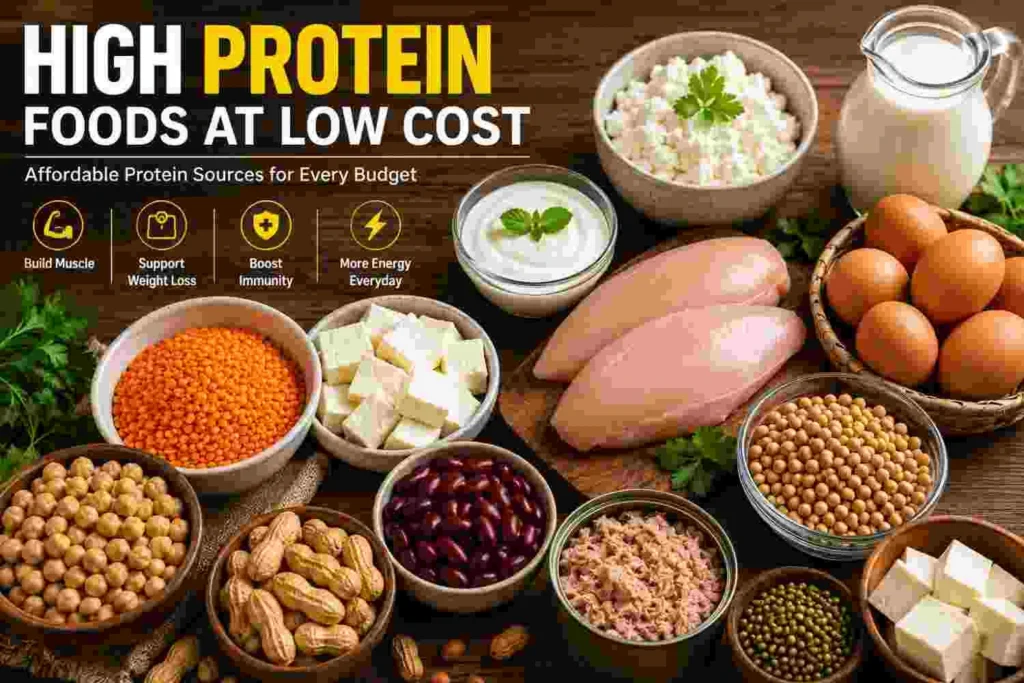
Top Low-Cost High-Protein Animal Sources
Animal proteins are complete proteins that provide maximum bioavailability. Here are the top cheap high protein foods from animal sources:
(1). Eggs
A large egg provides about 6g of protein, along with nutrients such as vitamin B12, choline, and selenium. They are easy to prepare and work well for breakfast, snacks, or meal prep.
- Protein Content: ~6g per large egg
- Estimated Cost: $0.20–$0.35 per serving
- Best Uses: Hard-boiled snacks, scrambled, or baked into egg muffins.
- Key Insight: Eggs as protein remain an unbeatable standard for low-cost, high-yield biological value.
(2). Canned Tuna
Canned tuna is a convenient high-protein, low-cost food that requires little preparation. One can provides around 30g of protein, making it an efficient choice for increasing your daily protein intake without spending much.
- Protein Content: ~30g per can
- Estimated Cost: $1.00–$1.50 per can
- Best Uses: Tuna salads, pasta bakes, or wrapped in whole-wheat tortillas.
- Key Insight: Shelf-stable canned tuna delivers one of the highest protein-to-calorie ratios among affordable protein sources.
(3). Cottage Cheese
½ cup of cottage cheese provides about 12–14g of protein, along with calcium, phosphorus, vitamin B12, and other essential nutrients. It is a filling option for muscle recovery and weight management. You can enjoy it with fruits, vegetables, or whole-grain foods as a protein-rich snack or breakfast.
- Protein Content: ~12–14g per 1/2 cup
- Estimated Cost: $0.50–$0.75 per serving
- Best Uses: Blended into sauces, topped with fruit, or mixed into pancake batter.
- Key Insight: Packed with slow-digesting casein protein, cottage cheese is ideal for evening meals and sustained recovery.
(4). Chicken Thighs & Breasts
A 4 oz serving of chicken thighs or breasts provides about 24–31g of protein, along with vitamin B6, niacin, selenium, phosphorus, and other essential nutrients. Chicken is a versatile, high-quality protein source that can support muscle growth, recovery, and weight management.
- Protein Content: ~24–31g per 4 oz serving
- Estimated Cost: $0.75–$1.25 per serving
- Best Uses: Batch-roasted, grilled, or shredded into soups and stir-fries.
- Key Insight: Opting for bone-in chicken thighs over chicken breast often cuts your meat costs by 30–40% without sacrificing total protein content.
(5). Greek Yogurt (Hung Curd)
A serving of Greek yogurt provides about 10g of protein, along with calcium, phosphorus, and vitamin B12. Its creamy texture and high protein content make it a convenient choice for muscle recovery, weight management, and healthy snacks. Pair it with fruit, nuts, seeds, or whole-grain foods for a balanced meal.
- Protein Content: ~10g per serving
- Estimated Cost: $0.75–$1.25 per serving
- Best Uses: Breakfast bowls, smoothies, dips, or paired with fruits and nuts.
- Key Insight: Greek yogurt is a convenient high-protein dairy food that can help increase daily protein intake while providing calcium and other essential nutrients.
(6). Milk
One glass of milk provides about 8g of protein, along with calcium, phosphorus, vitamin B12, and other important nutrients. Milk is an affordable and convenient protein-rich food that can be included in breakfast, smoothies, or post-workout meals.
- Protein Content: ~8g per glass
- Estimated Cost: $0.30–$0.60 per serving
- Best Uses: Smoothies, oatmeal, breakfast meals, or enjoyed as a drink.
- Key Insight: Milk provides both casein and whey protein, offering a combination of slower- and faster-digesting proteins that can support muscle recovery and daily protein needs.
(7). Paneer
A 100g serving of paneer provides about 18g of protein, along with calcium, phosphorus, and other essential nutrients. This popular Indian dairy food is a convenient high-protein vegetarian food that can support muscle growth, recovery, and overall nutrition. Enjoy it grilled, in curries, or added to salads and wraps.
- Protein Content: ~18g per 100g
- Estimated Cost: $1.00–$1.50 per 100g serving
- Best Uses: Grilled, added to curries, salads, wraps, or paneer bhurji.
- Key Insight: Paneer provides high-quality dairy protein and is a versatile option for increasing protein intake in a vegetarian diet.
(8). Turkey Breast
A 100g serving of turkey breast provides about 29g of protein, along with niacin, vitamin B6, selenium, and phosphorus.
- Protein Content: ~29g per 100g
- Estimated Cost: $1.50–$2.50 per 100g serving
- Best Uses: Grilled, roasted, sliced into sandwiches, or added to salads and wraps.
- Key Insight: Turkey breast is a lean animal protein that provides a high amount of protein with relatively little fat, making it useful for muscle-focused and weight-management diets.
Best Budget-Friendly Plant-Based Protein Sources
(1). Lentils (Dal)
One cup of cooked lentils (dal) provides about 18g of protein, along with fiber, iron, folate, and other essential nutrients. Lentils are an affordable plant-based protein source and a staple in many Indian diets.
- Protein Content: ~18g per cup
- Estimated Cost: ₹15–₹30 per serving
- Best Uses: Dal curry, soups, salads, or served with rice and roti.
- Key Insight: Lentils are a budget-friendly protein food that combines plant protein with fiber, making them a filling option for a balanced diet.
(2). Chickpeas (Chana)
One cup of cooked chickpeas (chana) provides about 15g of protein, plus fiber, iron, folate, and magnesium. They are a versatile high-protein vegetarian food that can support fullness and healthy meal planning.
- Protein Content: ~15g per cup
- Estimated Cost: ₹15–₹30 per serving
- Best Uses: Chana curry, hummus, salads, or roasted chickpea snacks.
- Key Insight: Chickpeas provide plant-based protein and dietary fiber, making them a practical option for affordable, filling meals.
(3). Kidney Beans (Rajma)
One cup of cooked kidney beans (rajma) provides about 15g of protein, along with fiber, iron, potassium, and folate. Rajma is a popular vegetarian protein source and works well as part of a balanced meal.
- Protein Content: ~15g per cup
- Estimated Cost: ₹20–₹35 per serving
- Best Uses: Rajma curry, rajma rice bowls, salads, or wraps.
- Key Insight: Pairing kidney beans with rice or another grain can complement their amino acid profile and create a more balanced protein meal.
(4). Black-Eyed Peas (Lobia)
One cup of cooked black-eyed peas (lobia) provides about 13g of protein, along with fiber, folate, iron, and potassium. This affordable legume is an easy way to add more plant protein to everyday meals.
- Protein Content: ~13g per cup
- Estimated Cost: ₹15–₹30 per serving
- Best Uses: Lobia curry, salads, soups, or rice dishes.
- Key Insight: Lobia is a nutritious, budget-friendly legume that provides both protein and fiber for a satisfying meal.
(5). Soybeans
One cup of cooked soybeans provides about 28g of protein, making them one of the richest whole-food plant protein sources. They also provide fiber, iron, magnesium, and healthy fats.
- Protein Content: ~28g per cup
- Estimated Cost: ₹20–₹40 per serving
- Best Uses: Soybean curries, salads, roasted soybeans, or homemade soy foods.
- Key Insight: Soybeans contain all nine essential amino acids, making soy protein a high-quality plant-based protein option.
(6). Tofu
A 100g serving of tofu provides about 10g of protein, along with calcium, iron, and other nutrients depending on the type. Tofu is a versatile vegan protein source and an excellent alternative to dairy-based protein foods.
- Protein Content: ~10g per 100g
- Estimated Cost: ₹30–₹60 per 100g
- Best Uses: Stir-fries, tofu bhurji, curries, salads, or grilled dishes.
- Key Insight: Tofu is a convenient soy-based protein that can help increase daily protein intake without relying on meat or dairy.
(7). Tempeh
A 100g serving of tempeh provides about 19g of protein, along with fiber, iron, and other nutrients. Because tempeh is made from fermented soybeans, it has a firm texture and a distinctive nutty flavor.
- Protein Content: ~19g per 100g
- Estimated Cost: ₹80–₹150 per 100g
- Best Uses: Tempeh tikka, stir-fries, sandwiches, salads, or grain bowls.
- Key Insight: Tempeh is a protein-rich fermented food that offers a substantial amount of plant protein in a compact serving.
(8). Seitan
A 100g serving of seitan provides about 21g of protein, making it one of the most concentrated vegan protein foods. Made primarily from wheat gluten, seitan has a chewy, meat-like texture.
- Protein Content: ~21g per 100g
- Estimated Cost: ₹80–₹150 per 100g
- Best Uses: Stir-fries, sandwiches, wraps, curries, or vegan meat alternatives.
- Key Insight: Seitan is a high-protein vegan food that can provide substantial protein with relatively few calories.
(9). Amaranth (Rajgira)
One cup of cooked amaranth (rajgira) provides about 9g of protein, along with fiber, magnesium, iron, and phosphorus. This naturally gluten-free grain-like food can add variety to a plant-based diet.
- Protein Content: ~9g per cup
- Estimated Cost: ₹20–₹40 per serving
- Best Uses: Porridge, rajgira rotis, grain bowls, or breakfast recipes.
- Key Insight: Amaranth is a nutrient-dense plant food that provides protein along with minerals and dietary fiber.
(10). Quinoa
One cup of cooked quinoa provides about 8g of protein, plus fiber, magnesium, iron, and other nutrients. It is one of the better-known complete plant protein sources because it contains all nine essential amino acids.
- Protein Content: ~8g per cup
- Estimated Cost: ₹40–₹80 per serving
- Best Uses: Salads, grain bowls, breakfast porridge, or as a rice alternative.
- Key Insight: Quinoa is a versatile complete protein food that can be especially useful in vegetarian and vegan meal plans.
(11). Buckwheat (Kuttu)
One cup of cooked buckwheat (kuttu) provides about 6g of protein, along with fiber, magnesium, and other nutrients. Despite its name, buckwheat is naturally gluten-free and is not a type of wheat.
- Protein Content: ~6g per cup
- Estimated Cost: ₹20–₹40 per serving
- Best Uses: Kuttu rotis, pancakes, porridge, dosas, or grain bowls.
- Key Insight: Buckwheat is a nutritious gluten-free food that can add plant protein and fiber to a balanced diet.
(12). Chia Seeds
Two tablespoons of chia seeds provide about 5g of protein, along with fiber, omega-3 fatty acids, calcium, and magnesium. Their small size makes them easy to add to meals and snacks.
- Protein Content: ~5g per 2 tbsp
- Estimated Cost: ₹15–₹30 per serving
- Best Uses: Chia pudding, smoothies, oatmeal, yogurt, or overnight oats.
- Key Insight: Chia seeds combine plant protein, fiber, and healthy fats, making them a nutrient-dense addition to breakfast and snacks.
(13). Flaxseeds
Two tablespoons of flaxseeds provide about 5g of protein, along with fiber, omega-3 fatty acids, and other beneficial plant compounds. Ground flaxseeds are particularly easy to incorporate into everyday meals.
- Protein Content: ~5g per 2 tbsp
- Estimated Cost: ₹5–₹15 per serving
- Best Uses: Smoothies, oatmeal, yogurt, rotis, or homemade energy bites.
- Key Insight: Flaxseeds provide a combination of plant protein, fiber, and ALA omega-3 fats, supporting a nutrient-rich diet.
(14). Hemp Seeds
Three tablespoons of hemp seeds provide about 10g of protein, along with healthy fats, magnesium, iron, and other essential nutrients. They have a mild, nutty flavor and require no cooking.
- Protein Content: ~10g per 3 tbsp
- Estimated Cost: ₹50–₹100 per serving
- Best Uses: Smoothies, salads, oatmeal, yogurt, or sprinkled over meals.
- Key Insight: Hemp seeds are a convenient plant protein source that provides all nine essential amino acids.
(15). Pumpkin Seeds
Two tablespoons of pumpkin seeds provide about 7g of protein, along with magnesium, zinc, iron, and healthy fats. They make a convenient snack when you want to add extra protein and nutrients to your diet.
- Protein Content: ~7g per 2 tbsp
- Estimated Cost: ₹20–₹40 per serving
- Best Uses: Snacks, oatmeal, salads, smoothies, or roasted seed mixes.
- Key Insight: Pumpkin seeds provide plant protein along with minerals such as magnesium and zinc, making them a nutrient-dense snack option.
(16). Almonds
A small handful of almonds provides about 6g of protein, along with vitamin E, magnesium, fiber, and healthy unsaturated fats. They are convenient for snacking but relatively calorie-dense.
- Protein Content: ~6g per handful
- Estimated Cost: ₹20–₹40 per serving
- Best Uses: Snacks, oatmeal, smoothies, yogurt, or almond butter.
- Key Insight: Almonds provide protein and healthy fats, but portion control is important when managing calorie intake.
(17). Peanuts
A 30g serving of peanuts provides about 9g of protein, along with healthy fats, fiber, magnesium, and other nutrients. They are one of the most affordable ways to add plant protein to your diet.
- Protein Content: ~9g per 30g
- Estimated Cost: ₹8–₹15 per serving
- Best Uses: Roasted snacks, peanut butter, chutney, smoothies, or homemade protein snacks.
- Key Insight: Peanuts are a budget-friendly plant protein food with a good combination of protein, healthy fats, and calories, making them useful for affordable high-protein diets.
Affordable Protein Foods Under ₹50
If you’re looking for protein food under 50 rupees, several everyday options can fit easily into a budget-friendly diet. Lentils, chickpeas, rajma, lobia, soybeans, peanuts, eggs, tofu, and milk can provide a useful amount of protein for around ₹50 or less per serving, depending on the brand and local prices.
For example, peanuts and lentils are among the most economical choices, while eggs, chickpeas, soybeans, tofu, and cottage cheese can also provide affordable protein when purchased in suitable portions. Choosing these foods regularly can make it easier to increase your daily protein intake without spending heavily on expensive supplements.
Are Plant-Based Protein Sources Cheaper Than Animal Protein?
Yes, in most cases plant-based protein sources like lentils, beans, and tofu are cheaper per gram than animal protein sources such as beef or specialty cheeses. However, some animal proteins like eggs and chicken thighs remain highly competitive.
The tradeoff is protein completeness. Animal proteins are complete on their own, while some plant sources need pairing (like rice and beans) to deliver all essential amino acids.
Sample 7-Day Low-Cost High-Protein Meal Plan
| Day | Breakfast | Lunch | Dinner |
|---|---|---|---|
| Mon | Eggs + oats | Lentil soup | Chicken thighs + rice |
| Tue | Greek yogurt | Tuna salad | Tofu stir-fry |
| Wed | Peanut butter toast | Chickpea salad | Ground turkey chili |
| Thu | Cottage cheese + fruit | Bean burrito | Sardines + veggies |
| Fri | Eggs + toast | Lentil curry | Chicken + beans |
| Sat | Protein smoothie | Tuna wrap | Tofu curry |
| Sun | Yogurt bowl | Leftover prep | Chicken soup |
Strategies for Buying High Protein Foods Low Cost
Getting protein on a budget requires strategic shopping habits. Applying these tactical principles helps ensure you consistently get high protein foods at low cost:
- Master Bulk Buying: Purchase dried lentils, beans, rice, and oats in large quantities from bulk bins to reduce packaging overhead.
- Leverage Weekly Meal Prep: Dedicate one afternoon to weekly meal prep. Cooking large batches minimizes food waste and prevents expensive takeout impulse buys.
- Embrace Frozen Meats & Seafood: Frozen chicken breasts, ground turkey, and fish fillets are often 20–30% cheaper than their fresh counter equivalents.
- Shop Seasonal & Sales: Track sales cycles at local grocery stores and freeze discounted meats near their sell-by date for long-term use.
Why Should You Include Multiple Protein Sources in Your Diet?
Relying on a single protein source limits nutrient intake, reduces gut microbiome diversity, and risks essential amino acid deficiencies. Incorporating diverse plant and animal proteins optimizes muscle synthesis, balances digestion, and supports long-term metabolic health.
Key Reasons to Diversify Your Protein Intake
- Complete Amino Acid Profile: Combining different sources ensures you get all nine essential amino acids—which the body cannot produce on its own—preventing biological deficiencies.
- Enhanced Micronutrient Delivery: Animal proteins deliver bioavailable iron and vitamin B12, while plant-based proteins supply critical magnesium, potassium, and folate.
- Improved Gut Health & Fiber: Plant proteins like lentils, beans, and seeds add dietary fiber and prebiotics, nourishing beneficial gut microbiota and aiding digestion.
- Lower Risk of Chronic Disease: Replacing high amounts of processed red meats with fish, poultry, or plant proteins reduces the intake of saturated fats, lowering the risk of cardiovascular disease and type 2 diabetes.
- Optimized Digestion Speed: Mixing fast-digesting proteins (like whey or egg whites) with slow-digesting options (like casein or legumes) provides a sustained release of amino acids for continuous muscle recovery.
- Reduced Heavy Metal Exposure: Rotating seafood, meat, and plant options minimizes the cumulative risk of exposure to specific contaminants, such as mercury found in large marine fish.
How to Get More Nutrition From the Foods You Eat
Getting more nutrition from protein-rich foods is not just about increasing your protein intake. How you prepare, combine, and rotate protein sources can help you build more balanced and nutrient-dense meals.
- Soak lentils, chickpeas, rajma, and lobia before cooking to improve their texture and digestion. Combining dal with rice, rajma with rice, or chickpeas with roti provides complementary amino acids, making these meals a practical way to improve the overall quality of plant protein.
- Soybeans, tofu, tempeh, quinoa, amaranth, and hemp seeds can also add high-quality plant protein and essential nutrients to your diet.
- For animal-based protein, rotate foods such as eggs, chicken breast, chicken thighs, turkey breast, canned tuna, shrimp, lean beef, pork tenderloin, paneer, cottage cheese, Greek yogurt, and milk.
- These foods provide complete or high-quality protein along with nutrients such as iron, zinc, calcium, vitamin B12, selenium, and phosphorus.
- You can also improve a meal’s nutritional value by pairing protein with vegetables, fruits, whole grains, legumes, nuts, and seeds. For example, try Greek yogurt with chia seeds and fruit, chicken with vegetables and brown rice, or tofu with quinoa and mixed vegetables.
Common Myths About Vegetarian Protein Foods
There are several common misconceptions about vegetarian protein foods, especially the idea that plant-based diets cannot provide enough protein.
- Myth 1: Plant protein is not high-quality protein.
Many plant foods contain protein, and some, such as soybeans, tofu, tempeh, quinoa, and hemp seeds, provide all or most essential amino acids in useful amounts. - Myth 2: Vegetarians need meat to build muscle.
Muscle growth depends mainly on total protein intake, essential amino acids, resistance training, calories, and recovery. Vegetarian protein sources can contribute to muscle growth when consumed in sufficient amounts. - Myth 3: You must combine proteins at every meal.
You do not necessarily need to combine complementary proteins in every meal. Eating a variety of protein-rich plant foods throughout the day can provide the essential amino acids your body needs. - Myth 4: Vegetarian protein foods are always low in protein.
Foods such as soybeans, seitan, tempeh, lentils, chickpeas, and kidney beans can provide substantial amounts of protein.
Conclusion
Finding high protein foods at low cost is easier with the right choices. Foods such as lentils, chickpeas, soybeans, peanuts, eggs, milk, paneer, cottage cheese, chicken, and canned tuna can help you meet your protein needs without spending too much.
Include a variety of plant-based and animal-based protein sources throughout the week for better nutrition. Whether your goal is muscle growth, weight loss, or overall health, a balanced diet built around affordable protein-rich foods can help you reach your goals without relying on expensive supplements.
Frequently Asked Questions
- How can you find high protein foods at low cost to build muscle on a budget?Combining dried lentils, eggs, tofu, chicken thighs, and peanuts can make it easier to meet your daily protein needs while keeping meals affordable.
- Are plant-based proteins as effective as meat for muscle building?Yes, plant-based proteins build muscle just as effectively as meat when you consume adequate total protein and pair complementary sources.
- Is canned tuna safe and cost-effective to eat daily?Canned tuna is highly cost-effective, providing 30g of lean protein per can for around $1.25, but it should not be eaten daily due to potential mercury buildup.
- How do I lower the cost of buying meat for high protein diets?You can cut meat costs by 30–50% by choosing bone-in chicken thighs instead of boneless breasts, buying family-sized bulk packs, and buying frozen poultry.
- Which high protein foods at low cost offer the highest protein density?Soya chunks, canned tuna, and chicken breasts offer the highest protein density among budget-friendly foods.
- Are canned beans or dried beans a better choice for high protein foods at low cost?Dried beans are significantly cheaper per serving, costing up to 50% less per gram of protein than canned beans.
- What dairy products provide high protein at a low cost?Cottage cheese and plain store-brand Greek yogurt tubs are the most cost-effective high-protein dairy options.
- Is whey protein powder cheaper than whole food protein sources?Bulk whey protein powder (₹1.70–₹2.60 per gram of protein) is cheaper than most fresh meats, but slightly more expensive than dried lentils and soya chunks.
Author: I’m Nikhil, founder of FitNova360. I have completed nutrition certification courses through Coursera and am passionate about sharing evidence-based information on nutrition, fitness, and healthy living. My goal is to make complex health topics simple and practical, helping readers make informed choices and build healthier lifestyles.