- A 28g serving (about 23 almonds) provides around 6g of protein.
- Rich in fiber, healthy fats, magnesium, and vitamin E.
- Supports muscle recovery, lasting energy, and overall health.
- Find the best time to eat almonds for your fitness goals.
Understanding the average protein content of almonds also helps you compare them against other everyday snacks. Beyond just protein, the nutritional value of almonds comes from a well-rounded macronutrient breakdown — a mix of protein, healthy fats, and fiber-rich carbs that work together to keep you full and energized.
Almond Nutrition Facts
| Serving Size | Protein | Calories |
|---|---|---|
| 1 Almond | 0.26 g | 7 kcal |
| 5 Almonds | 1.3 g | 36 kcal |
| 10 Almonds | 2.6 g | 71 kcal |
| 11 Almonds | 2.9 g | 78 kcal |
| 23 Almonds (28g) | 6 g | 164 kcal |
| 30g | 6.4 g | 176 kcal |
| 50g | 10.6 g | 293 kcal |
| 100g | 21 g | 579 kcal |
| ¼ Cup (35g) | 7 g | 205 kcal |
| ½ Cup (70g) | 14 g | 410 kcal |
| 1 Cup (140g) | 30 g | 820 kcal |
Vitamins and Minerals in Almonds (28 Grams)
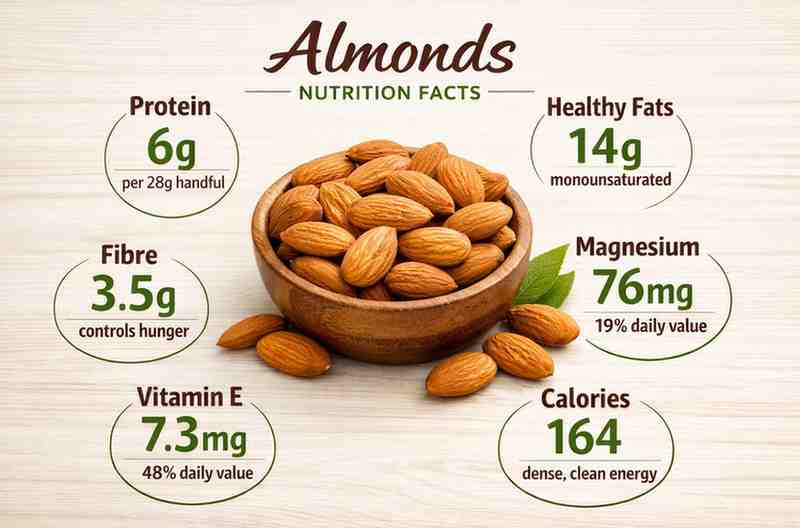
A 28-gram (1-ounce) serving of almonds is packed with essential vitamins and minerals, including vitamin E, magnesium, calcium, potassium, and iron.
(1). Arginine
The protein in almonds provides important amino acids, including arginine, which your body uses to produce nitric oxide. Interestingly, the high almonds arginine lysine ratio (roughly 4.3:1, with about 0.69g of arginine to 0.16g of lysine per 28g serving) makes them exceptionally rich in L-arginine relative to L-lysine.
Nitric oxide helps relax and widen blood vessels, improving blood flow so oxygen and nutrients can reach your muscles more efficiently during exercise. Combined with their protein, healthy fats, and magnesium, almonds can support muscle performance, muscle recovery, and overall workout nutrition.
(2). Almond fat content
Almonds contain 14 grams of fat per 28g serving, but over 90% of it is unsaturated — the same type of healthy fat found in olive oil and avocados.
Not all fat behaves the same way in your body. This mix of monounsaturated and polyunsaturated fats is why almonds don’t work like typical high-fat snacks.
Clinical studies in journals like the European Journal of Clinical Nutrition show that regular almond consumption does not lead to weight gain. Instead, the combination of healthy fats, fiber, and protein helps regulate appetite and control overall calorie intake for the rest of the day.
(3). Fiber
Almonds are also an excellent source of dietary fiber, providing about 3.5 grams per ounce (28 grams). They contain both soluble fiber and insoluble fiber, which work together to support digestive health and overall wellness.
Insoluble fiber helps food move smoothly through the digestive system, while soluble fiber may help lower LDL (bad) cholesterol, support healthy blood sugar levels, and improve heart health.
The fiber in almonds also helps you stay full for longer, making them a satisfying snack that can support weight management and reduce unnecessary cravings.
(4). Magnesium
Almonds are a good source of magnesium, an essential mineral that supports muscle function and exercise performance. Magnesium helps muscles contract and relax properly, which may reduce muscle cramps and support muscle recovery after exercise.
Research suggests that magnesium deficiency can negatively affect physical performance, energy production, and overall muscle function. Since many people do not get enough magnesium through their diet, adding magnesium-rich foods like almonds can help support an active lifestyle.
(5). Vitamin E
Almonds are one of the best natural sources of vitamin E, a powerful antioxidant that helps protect your cells from oxidative stress caused by exercise. During intense workouts, your body produces free radicals that can contribute to muscle damage.
Vitamin E helps protect muscle cells, supports muscle recovery, and promotes overall health. Because almonds naturally contain both vitamin E and healthy fats, your body can absorb this nutrient efficiently as part of a balanced diet.
(6). Calories
A 28g serving of almonds contains 164 calories, but your body may absorb closer to 129 of them, thanks to reduced fat digestibility.*
Not all calories behave the same way. The source, nutrient density, and hormonal response matter far more than the raw number. A 2022 study in Frontiers in Nutrition confirmed that athletes eating almonds daily showed significantly better energy, faster recovery, and reduced inflammation — without any meaningful change in body weight.
(7). Calcium
A 28g handful of almonds quietly delivers 76 mg of plant-based calcium. For an athlete jumping, running, or lifting heavy, calcium isn’t just about bone density—it is a critical element required for basic muscle contractions.
(8). Potassium
With 208 mg of potassium per ounce, almonds help maintain the body’s fluid balance and support proper muscle function. When you exercise and sweat, your body loses important minerals. Potassium works together with magnesium to support healthy nerve function and help your muscles contract and relax properly, which may reduce the risk of muscle cramps during workouts.
(9). Iron
With 1.05 mg of iron per serving, almonds support the production of hemoglobin—the protein in red blood cells that carries oxygen from your lungs to your muscles. Better oxygen delivery can help support endurance and may reduce fatigue during intense exercise.
(10). Sugar
A standard 28-gram serving contains a mere 1.2 grams of natural carbohydrates as sugar—and absolutely zero added sugars.Because almonds contain very little natural sugar and are rich in fiber and healthy fats, your body digests them more slowly. This helps provide steady energy throughout the day instead of causing the rapid rise and fall in blood sugar levels that often happens after eating sugary or highly processed snacks.
Along with sugar, it’s worth looking at the total carbohydrates in almonds. A 28g serving contains around 6g of total carbs, most of which comes from fiber rather than starch or sugar — which is why almonds don’t spike blood sugar the way other carb-heavy snacks do.
Almond amino acid profile
| Amino Acid | Amount (Per 28g) | Why It Matters |
|---|---|---|
| Arginine | 0.69 g | Supports nitric oxide production and healthy blood flow. |
| Glutamic Acid | 1.74 g | Plays a key role in muscle metabolism and recovery. |
| Aspartic Acid | 0.70 g | Helps support energy production during exercise. |
| Lysine | 0.16 g | Present in smaller amounts, making almonds an incomplete protein. |
| Methionine | 0.04 g | Essential for tissue growth and repair. |
Is Almond Protein a Complete Protein?
Almonds are a good source of plant protein, but they are not a complete protein. While almonds contain all nine essential amino acids, they are relatively low in lysine, which means they do not provide these amino acids in ideal proportions for optimal muscle protein synthesis.
- However, almonds are naturally rich in arginine, glutamic acid, and branched-chain amino acids (BCAAs) that support muscle recovery, blood flow, and overall workout nutrition.
- Pairing almonds with foods such as beans, lentils, soy foods, dairy, pumpkin seeds, or chia seeds creates a more balanced amino acid profile and helps meet your daily protein needs.
This makes almonds a solid but incomplete plant-based protein. If you’re looking for complete protein sources, pairing almonds with quinoa, soy, or dairy fills the amino acid gap. This combination approach is especially useful as one of the reliable protein sources for vegans, since plant foods rarely offer a complete amino acid profile on their own.
Almonds vs Other Nuts Protein Content
When comparing protein content in nuts, almonds consistently rank near the top, just behind peanuts.
| Nut | Protein (Per 28g) | Calories (Per 28g) |
|---|---|---|
| Peanuts | 7.3 g | 161 kcal |
| Almonds | 6 g | 164 kcal |
| Pistachios | 5.8 g | 159 kcal |
| Cashews | 5.2 g | 157 kcal |
| Walnuts | 4.3 g | 185 kcal |
| Hazelnuts | 4.2 g | 178 kcal |
| Brazil Nuts | 4.1 g | 187 kcal |
| Pecans | 2.6 g | 196 kcal |
| Macadamia Nuts | 2.2 g | 204 kcal |
Tips: If you’re wondering whether almonds or peanuts are the better choice, our complete comparison guide covers everything you need to know.
When is the Best Time to Eat Almonds for Muscle Recovery?
Knowing the almond protein content per 28 grams is only half the battle—timing is what unlocks the real results. While you can enjoy a handful of almonds at any time of the day, certain windows maximize their fitness benefits:
- The 3 PM Craving Destroyer: This is when cortisol spikes and energy crashes hit hardest. Snacking on 23 almonds stabilizes your blood sugar and keeps satiety high, preventing mindless snacking on processed office junk food.
- Pre-Workout Energy Boost (30–45 Minutes Before): Eating a small handful of almonds before training provides a steady stream of healthy fats and sustained energy without making you feel sluggish or heavy.
- After you exercise, have some almonds with either a banana or some rice. Protein will start repairing the muscles, and carbohydrates will help in replacing the glycogen that was used up during your training session. This is a straightforward, cost-effective approach based on the same science that underlies pricey post-exercise products.
New Clinical Insights on Nuts and Metabolic Health
Metabolic health studies and dietary guidelines emphasize that the physical structure of almonds actually prevents your body from absorbing all of their baseline calories.
The natural cell walls in almonds hold onto some of the fat as they pass through your digestive system. As a result, your body may absorb fewer calories than expected.This means your body may actually absorb up to 20% fewer calories than what is listed on the back of the nutrition label! Furthermore, public health discussions are increasingly focusing on how shifting snack habits from ultra-processed carbohydrates to whole foods like almonds actively reduces visceral fat and stabilizes insulin spikes-making it a helpful tool for managing body weight and body fat over time.
Why Consistent Nutrition Matters — and How Almonds Can Help
Many consume most of their daily requirement for proteins within one or two major meals and practically none between those intervals. While a single missed window won’t instantly break down muscle tissue, keeping your body fueled with small, nutrient-dense inputs keeps your satiety high and prevents the severe energy crashes that lead to overeating later.
Almonds fit into the gaps that no meal-prep plan ever quite covers. They require no cooking, no refrigeration, no preparation whatsoever. You put them in your bag on Monday morning, and they’re there every day.
The protein in almonds isn’t just a number. It’s six grams that reach your body during the exact hours when most people give their systems nothing but a caffeine spike.
Health Benefits of Almonds for Everyday Fitness
Beyond muscle recovery, the overall health benefits of almonds extend to heart health, blood sugar control, and sustained energy throughout the day. For most active adults, meeting your daily protein intake doesn’t have to come only from meat or supplements — a consistent almond habit, paired with other whole foods, can meaningfully contribute to your day’s protein goals.
One final thing
Almonds may be small, but they offer an impressive combination of protein, healthy fats, fiber, magnesium, and vitamin E that supports overall health, muscle recovery, and sustained energy. Understanding almond protein content per 28 grams makes it easier to include the right serving in your daily diet.
A standard 28-gram serving (about 23 almonds) provides around 6 grams of protein, along with essential nutrients that help keep you full and support an active lifestyle.
For the best results, enjoy a handful of raw or dry-roasted almonds as a snack, before or after a workout, or add them to oatmeal, yogurt, salads, or smoothies. Combined with a balanced diet and regular exercise, this simple habit can help you meet your daily nutrition goals without relying on heavily processed snacks.
FAQ
- What is the almond protein content per 28 grams?The almond protein content per 28 grams is about 6 grams of protein.
- Is almond protein complete?No. The protein in almonds is not complete, as it does not contain enough lysine. A combination of almonds with complementary foods that supply all the essential amino acids is required.
- How many almonds make 28 grams?There are about 23 whole almonds in 28 grams, which is considered to be one serving of almonds.
- Does roasting almonds reduce protein content?Minimum. There is minimal protein loss in roasting as there is only a slight difference between roasted and raw almonds.
- Is almonds good for muscle building?These foods have the capacity to provide an increased amount of protein intake, though they cannot be considered to be the only source since the amino acids present are not fully complemented.
- Is almond protein easily digestible?Almonds contain moderate protein digestibility. Removing the skin or soaking almonds might increase protein digestibility by decreasing antinutrient levels such as phytates.
- How Many Carbs in Almonds per Ounce (28 Grams)?A 1-ounce (28-gram) serving of almonds contains approximately 6 grams of total carbohydrates.
Author: Nikhil Kumar
Nikhil is a dedicated health and fitness enthusiast with a strong interest in nutrition science and wellness. Holding a Nutrition Certification from Coursera, he focuses on translating scientific research into practical advice that readers can apply in their everyday lives. His work emphasizes evidence-based nutrition, healthy eating, fitness, and long-term well-being.