When comparing peanuts vs almond protein, peanuts contain about 24.4 grams of protein per 100 grams, while almonds provide around 21.2 grams per 100 grams. This means peanuts offer approximately 15% more protein than almonds.
In a 1-ounce (28-gram) serving, the peanuts vs almond protein difference is also noticeable. Peanuts provide about 7 grams of protein, while almonds contain about 6 grams. Although the difference is only around 1 gram per serving, choosing peanuts can slightly increase your daily protein intake if you eat nuts regularly as part of a balanced diet.
- Peanuts win on protein compared to almonds.
- Almonds provide more vitamin E, fiber, calcium, and magnesium.
- Peanuts provide plant-based protein, healthy fats, and B vitamins.
- Java peanuts have slightly more protein than Bold peanuts.
- Choose peanuts for more protein or almonds for more nutrients.
Peanuts vs Almonds Nutrition Comparison
Almonds beat peanuts in fibre, Vitamin E, calcium and magnesium. Peanuts lead in protein, niacin, folate and overall affordability per gram of nutrition. Both offer different benefits for different nutritional needs — so the best choice depends on what your body needs most right now.
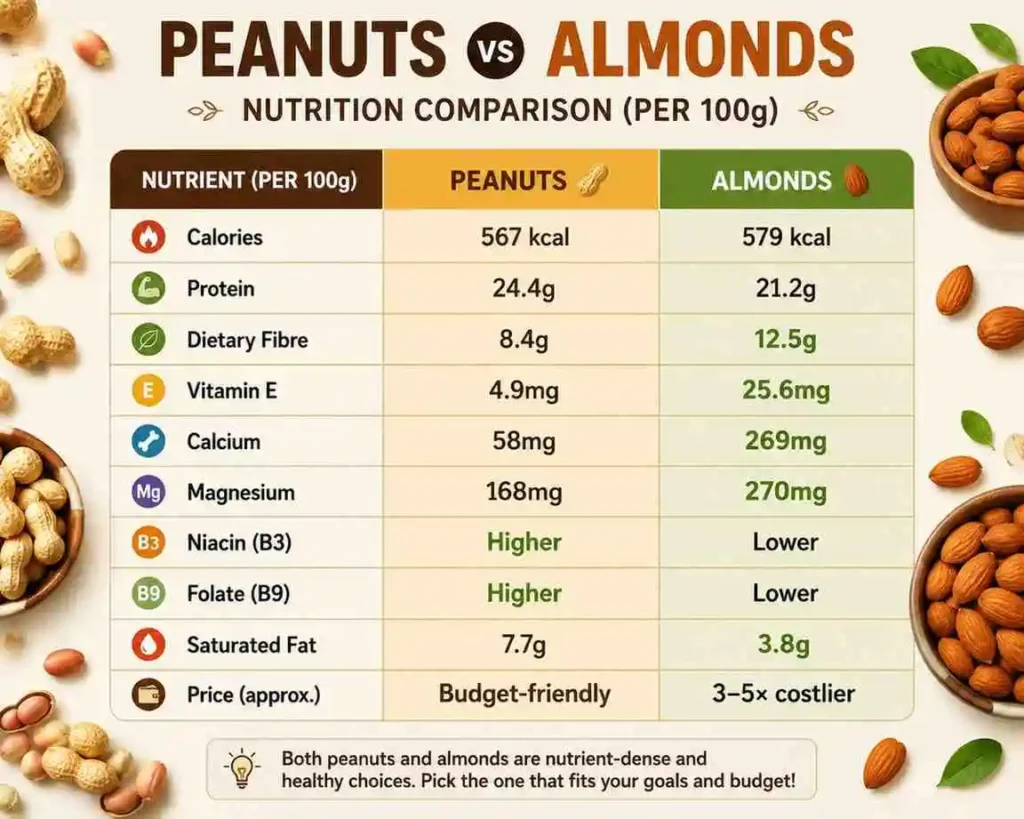
| Nutrient (per 100g) | Peanuts 🥜 | Almonds 🌰 |
|---|---|---|
| Calories | 587 kcal | 579 kcal |
| Protein | 24.4g | 21.2g |
| Dietary Fibre | 8.4g | 12.5g |
| Vitamin E | 4.9mg | 25.6mg |
| Calcium | 58mg | 269mg |
| Magnesium | 178mg | 270mg |
| Niacin (B3) | Higher | Lower |
| Folate (B9) | Higher | Lower |
| Saturated Fat | 7.7g | 3.8g |
| Price (approx.) | Budget-friendly | 3–5× costlier |
The pattern is clear. Peanuts win on protein, B vitamins, and cost. Almonds dominate on Vitamin E, fibre, calcium, and bone-supporting minerals. Neither is “better” in an absolute sense — it depends entirely on what your body currently needs most.
Which Is Best for You?
Choose peanuts for budget-friendly high protein and B vitamins. Choose almonds for Vitamin E, fibre, and bone minerals. Eating both daily gives you the best of both nutritional profiles.
| Choose Peanuts If You… | Choose Almonds If You… |
|---|---|
| Want more protein per serving | Want more vitamin E |
| Are trying to build or maintain muscle | Want more calcium and magnesium |
| Need an affordable, high-protein snack | Want a higher-fiber snack |
| Follow a high-protein, lower-carb diet | Prefer a lower-glycemic snack |
| Want more niacin and folate | Focus on heart health and antioxidants |
| Need a filling snack after workouts | Want extra nutrients for skin health |
Peanuts vs Almond Protein for Post-Workout Recovery
After a workout, your muscles need protein to repair and rebuild. In the peanuts vs almond protein comparison, both nuts can support recovery, but each offers different benefits.
Why Peanuts Work Better Right After Training
- When it comes to peanuts vs almond after exercise, both nuts provide plant-based protein that supports muscle recovery. However, peanuts contain about 24.4 grams of protein per 100 grams, while almonds provide around 21.2 grams per 100 grams. Because of their slightly higher protein content, peanuts can be a better option for increasing your post-workout protein intake.
- Eating peanuts or peanut butter as part of a balanced post-workout snack can help support muscle protein synthesis, especially when combined with a source of carbohydrates for energy replenishment. While the protein difference between peanuts and almonds is modest, both are nutrient-dense, high-protein snacks that contribute to overall recovery and daily nutrition.
- Peanuts also carry niacin and resveratrol, which help manage the mild inflammation your body naturally produces after hard training. That inflammation isn’t bad in small amounts — it’s part of the repair process — but keeping it controlled means you recover faster and feel less sore the next day.
Why Almonds Work Better Later — Especially Before Bed
Almonds provide 270mg of magnesium and 25.6mg of Vitamin E per 100g, and both of these nutrients shine during the hours after training, not just the first window.
- Magnesium directly supports muscle relaxation, helps regulate sleep depth, and plays a role in protein synthesis — and most serious muscle repair happens during deep sleep, not while you’re sitting on the couch after your workout.
- Vitamin E, meanwhile, works as an antioxidant that clears the oxidative stress your cells accumulated during exercise. Think of it as the cleanup crew that arrives after the construction workers have done their job.
A small handful of soaked almonds before bed is genuinely one of the simplest recovery habits you can build.
The Smartest Approach Is Using Both
Rather than choosing one, use them at different points in your recovery day.
- Peanuts or peanut butter in your post-workout meal handles the protein and energy side. Almonds in the evening handle the magnesium and antioxidant side. Together, they cover the full arc of recovery from training session to the next morning.
- And if you want to take your recovery one step further, smoothies are worth adding to this routine — because liquids absorb faster than solid food after training, which means nutrients reach your muscles more quickly.
Bold Peanuts vs Java Peanuts: Which Is Best?
Bold peanuts are larger, crunchier, and higher in natural oils and monounsaturated fats, making them ideal for roasting and peanut oil production. In contrast, Java peanuts are smaller, naturally sweeter, and have a smoother texture, making them well suited for peanut butter and everyday snacking.
| Nutrient (Per 100 g) | Java Peanuts | Bold Peanuts |
|---|---|---|
| Calories | 565–570 kcal | 567–580 kcal |
| Protein | 25.8–26.5 g | 23.5–25.8 g |
| Total Fat | 42–48 g | 49–51 g |
| Saturated Fat | Higher | Lower |
| Monounsaturated Fat (MUFA) | Lower | Higher |
| Dietary Fiber | 8.5–9.5 g | 8.0–8.5 g |
| Natural Sugars | 2.8–4.2 g | 2.0–2.5 g |
Don’t overthink the Bold vs Java choice when buying for personal use. Pick whatever is locally available, dry-roasted, and unsalted — that’s the version your body benefits from most, regardless of variety.
How to Eat Peanuts as a Healthy Snack Replacement
WebMD recommends eating peanuts with their thin papery skin intact because the skin holds the highest concentration of polyphenols and antioxidants. Here are the four most practical ways to use peanuts as a snack replacement:
- Raw or dry-roasted (unsalted): A 28g handful gives you approximately 7g protein and supports satiety for 2–3 hours without causing a blood sugar spike. This is the simplest and most effective swap.
- Add to salads or oatmeal: A handful of peanuts adds protein, healthy fats, fiber, and a crunchy texture to everyday meals. They’re an easy way to make oatmeal, yogurt, or salads more filling and nutritious while supporting your daily protein intake.
- Peanut butter on whole wheat: A 2017 Harvard study tracking over 210,000 participants found that replacing daily processed meat snacks with nuts correlated with a 13% reduction in cardiovascular disease risk. That’s a meaningful shift from one simple habit change.
Can You Eat Roasted Peanuts with Tea?
A cup of tea paired with a handful of roasted peanuts is an easy and satisfying snack. Instead of reaching for biscuits or fried snacks, peanuts offer plant-based protein, healthy fats, and fiber, making them a more nutritious choice that helps curb hunger between meals.
Side Effects of Eating Peanuts with Tea
The one real concern worth knowing about is tannins — the naturally occurring polyphenol compounds in tea, especially black tea. According to a comprehensive 2024 review published in PMC (NCBI), tannins can bind to iron and reduce how much your body absorbs when you consume them together.
Peanuts contain about 1.6mg of iron per 100g. Drinking strong tea alongside them may lower the bioavailability of that iron. Research on tea tannins also shows that consuming very strong tea on an empty stomach — with or without food — can occasionally cause mild nausea or bloating in sensitive individuals, due to the astringent properties of tannin compounds.
If you have diagnosed iron deficiency or anaemia, space your tea and iron-rich foods at least one hour apart. For most healthy adults, eating a small portion of roasted peanuts with one or two cups of tea daily is completely safe. The tannin-iron interaction becomes a real issue only with very high tea consumption alongside a consistently iron-poor diet.
Final Verdict: Peanuts or Almonds — Which Should You Pick?
In the peanuts vs almond protein comparison, peanuts win when it comes to protein, making them an excellent choice for anyone looking to increase their daily protein intake, support muscle recovery, or enjoy an affordable, high-protein snack. Almonds win for vitamin E, fiber, calcium, magnesium, and antioxidants, offering a wider range of nutrients that support overall health.
FAQ'S
- Are peanuts or almonds better for post-workout recovery?Peanuts work better immediately after training because of their higher protein content, which kickstarts muscle repair within the critical 30 to 60 minute window. Almonds work better later — especially before bed — because their high magnesium and Vitamin E content supports muscle relaxation, deep sleep quality, and overnight repair.
- Which Nut Has More Protein in the Peanuts vs Almond Protein Comparison?Peanuts have more protein than almonds. Peanuts deliver 24.4g of protein per 100g compared to almonds' 21.2g, giving peanuts roughly a 15% protein advantage.
- What is the difference between bold peanuts and java peanuts?Bold peanuts are larger, richer in monounsaturated fats, and lower in saturated fat, making them ideal for roasting and peanut oil production. Java peanuts are smaller, slightly sweeter, and contain slightly more protein, making them a great choice for peanut butter and everyday snacking.
- Can we eat roasted peanuts with tea every day?Yes, eating roasted peanuts with tea daily is generally safe for healthy adults. The only thing worth knowing is that tea contains tannins, which can mildly reduce iron absorption when consumed alongside iron-rich foods regularly.
- What are the side effects of eating peanuts with tea?The main concern is that strong tea, especially black tea, can reduce how much iron your body absorbs from peanuts and other foods.If you have low iron levels or anaemia, it is better to drink tea at least 1 hour before or after eating.
- Which is healthier peanuts or almonds for weight loss?Both peanuts and almonds can support weight loss, but they do so in different ways. Peanuts are higher in protein, helping you stay full and maintain muscle, while almonds are higher in fiber, which slows digestion, promotes fullness, and supports healthy blood sugar levels.
- Is it better to eat almonds soaked or raw for maximum nutrition?Soaked almonds are easier to digest and may slightly improve nutrient availability. Eating 8–10 soaked almonds with breakfast or after a workout is a simple way to add protein, healthy fats, vitamin E, and magnesium to your diet.
Author: Nikhil Kumar
Nikhil Kumar is a health and fitness writer with a passion for nutrition, wellness, and evidence-based living. He has completed a Nutrition Certification through Coursera and enjoys turning complex scientific research into clear, practical guidance. His content focuses on nutrition, healthy eating, fitness, and sustainable lifestyle habits to help readers make informed decisions about their health.
📚 Research Citations & Trusted Sources
- USDA Nutritional Data — Peanuts & Almonds per 100g. SouperSage USDA Comparison
- Arya, S.S., Salve, A.R., Chauhan, S. (2016). Peanuts as functional food. Journal of Food Science and Technology, 53(1), 31–41. PMC4711439
- Cleveland Clinic — Peanut Health Benefits. Dietitian Julia Zumpano, RD, LD. Cleveland Clinic
- Harvard Study (2017) — 210,000+ participants, nuts and cardiovascular risk. Via Consumer Reports
- Urinary Phenolic Metabolites & Vascular Health — Peanut Consumption. NCBI PMC, 2023. PMC10045820
- Tannins in Foods and Beverages — Functional Properties Review. NCBI PMC, 2024. PMC11858154
- Medical News Today — Healthiest Nuts Ranked by Protein. MedicalNewsToday
- WebMD — Nutrition Facts and Health Benefits of Peanuts. WebMD
- Peanut vs Almond Nutrition Comparison — Tavazo Corporation. Tavazo, 2026