

Hello Everyone !
Thyroid issues are very common during pregnancy, and both high thyroid (hyperthyroidism) and low thyroid (hypothyroidism) can affect the mother and the baby. The good news is: thyroid problems are easy to diagnose, easy to treat, and can be safely managed with the right care.
In this blog, I’m sharing a complete, doctor-approved guide based on expert opinions to help you understand, manage, and control thyroid levels during pregnancy.
Disclaimer :
This information is provided by obstetricians and endocrinologists: Dr. Vidya Tickoo, Dr. Jo Laurie, Dr. Chaitra Gowda, Dr. Akta Bajaj, and the Endocrine Society.
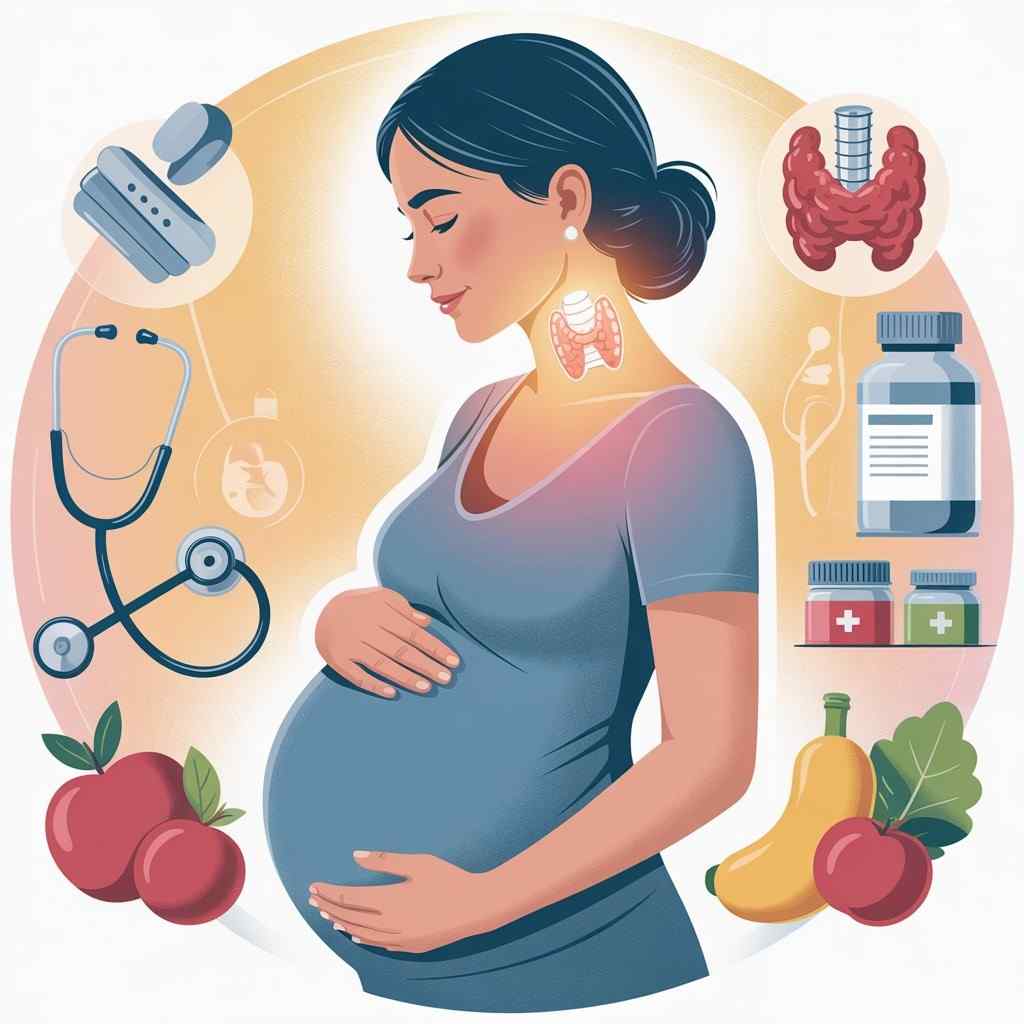
What Is Hyperthyroidism and Hypothyroidism During Pregnancy?
Hyperthyroidism during pregnancy is a condition where a pregnant woman’s thyroid gland produces too much thyroid hormone.These extra hormones can affect both the mother and the baby because they play a key role in growth, energy levels, and metabolism.The most common cause of hyperthyroidism is Graves’ disease. It happens when the immune system becomes overactive and pushes the thyroid to make too much hormone.
Hypothyroidism is a condition where the thyroid gland doesn’t make enough thyroid hormones.These hormones are important for controlling metabolism, energy, mood, heart function, and growth. When the levels are low, the body slows down.The most common cause of hypothyroidism is Hashimoto’s disease. It’s a condition where your immune system mistakenly attacks your thyroid gland.
What are the symptoms of Hyperthyroidism ?
- Heart beating fast or hard.
- Losing weight without trying.
- Feeling nervous, restless, or easily irritated.
- Hands shaking.
- Feeling too hot or sweating a lot.
- Trouble sleeping
- Tiredness or muscle weakness
- Hair becoming thin.
- Periods becoming lighter or irregular.
What are the symptoms of Hypothyroidism ?
- Feeling tired or low in energy.
- Weight gain even without eating more.
- Feeling cold more than others.
- Dry skin and dry, rough hair.
- Slow heartbeat.
- Constipation (hard or less frequent poop)
- Feeling sad or low mood.
- Forgetfulness or slow thinking.
- Puffy face.
- Muscle cramps or weakness.
- Heavy or irregular periods.
How to Treat Hyperthyroidism ?
There are multiple methods of treating hyperthyroidism. To control extra thyroid hormones, doctors typically provide medications like Antithyroid medicines,Beta blocker medicines. In some cases, part of the thyroid may need to be removed with surgery. Along with treatment, regular doctor visits and healthy habits help keep thyroid levels under control, especially during pregnancy.
How to Treat Hypothyroidism Safely
The safest way to treat hypothyroidism is by taking a daily thyroid hormone medicine called levothyroxine Sodium .It provides the hormone your body needs, keeping your energy, metabolism, and body functions normal, even if your thyroid isn’t working properly.
How to Take Levothyroxine Correctly ?
- Take levothyroxine every day at the same time, usually in the morning.
- Take it on an empty stomach, at least 30–60 minutes before breakfast, for best absorption.
- Avoid calcium, iron, antacids, or soy for 4 hours after your medicine, because they can make it less effective.
- Swallow the tablet whole with a glass of water.
- Never stop the medicine on your own, even if you feel better—always follow your doctor.
- Your doctor will check your TSH levels, symptoms, weight, and medical history.
- Based on these, the doctor will adjust your dose if needed.
Why Thyroid Control Matters in Pregnancy ?
During the first twelve weeks of pregnancy, your baby depends entirely on your thyroid hormones. At this stage, the baby’s own thyroid gland hasn’t developed yet, so it cannot make hormones on its own. This means your thyroid levels play a direct role in your baby’s early growth. .These thyroid hormones help in :
- Brain development .
- IQ and intelligence .
- Spinal cord and nerve growth .
- Growth and metabolism .
- If your thyroid levels are too high or too low, it can lead to:
- Miscarriage : A miscarriage is when a pregnancy ends early on its own. It usually happens because the baby wasn’t growing properly, meaning the baby has stopped developing and is no longer alive.
- Preterm labor : When a woman’s body starts labor (the process of getting ready for the baby to be born) before 259 days or 37 weeks of pregnancy, she may have pain, contractions, and her cervix begins to open.
- Low birth weight : Low birth weight means the baby is born smaller and lighter than a normal newborn baby (usually less than 2.5 kg).
- Slow developmental progress : When a child learns things like sitting, walking, talking, or playing later than most children of the same age.
- Struggles to learn new things in school : It faces problems in learning new activities, skills, and study-related concepts. It takes more time to understand things compared to other children of the same age.
Ongoing Thyroid Imbalance in Pregnancy May Raise Autism Risk
- A large study of 51,000 mothers found that when a woman’s thyroid levels stay unbalanced for several months during pregnancy, her baby may have a higher chance of autism.
- Researchers also found that when the thyroid stays unbalanced for more months in pregnancy, the risk increases.
- This shows how important regular thyroid testing and proper treatment are during pregnancy, because thyroid hormones play a key role in a baby’s brain development.
What to eat for Thyroid health during pregnancy ?

You can include in our daily diet like :
- Iodized salt – essential for hormone production.
- Selenium-rich foods – eggs, nuts, and seeds.
- Omega-3 foods – fish, flaxseeds, chia seeds.
- Whole grains – oats, brown rice, whole wheat.
- Milk and dairy – for calcium and overall nutrition.
- Fresh fruits and vegetables – for vitamins, minerals, and fiber.
When to go to a doctor ?
You should see a doctor if you notice symptoms like rapid heartbeat, unexplained weight loss, feeling very anxious or nervous, excessive sweating, trouble sleeping, or swelling in your neck.
Is Normal Delivery Possible with Thyroid Problems ?
Yes, a normal delivery is absolutely possible if thyroid levels are well controlled.
Conclusion:
Thyroid disorders in pregnancy are manageable with timely tests, proper medication, and a balanced diet. Controlling thyroid protects the mother’s health and ensures the baby’s growth, brain development, and overall well-being.