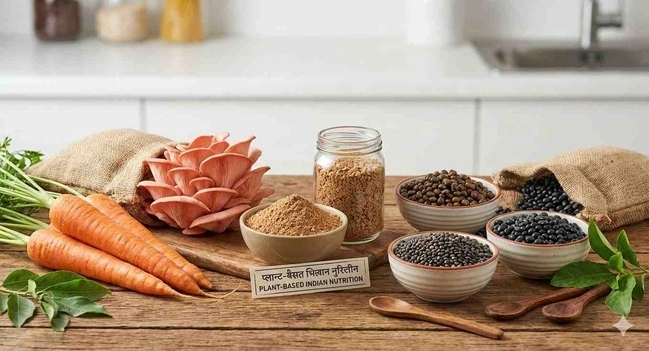
Top Low-Cost Protein Foods in India Under ₹30–₹50

Protein is an essential nutrient for our body. It helps in muscle growth, body development, and overall strength. Without enough protein, the body may not work properly, which can lead to poor weight gain, slow growth, and other physical health problems. Today, many people think completing their daily protein intake is very expensive. However, this is not true. In this blog, we will discuss the top low-cost protein foods in India under ₹30–₹50 that are easily available and affordable. These foods are commonly recommended by expert doctors and professional dietitians.
Table of Contents
ToggleSource :
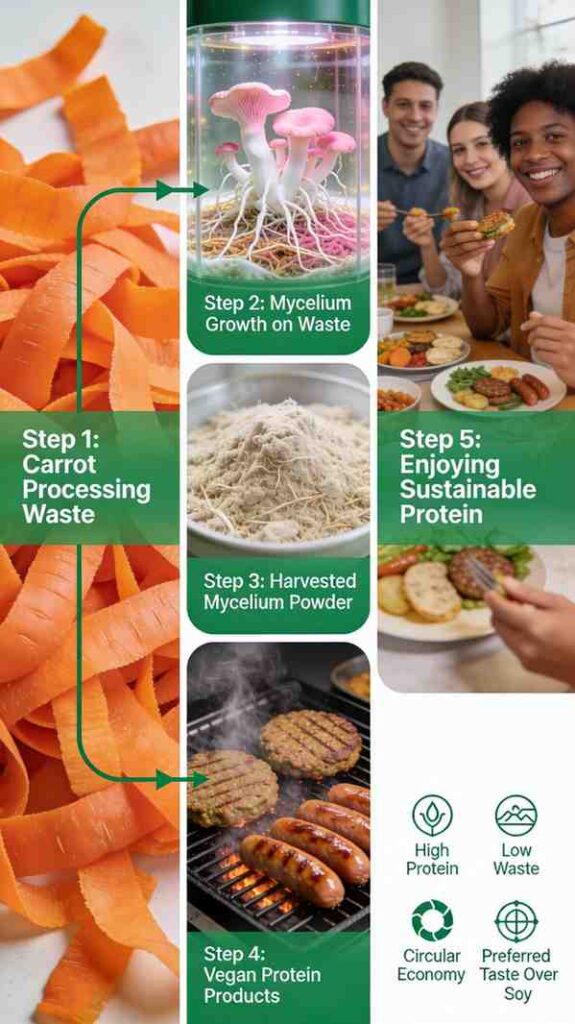
In research published in the Journal of Agricultural and Food Chemistry, researchers screened many fungal strains and selected Pleurotus djamor (pink oyster mushroom) because it grew well on carrot side streams and produced protein‑rich mycelium, which was used to make vegan patties and sausages that taste testers preferred over soy versions
Quick Overview :
Carrot-based fungal protein is a healthy and affordable way to get more protein. By growing Pleurotus djamor on carrot waste, we reduce food waste and get protein-rich mycelium. It can be turned into powder, granules, or textured forms, and easily added to smoothies, soups, snacks, or baked foods. It’s a simple, plant-based, and eco-friendly way to stay healthy.
Cheap protein sources in India
Carrot Waste Into Protein-Rich Food
Did you know that leftover carrot parts from food processing can be used to grow edible fungi that are packed with protein? Scientists have found that these fungal proteins can even make vegan foods taste better than those made with common plant-based proteins.
Researchers wanted to see if carrot leftovers could be put to good use. They fed these carrot scraps to edible fungi and created a less expensive protein source.
Next, they tested this fungal protein in vegan patties and sausages. Volunteers who tried these foods said they tasted better than similar products made with traditional plant proteins.
It shows how food waste can be transformed into high-quality protein and highlights the potential of fungi to help with global food challenges,” says Martin Gand, the lead researcher.
Why Scientists Looked at Carrot Waste ?
Carrots are widely used in food processing, especially for producing natural food colors. During this process, a large amount of waste, such as leftover pulp and other materials, is generated. Instead of discarding this waste, researchers asked an important question: can carrot waste be reused to grow nutritious food? The answer came from an unexpected source—edible fungi.
How Carrot Protein Is Made: Step-by-Step Detailed Process
Carrot protein does not come directly from carrots. It is made by growing edible fungi on carrot waste. As the fungi grow, they form a structure called mycelium, which is rich in protein. This mycelium is then used as a protein source.
Step 1: Collect the Carrot Waste
Collect fresh carrot waste such as peels, pulp, or leftover material from carrot processing or home kitchens. Make sure the waste is clean and free from dirt, chemicals, or spoiled parts. It contains natural sugars,Fiber,Minerals,Residual nutrients.This carrot waste will act as the base material for growing edible fungi.
Step 2: Preparing the Growth Medium
The treated carrot waste is used as a growth base for the fungi. To help the fungi grow better and faster, small amounts of water and minerals are added. Carrot waste is naturally rich in carbohydrates, which provide energy to the fungi. It also contains fiber and important micronutrients. Together, these nutrients create the right environment for fungal growth, allowing the fungal mycelium to grow well and produce protein-rich material.
Step 3: Selection of Edible Fungus
Not all fungi are safe or suitable for food, so choosing the right edible fungus is very important. Scientists carefully test many fungal strains and select only those that are edible, non-toxic, and capable of producing high levels of protein. In research studies, Pleurotus djamor, commonly known as the pink oyster mushroom, showed the best results. This fungus is preferred because it grows quickly, produces high-quality protein, and has a pleasant taste and texture, making it suitable for food use.
Step 4: Inoculation (Adding the Fungus)
In this step, the selected edible fungus is carefully added to the prepared carrot waste. This process is known as inoculation. Once the fungus is introduced, it begins feeding on the nutrients present in the carrot waste. As it grows, the fungus develops fine, root-like threads called mycelium. These threads slowly spread throughout the carrot waste, forming a dense network. The mycelium is the most important part of this process, as it is rich in protein and is later used as the main nutritional source.The overall processes are shown below :
Step 5: Controlled Growth Conditions
For healthy and consistent mycelium growth, the surrounding conditions are carefully controlled. Key factors such as temperature, moisture, oxygen supply, and cleanliness play an important role in this process. Maintaining the right conditions helps the fungus grow faster, produce more protein, and reduces the risk of contamination. Unlike traditional crops, this method requires very little space and water and does not depend on soil or sunlight, making it an efficient and sustainable way to produce protein.
Step 6: Harvesting the Fungal Mycelium
Instead of waiting for full mushrooms to develop, scientists focus on harvesting the mycelium. This approach is preferred because mycelium grows much faster, contains a higher concentration of protein, and has a smoother texture that works well in food products. Once sufficient mycelium has formed, it is carefully separated from the remaining substrate and prepared for further use.
Step 7 : Drying and Stabilization
Freshly harvested mycelium contains a high amount of moisture, so it needs to be preserved properly. This is done through drying, using either air drying or low-heat drying methods, followed by stabilization to improve shelf life. Drying helps prevent spoilage, protects the nutritional value, and makes the mycelium easier to store and transport for later use.
Step 8 :Processing into Carrot Protein Products
After drying, the mycelium is further processed into different usable forms. These include protein powder, protein granules, minced protein, and textured protein that can be used to make foods like patties and sausages. The final product is known as carrot-based fungal protein, which can be easily added to a variety of everyday foods.
How to use Carrot Protein ?
Carrot protein is versatile and easy to include in daily meals in the form of mycelium powder. It can be added to smoothies, shakes, or milk to increase protein intake without changing the taste. Mycelium powder or granules can also be mixed into soups, curries, and dals for extra nutrition. Minced or textured carrot protein works well for making snacks like cutlets, patties, and burgers, serving as a healthy plant-based alternative to meat. It can even be used in chapati dough, paratha stuffing, or baked foods to boost protein in a simple and affordable way.
Low cost high protein foods in India
Black Peas :
Black chana (kala chana) is an excellent high-protein food and one of the most affordable protein sources in India. It provides about 20–22 g of protein per 100 g in raw form, which helps support muscle growth, tissue repair, and overall body strength.
Benefits for Stomach :
Along with protein, black chana is rich in dietary fiber, which improves digestion, keeps you full for longer, and helps manage body weight and blood sugar levels. It is also a good source of iron, magnesium, and B-vitamins that support energy levels and heart health.
How to Consume:
Easy to consume and very easy to use, black peas can be eaten boiled, sprouted, roasted, or cooked as a curry, making it a simple, nutritious, and practical addition to a balanced daily diet.
Black gram :
Black gram (urad dal) is one of the richest and most trusted plant-based protein sources in Indian diets. It contains around 24–25 g of protein per 100 g (raw), making it especially valuable for muscle strength, tissue repair, and daily energy needs.
Correct Method of Preparing Urad Dal for Maximum Benefits
To use urad dal properly, the grains are first cleaned and washed to remove dust and impurities. They are then soaked in water for 6–8 hours, which softens the dal and improves digestion by reducing natural anti-nutrients. After soaking, the dal is cooked by boiling or pressure cooking until it becomes soft and easy to digest. It can be prepared as dal, idli–dosa batter, vada, or added to curries. Regular consumption of properly cooked urad dal supports sustained energy, gut health, and overall nutritional balance.
Black Soybeans:
Black soybeans are considered one of the highest plant-based protein sources, providing about 36–40 g of protein per 100 g (raw). They are especially beneficial for people following vegetarian or vegan diets.
Correct Method of Preparing black soybeans for Maximum Benefits
The preparation process begins with washing the black soybeans well, followed by soaking them in water for 8–10 hours to make them soft and easier to digest. After soaking, the beans are cooked, ideally in a pressure cooker, until they are fully tender. This step is important because raw or half-cooked soybeans can be hard on the stomach.
After cooking, black soybeans can be used to prepare dal, added to curries, mixed into salads, stir-fried with vegetables, or mashed and used as a spread, making them simple to include in everyday meals.When prepared properly and eaten in the right amount, they help support muscle strength, heart health, and keep you full for longer, making them a healthy and practical protein food.
Conclusion:
Carrot-based fungal protein and affordable pulses like kala chana, urad dal, and black soybeans offer accessible, nutrient-dense ways to meet protein needs in India. These low-cost options support health, reduce waste, and make daily protein intake practical for everyone.

Health & Wellness Researcher
Nikhil Bhardwaj is a health researcher dedicated to breaking down the latest medical studies into actionable wellness insights. He specializes in the intersection of mental health and physical fitness.
Follow Me