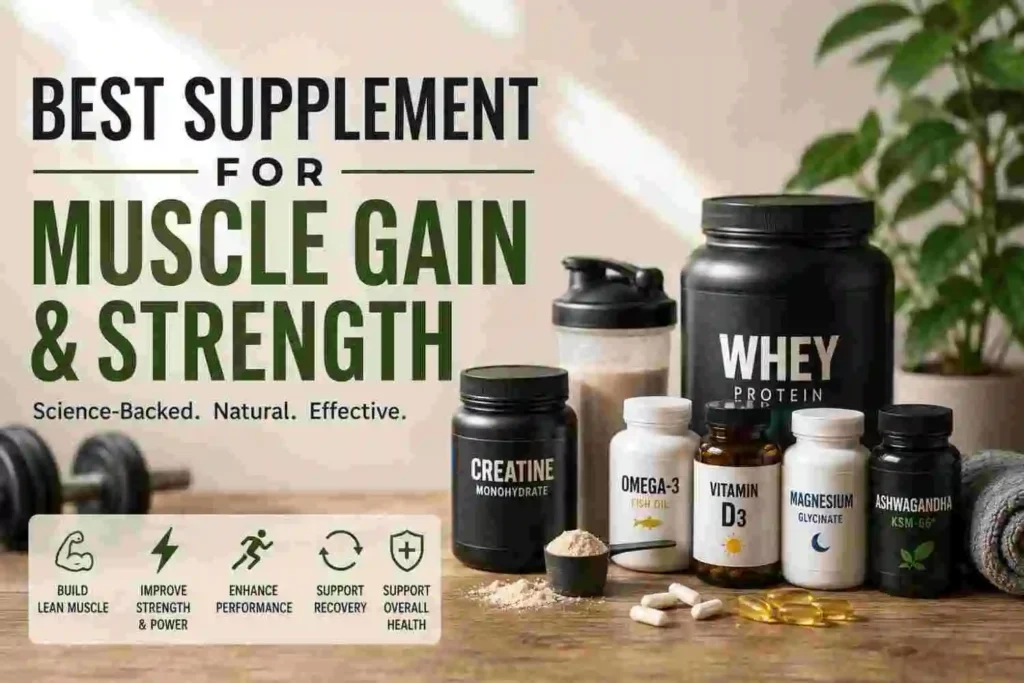
| Supplement | Primary Benefit | Typical Effective Dose | Evidence Tier |
|---|---|---|---|
| Creatine monohydrate | Strength, power, lean muscle | 3–5 g/day | Tier 1 (extensively researched) |
| Whey protein | Muscle protein synthesis | 20–40 g/serving | Tier 1 |
| Beta-alanine | Muscular endurance | 3.2–6.4 g/day | Tier 1 |
| Citrulline malate | Blood flow, training volume | 6–8 g pre-workout | Tier 2 |
| HMB | Muscle protein breakdown reduction | 3 g/day | Tier 2 |
| Caffeine | Power output, focus | 3–6 mg/kg body weight | Tier 1 |
| Ashwagandha | Stress adaptation, strength support | 300–600 mg/day | Tier 2 |
| Omega-3 fish oil | Recovery, joint health | 1–3 g/day (EPA+DHA) | Tier 2 |
What Are the Best Natural Supplements for Muscle Gain and Strength?
The best natural supplements for muscle gain and strength are creatine, protein (whey or plant-based), beta-alanine, BCAAs, HMB, and citrulline — compounds that directly support resistance training output, muscle protein synthesis, or exercise recovery.
Natural, in this context, means non-synthetic hormonal agents: no anabolic steroids, no prohormones, only nutrients, amino acids, and plant extracts already present in whole foods or produced by the body.
(1). Creatine Monohydrate
Creatine monohydrate stands as the single most researched strength supplement in sports nutrition. It operates by increasing intramuscular phosphocreatine stores, which rapidly regenerates adenosine triphosphate (ATP) during high-intensity resistance training.
- Primary Benefit: 5–15% increases in maximal strength and power output.
- Optimal Dosage: 3–5 grams daily (loading phase of 20 grams/day for 5 days is optional).
Clinical Nuance: Monohydrate remains superior in bioavailability and cost-effectiveness compared to buffered or liquid forms.
(2). Whey Protein Isolate
Whey protein isolate is quickly digested and contains all the essential amino acids your body needs, including high levels of branched-chain amino acids (BCAAs), especially leucine. Leucine helps activate the mTOR signaling pathway, which tells your body to start muscle protein synthesis. To put it simply, Leucine acts like a master ‘ON-switch’ in your cells. Without it, your body cannot use the protein you eat to repair and build new muscle fibers.
- Primary Benefit: Accelerated muscle repair and convenient daily protein target fulfillment.
- Optimal Dosage: 25–40 grams post-workout or as a dietary supplement between meals.
Clinical Nuance: Cold-processed cross-flow microfiltered isolates ensure minimal lactose and fat while preserving native immunoglobulins.
(3). Beta-Alanine
Beta-alanine is a naturally occurring non-essential amino acid that serves as the rate-limiting precursor to intramuscular carnosine synthesis. In skeletal muscle tissue, beta-alanine combines with L-histidine to form carnosine, a dipeptide that functions as a primary intracellular physicochemical buffer.
During high-intensity resistance training, rapid glycolysis leads to the accumulation of hydrogen ions H⁺, causing a drop in intramuscular pH (acidosis). In simple terms, when you lift heavy, your muscles produce acid. This acid buildup causes that intense ‘burning sensation’ and forces your muscles to fatigue.
By increasing intramuscular carnosine concentrations by 40% to 80%, beta-alanine neutralizes excess H⁺ ions, stabilizing muscle pH. Think of beta-alanine as a sponge that soaks up this acid, allowing you to squeeze out 2 to 3 more reps before failing.
By increasing intramuscular carnosine concentrations by 40% to 80%, beta-alanine neutralizes excess H⁺ ions, stabilizing muscle pH and preserving peak power output.
- Primary Ergogenic Benefit: Significant increase in total training volume, higher rep performance in the 8–15 rep range, and extended time-to-exhaustion during high-intensity interval sets.
- Clinical Dosage & Administration: 3.2 to 6.4 grams daily. Sustained loading over 4 to 8 weeks is required to fully saturate muscle carnosine stores.
Bioavailability & Side Effects: Splitting the daily amount into multiple 1.6-gram doses or utilizing sustained-release formulations prevents transient paresthesia—a harmless, nerve-tingling sensation caused by beta-alanine binding to Mas-related G-protein coupled receptors on sensory neurons.
(4). Ashwagandha (KSM-66)
Ashwagandha (Withania somnifera) is a well-known adaptogenic herb that helps the body manage physical and mental stress. It may help lower high cortisol levels, support healthy testosterone production, and improve recovery during intense resistance training. By helping the body adapt to training stress, ashwagandha may support muscle growth, strength gains, exercise performance, and overall recovery.
Heavy training and physical stress can increase cortisol, a hormone linked to muscle breakdown when levels remain elevated. High cortisol may also affect normal hormone balance and recovery. Standardized ashwagandha root extracts, such as KSM-66, may help lower cortisol levels and reduce markers of exercise-related muscle damage, including creatine kinase.
By helping manage the body’s stress response, ashwagandha may support muscle recovery, strength, power output, and a healthy anabolic environment. Some clinical studies have found that combining structured resistance training with KSM-66 may lead to greater improvements in strength, including 1RM bench press and leg extension performance, compared with a placebo.
(5). HMB (Beta-Hydroxy-Beta-Methylbutyrate)
HMB (beta-hydroxy-beta-methylbutyrate) is a natural metabolite of leucine, an essential amino acid that plays an important role in muscle protein synthesis. HMB mainly works by helping reduce muscle protein breakdown, which may support muscle preservation and recovery during periods of intense training or low calorie intake.
During high-volume resistance training, your muscles experience greater stress and may require more time to recover. HMB may help reduce exercise-related muscle damage and limit muscle protein breakdown, allowing the body to better maintain lean muscle mass.
HMB may be especially useful for beginners, people returning to training after a break, athletes going through demanding training phases, or individuals following a calorie-restricted diet. However, its benefits for experienced lifters who already consume enough high-quality protein may be more limited.
- Primary Benefit: Helps reduce muscle protein breakdown, supports lean muscle preservation, and promotes exercise recovery.
- Best Use: HMB may be most useful during high-volume training, intense exercise, calorie restriction, or periods when maintaining lean muscle mass is a priority.
- Key Point: HMB should not replace adequate protein or resistance training. It works best as a complementary supplement alongside sufficient protein intake, progressive resistance training, adequate calories, and proper recovery.
(6). Omega-3 Fish Oil
Omega-3 fish oil contains essential fatty acids—specifically eicosapentaenoic acid (EPA) and docosahexaenoic acid (DHA)—that control post-workout inflammation, reduce delayed-onset muscle soreness (DOMS), protect joint articular health, and improve overall muscle tissue flexibility.
- Clinical Benefits: EPA and DHA integrate directly into muscle cell membranes, improving membrane fluidity and reducing post-exercise muscle soreness without halting natural anabolic adaptation.
- Optimal Dosage: 1,000 mg (typically 2 capsules of 500 mg) daily with meals. High-intensity athletes or those managing joint stress can scale up to 4–6 grams under medical supervision.
Quality Assurance: Choose molecularly distilled, third-party certified fish oil to guarantee zero heavy metal or PCB contamination.
(7). Vitamin D Support Muscle Strength and Performance
Vitamin D plays an important role in muscle function because it acts as a hormone-like nutrient that interacts with vitamin D receptors in skeletal muscle. Adequate vitamin D levels help support muscle strength, fast-twitch muscle fiber function, physical performance, and normal immune system function.
- Clinical Benefits: Research confirms that athletes with optimal serum vitamin D levels demonstrate higher vertical jumps, faster sprint speeds, lower injury rates, and balanced endocrine health.
- Optimal Dosage: 2,000–4,000 IU daily of Vitamin D3 (cholecalciferol) for individuals with low sun exposure.
Absorption Tip: Always take vitamin D alongside dietary fats (like olive oil, eggs, or avocados) to optimize fat-soluble intestinal absorption.
(8). Electrolytes Essential for Neuromuscular Function and Hydration
Electrolytes—including sodium, potassium, magnesium, and calcium—maintain the electrical membrane potential in muscle cells. Think of electrolytes as the ‘spark plugs’ of your body. They carry the electrical signals from your brain to your muscles. Without them, your muscles cannot contract properly, leading to sudden cramps and performance drops.
- Clinical Benefits: Restoring vital minerals preserves blood plasma volume, sustains physical endurance during prolonged exercise, and prevents exercise-associated hyponatremia.
- Optimal Timing: For sessions exceeding 60 minutes or during high-heat training, consume 200–300 mg of sodium per hour (roughly 2–3 electrolyte capsules or targeted mixes).
Formulation Tip: Avoid high-sugar commercial sports drinks; choose clean electrolyte formulations or natural coconut water paired with unrefined sea salt.
(9). Magnesium Improve Muscle Recovery, ATP Energy, and Sleep
Magnesium is an essential mineral co-factor required for over 300 enzymatic reactions, driving bioavailable adenosine triphosphate {Mg-ATP} energy production. In everyday terms, magnesium is your body’s battery charger. It helps create cellular energy (ATP), relaxes tight muscles, and signals your nervous system to wind down for deep, restorative sleep.
- Clinical Benefits: Magnesium downregulates central nervous system stress, reduces post-exercise muscle tightness, speeds up recovery, and improves deep restorative sleep cycles.
- Optimal Dosage: 200 mg daily before bed (scaling up to 400 mg if baseline levels are low). Highly bioavailable forms like magnesium glycinate or citrate are gentlest on the digestive tract.
Dietary Sources: Boost daily intake with whole foods such as pumpkin seeds, spinach, almonds, and 85%+ dark cacao.
Note: This guide is backed by decades of clinical sports science. To make it accessible for everyone, we have included ‘In Simple Words’ breakdowns under highly technical sections so you can grasp the science instantly.
How Does Protein Quality Impact Lean Muscle Synthesis?
Protein quality affects lean muscle growth by providing essential amino acids, especially leucine. Leucine helps activate the mTOR signaling pathway, which tells your body to start muscle protein synthesis and supports the repair and growth of skeletal muscle tissue.
Protein Breakdown and Amino Acid Profiles
- Whey Protein Isolate: A fast-digesting protein that typically provides more than 90% protein, with very little fat and lactose. It is a convenient source of essential amino acids for muscle protein synthesis and post-workout recovery.
- Plant-Based Protein Formulations: Combining pea protein and rice protein provides a more complete amino acid profile, making this blend a useful protein source for vegan athletes and people who avoid dairy.
- Hydrolyzed Protein: Protein that has been broken down into smaller peptides for easier digestion. It can provide amino acids quickly and may be useful as part of post-workout nutrition and muscle recovery.
How Do Nitric Oxide Boosters Enhance Workout Intensity?
Nitric oxide boosters may improve workout intensity by increasing nitric oxide levels, which helps relax and widen blood vessels. This process, known as vasodilation, can improve blood flow to working skeletal muscles. In plain English, it widens your blood vessels like a highway. This allows more oxygen and nutrients to rush into your muscles, giving you a massive ‘muscle pump’ and helping clear out waste products so you don’t tire out quickly.
This can help muscles handle repeated high-intensity sets and may contribute to better training endurance, muscle pump, and overall workout performance.
Common nitric oxide-boosting ingredients include L-citrulline, L-arginine, and beetroot, which are often used in pre-workout supplements to support blood flow and exercise performance.
Post-Workout Recovery: Accelerating Muscle Repair and Refueling
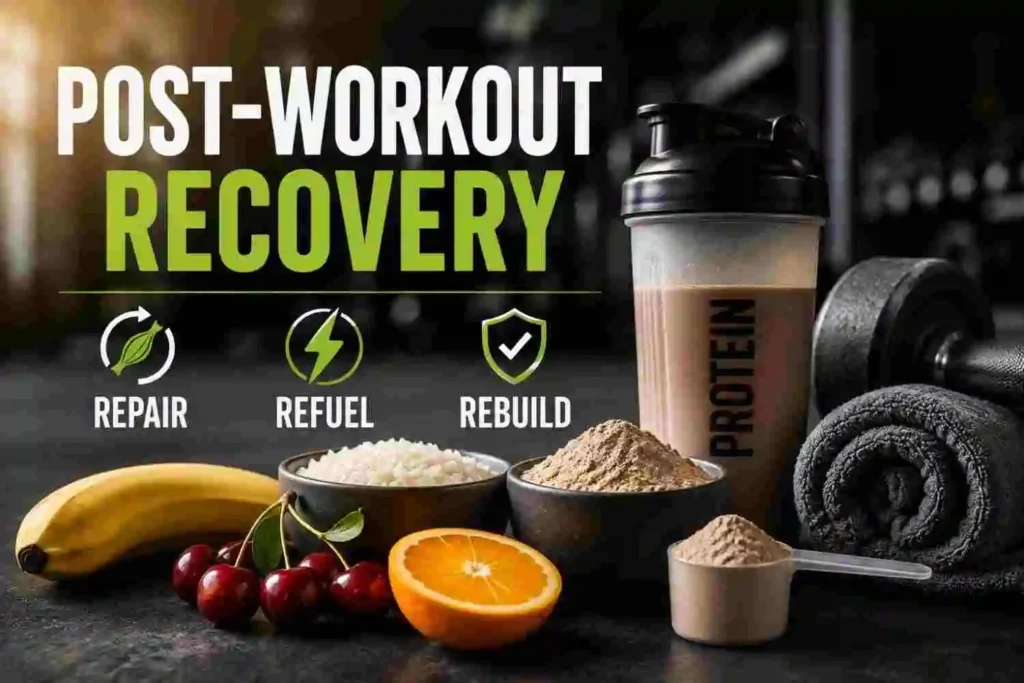
Optimizing exercise recovery is important for getting the full muscle-building benefits of resistance training. Strength training creates small amounts of muscle damage and stress, while proper sports nutrition provides the protein, amino acids, carbohydrates, and other nutrients needed to repair and rebuild muscle tissue.
Essential Post-Workout Recovery Protocols
- Glycogen Replenishment: Combine fast-digesting protein with high-glycemic carbohydrates after a workout to support insulin release, improve amino acid delivery to muscle cells, and restore depleted muscle glycogen stores.
- Reducing Muscle Soreness: Tart cherry extract and curcumin act as potent natural antioxidants, lowering delayed onset muscle soreness (DOMS) without blunting long-term muscle hypertrophy.
- Joint and Connective Tissue Support: Hydrolyzed collagen peptides combined with vitamin C may support tendon strength, connective tissue resilience, and joint health during heavy resistance training and axial loading.
How Does Hormonal Balance Support Natural Muscle Gain?
Hormonal balance supports natural muscle gain by maintaining optimal serum testosterone levels, controlling catabolic cortisol spikes, and providing essential micronutrient cofactors required for endocrine function, protein synthesis, and overall physiological recovery.
Micronutrients for Endocrine Health
- Vitamin D3 & Vitamin K2: Vitamin D3 supports hormone function, bone health, muscle function, and normal muscle power. Low vitamin D levels are associated with lower muscle strength and reduced physical performance.
- Zinc & Magnesium (ZMA): Zinc supports normal hormone production and immune function, while magnesium plays an important role in sleep quality, muscle function, and normal neuromuscular contraction.
- Adaptogens & D-Aspartic Acid: Adaptogenic herbs such as ginseng, maca root, and ashwagandha may help the body manage physical stress and support recovery during demanding training. D-aspartic acid is also involved in hormone-related processes, although evidence for its effect on testosterone and muscle growth is mixed.
Quality Assurance, Bioavailability, and Pitfalls
- Relying on BCAAs Instead of Essential Amino Acids: BCAAs provide only three essential amino acids and do not contain the full range of essential amino acids needed to support muscle protein synthesis. Complete proteins such as whey isolate or a complete EAA supplement may provide better support for muscle growth.
Solution: Prioritize complete protein sources that provide all essential amino acids, such as whey protein, eggs, dairy, meat, fish, or a well-formulated plant protein blend. If your daily protein intake is already adequate, BCAA supplements may not provide much additional benefit. - Under-Dosing Pre-Workout Ingredients: Some commercial pre-workout products use “proprietary blends” that do not clearly show the amount of each ingredient. This can result in low doses of key ingredients such as citrulline or beta-alanine, which may reduce their potential effect on workout performance.
Solution: Choose supplements with fully disclosed ingredient amounts rather than proprietary blends. Check the nutrition label to make sure the product provides evidence-based doses of ingredients such as L-citrulline and beta-alanine instead of relying only on the number of ingredients listed on the label. - Ignoring Micronutrient Absorption: High-dose performance supplements cannot fully compensate for poor nutrient status or low bioavailability. Digestive issues, inadequate nutrient absorption, or vitamin D deficiency can affect how effectively the body uses essential micronutrients and supports exercise recovery.
Solution: Focus on a balanced diet and adequate micronutrient intake first. If you suspect a deficiency, appropriate blood testing and professional guidance can help identify the problem. Taking supplements with suitable meals and choosing well-absorbed forms may also help improve nutrient utilization and support recovery.
Conclusion
Achieving maximal athletic performance and building lean tissue ultimately comes down to intelligent, science-backed choices. Integrating the best natural supplements for muscle gain and strength into your daily routine gives your body the exact ergogenic tools it needs to increase power output, accelerate post-workout recovery, and drive long-term hypertrophy.
Frequently Asked Questions
- What is the single best natural supplement for muscle gain and strength?Creatine monohydrate is the single best supplement for muscle growth and strength.
- Can you build muscle without protein powder?Yes, you can build muscle without protein powder as long as you meet your daily total protein intake (1.6 to 2.2 grams per kilogram of body weight) through whole food sources like chicken, eggs, fish, tofu, and legumes.
- When is the best time to take natural supplements for workout performance?Pre-workout supplements like L-citrulline (6–8g) and caffeine (3–6 mg/kg) are best taken 30 to 45 minutes before exercise for immediate blood flow and focus benefits.
- Is beta-alanine paresthesia (tingling) dangerous?No, the tingling sensation (paresthesia) caused by beta-alanine is completely harmless.
- How does Ashwagandha KSM-66 help with muscle gain?Ashwagandha KSM-66 supports muscle gain by modulating physical stress, lowering high cortisol levels, and supporting natural testosterone production.
Disclaimer: This content is for educational purposes only and is not a substitute for professional medical or nutritional advice. Consult a qualified healthcare professional before starting any supplement, especially if you have a medical condition or take medications.
Author: I’m Nikhil, founder of FitNova360. I’ve completed professional nutrition certification courses through Coursera and have a strong passion for nutrition, fitness, and healthy living. I aim to make complex health and fitness topics simple, practical, and easy to understand by sharing clear, evidence-based information.
Pingback: How to Make Strawberry Smoothie
Pingback: 8 Health Benefits of Strawberry Smoothie