
- By: Health & Wellness Researcher
- Date: February 13, 2026
- Source: This article is based on careful review of trusted nutrition and health resources, including well-known medical and lifestyle platforms such as Healthline and The Times of India, along with findings from recent clinical research studies.
Yes, eating a banana at night is beneficial for most people. Bananas are frequently touted as a nutritional powerhouse – they’re high in fiber, potassium, magnesium, calcium, and vitamins – and have substances (such as the amino acid tryptophan) that work to promote sleep.
Numerous individuals are curious about whether eating a banana before bed is helpful or harmful. The truth is that eating a banana at night is perfectly harmless and may even have a positive effect on sleep patterns in most individuals.
Table of Contents
ToggleNutrients in Bananas and Sleep
Bananas contain several sleep-promoting nutrients. A medium banana (weighing 100-120g) contains about 105 calories, 26g of carbs, 3g of fiber, 8% of your daily magnesium, and 30% of your daily potassium. Magnesium is essential for regulating your body clock and increasing levels of the sleep hormone melatonin. Tryptophan, an amino acid, is used in the brain to produce melatonin and serotonin, which promotes relaxation. Bananas also contain vitamin B6, a melatonin precursor, and natural carbohydrates, which facilitate the entry of tryptophan into the brain.
In reality, eating a banana (with milk) before sleeping can help. Recently, a clinical trial asked patients with insomnia to eat a banana or drink milk before bed. Both groups reported better sleep quality in simple sleep surveys, and the milk group even slept for longer periods. According to nutrition experts, a soft banana is easier to digest than many other foods eaten late at night. The banana’s high potassium and magnesium content relaxes the muscles and calms the nervous system as part of your evening routine. In conclusion, a banana before sleep can act like a natural muscle relaxer and help you sleep comfortably without feeling hungry.
Myths and Cautions When Eating Bananas at Night
Even though bananas have health benefits, they are sometimes mistakenly accused of problems when consumed at night. Most of these myths are not true or only relate to a few instances.
- Myth: “Bananas cause mucus.” There is an old wives’ tale (based on the Ayurvedic tradition) that bananas consumed at night will cause an increase in mucus or throat congestion. For example, in one health-related article, it was written: “Ayurveda advises against eating bananas before bedtime because they cause mucus and slow down digestion.” But nutrition experts today argue that there is no scientific basis for the claim that bananas can increase the production of mucus or make one sicker when they have a cold .
- Myth: “They’re too heavy to digest.” It’s true that a banana is pretty starchy and takes a while to digest due to its fiber content. This is why some people’s advice is to not eat heavy meals late at night. Bananas aren’t as heavy as a cheeseburger, though – a ripe banana isn’t too hard on the stomach. However, as with anything, eating a whole banana right before going to bed might give a sensitive person a little bit of indigestion. A good rule of thumb is to eat it at least 30-60 minutes before bed, giving your body a chance to start breaking it down.
- Who should be cautious : For most healthy individuals, a banana a night is no problem, but certain situations require consideration.
- Diabetes or prediabetes: A sweet banana contains 14 g of “natural” sugar and a medium glycemic load. If you have diabetes or insulin resistance, enjoy your banana with a source of protein or fat (such as nuts or yogurt) to reduce the rapid increase in sugar .
- Kidney disease: Patients with moderate to severe kidney disease are usually advised to restrict potassium. Given that one banana contains ~400-450 mg of potassium , you may need to restrict banana consumption based on your physician’s recommendations .
- Banana allergy is very uncommon, but if you have a rubber allergy or a banana allergy, it is best to avoid consuming bananas. Sufferers of migraines claim that bananas trigger their migraines; therefore, they should reduce the consumption of bananas or avoid them altogether.
- Respiratory problems: If you have asthma, or you are experiencing sinusitis or a cold, the Ayurvedic system of medicine would advise you to avoid bananas to ensure that your mucus levels remain under control, although there is no scientific basis for this.
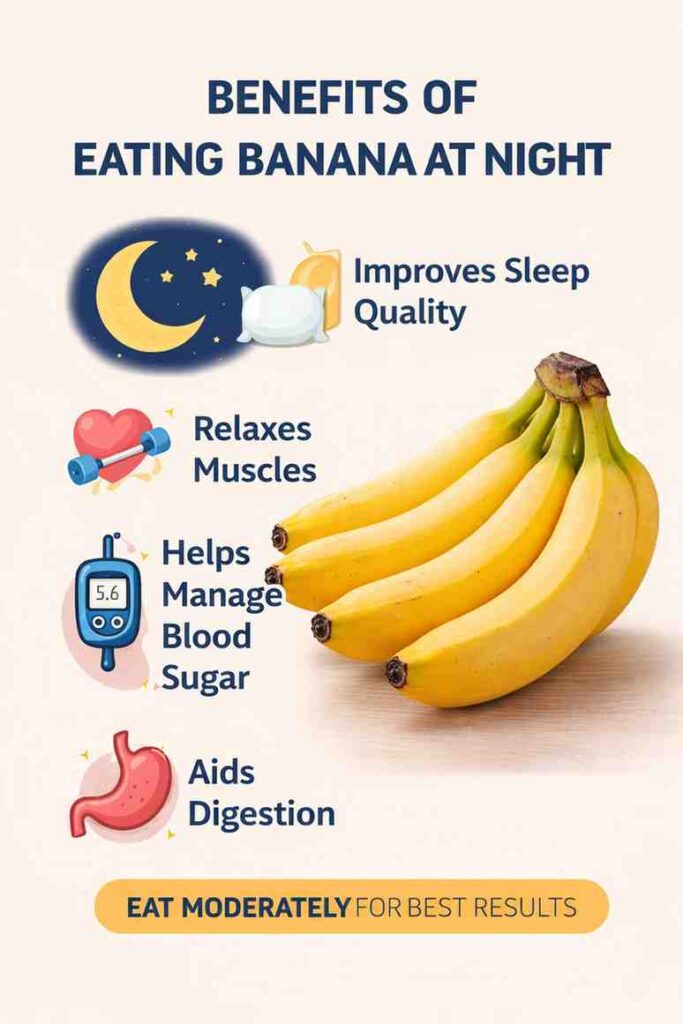
Benefits of Eating Bananas at Night
Encourages sleep:
Bananas are rich in magnesium, potassium, and tryptophan, which have been shown in research to be associated with longer and more restful sleep . The banana’s high carb and fiber content also aid in the body’s absorption of tryptophan, which is then converted to melatonin, the sleep hormone .
Relaxes muscles and nerves
Bananas have high amounts of potassium and magnesium (10-15% DV per banana), which help relax the muscles and promote nerve health . This is a gentle way to induce sleep and stay asleep.
Help in digestion
Bananas are rich in resistant starch and soluble fiber (like pectin) thatfeed good gut bacteria . This fermentation produces butyrate and other short-chain fatty acids
that promote healthy digestion .The banana’s high fiber content also slows down stomach emptying, making you feel fuller for longer and preventing hunger pangs in the middle of the night . In short, eating a banana before bedtime ensures that you sleep through the night without waking up hungry.
Low-calorie sweet snack.
With approximately 105 calories per banana, they are a healthy way to satisfy a sweet tooth before bedtime . Opting for a banana instead of a processed dessert means more fiber and vitamins with fewer calories and less added sugar and fat.
Soothes heartburn
Bananas are mildly alkaline and low in acid, acting as a natural antacid. Some research finds that eating a banana (even at night) can help neutralize stomach acid and relieve heartburn . This makes them gentler on the gut than many spicy or heavy late-night snacks.
Conclusion:
In conclusion, having a banana at night is not harmful and can actually be very helpful. Bananas are full of sleep-promoting nutrients (magnesium, potassium, tryptophan, vitamin B6) and are a gentle source of fuel and satisfaction for the night . There is no credible research to suggest that bananas are not good to eat before bed – actually, a study found that eating a banana (or glass of milk) at bedtime enhanced sleep quality in insomniacs . The old myths (mucus, indigestion) are simply that – myths, not based in reality . In short, Eating Banana at Night Good or Bad? – for most people, it’s good, provided you eat it reasonably before sleep and payattention to any personal health concerns