Last Updated: August 23, 2026
These 12 post workout smoothie recipes are designed to support muscle recovery by providing the protein, carbohydrates, and essential nutrients your body needs after exercise. Whether you’re recovering from strength training, running, or an intense gym session, these smoothies help replenish glycogen stores, support muscle repair, and restore energy — and they double as some of the easiest post workout smoothies you can put together with a blender and a fridge.
From Tart Cherry Blend and Beetroot Berry Blast to Mango Turmeric, Watermelon Mint, Spinach Avocado, and Pineapple Ginger, every recipe includes its nutritional benefits, key ingredients, and the best time to enjoy it — combining protein recovery, hydration, and quick digestion in every glass.
If you’ve ever wondered what smoothie to drink after a workout, or searched for the best post workout smoothie recipes that actually taste good, this guide covers it.
Quick Overview: Best Post-Workout Smoothies
| Smoothie | Best Workout | Main Benefit | Key Ingredient |
|---|---|---|---|
| Banana Peanut Butter | Weightlifting | Muscle recovery | Peanut butter |
| Tart Cherry Recovery | Heavy leg day | Helps with soreness | Tart cherry |
| Mango Turmeric | HIIT / CrossFit | Supports recovery | Turmeric |
| Spinach Avocado | Strength training | Nutrient replenishment | Spinach |
| Watermelon Mint | Running / Cycling | Hydration | Watermelon |
| Beetroot Berry Blast | Endurance training | Oxygen delivery | Beetroot |
| Chocolate Oat | Bodybuilding | Mass gain | Oats |
| Pineapple Ginger | Yoga / Pilates | Recovery & digestion | Pineapple |
| Green Goddess | Plant-based strength | Protein & fiber | Chia seeds |
| Strawberry Banana Whey | General fitness | Muscle repair | Whey protein |
| Black Bean Chocolate | Vegan strength | Plant protein | Black beans |
| Almond Butter Date | Morning fasted workout | Quick energy | Dates |
12 Post Workout Smoothie Recipes — And Why Each One Works
If you are looking for post workout smoothie recipes that support muscle recovery, restore energy, and provide protein after exercise, this guide gives you practical options for different types of workouts.
Every smoothie below has a clear reason to exist — not just a list of ingredients, but an explanation of how key ingredients can support your body after a hard session, whether you want a healthy post workout smoothie recipe, a high protein post workout smoothie recipe, or something simple you can throw together in under five minutes.
(1). Tart Cherry Recovery Blend
Tart cherry is one of the most studied anti-soreness foods in sports nutrition. It is packed with anthocyanins — natural plant compounds that act as powerful antioxidants. After hard exercise, your muscles release free radicals that damage cells and create inflammation.
Rich in anthocyanins, this smoothie helps fight oxidative stress caused by intense exercise. These powerful antioxidants neutralize free radicals, reduce inflammation, ease delayed onset muscle soreness (DOMS), and support faster muscle recovery.
Greek yogurt brings in a two-protein punch — whey protein (fast-digesting) and casein protein (slow-digesting). This combination is ideal because fast protein hits your muscles immediately after training for quick digestion and muscle repair, while the slower casein keeps feeding your muscles for hours while you sleep.
One cup of Greek yogurt delivers roughly 17–20 grams of protein. Combined with the banana’s fast carbs and the cherry’s anti-inflammatory power, this post workout smoothie with Greek yogurt is one of the smartest protein recovery choices on this list.
What to blend: ½ cup tart cherry juice · 1 banana · 1 scoop vanilla protein · 1 cup Greek yogurt · handful of ice
(2). Mango Turmeric Smoothie
Turmeric contains curcumin, one of the most well-studied anti-inflammatory compounds in the world. Research has shown curcumin reduces the markers of exercise-induced inflammation in the blood.
The key trick is adding a small pinch of black pepper, which contains piperine — a compound that increases curcumin absorption in your body by up to 2,000 percent. Without it, most curcumin passes through your system unused. So do not skip the pepper even though it sounds strange in a smoothie.
Mango is not just there for sweetness. It provides an energy boost through fast carbohydrates that replenish energy stores, plus vitamin C which helps your body produce collagen — the protein that keeps joints and connective tissues healthy and resilient after repetitive high-impact training.
Coconut milk adds healthy saturated fats (medium-chain triglycerides or MCTs) that your body uses for quick energy and that also support reduced inflammation. Blend in a plant-based protein powder and this fruit and vegetable blend works brilliantly for vegan athletes too.
What to blend: 1 cup frozen mango · 1 tsp turmeric · tiny pinch black pepper · 1 tsp fresh ginger · 1 scoop plant protein · 1 cup coconut milk
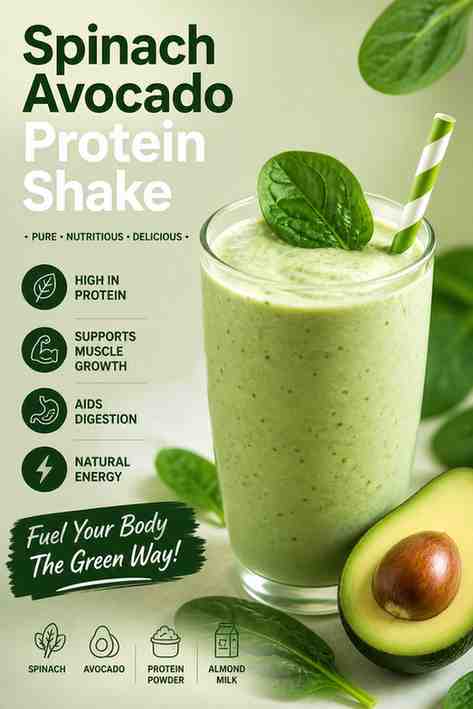
(3). Spinach Avocado Protein Shake
Spinach is loaded with magnesium, a mineral that plays a direct role in muscle recovery. Magnesium helps muscles relax after contraction, reduces cramping, and supports protein synthesis (the process your muscles use to rebuild themselves).
It also contains iron, which transports oxygen to your muscles — low iron means your muscles get less oxygen, which slows recovery and makes you feel fatigued faster during your next session.
Avocado is unusual in a smoothie but incredibly useful. It contains monounsaturated fatty acids — the same type of healthy fat found in olive oil — that actively reduce inflammation at the cellular level.
Avocado also makes the texture thick and creamy, almost like a milkshake, so it feels like a treat rather than a health obligation. The healthy fats it provides also help your body absorb fat-soluble vitamins (A, D, E, K) from the spinach and other ingredients, supporting overall nutrient replenishment. One protein scoop rounds it off with the amino acids your muscles need to repair.
What to blend: 1 cup fresh spinach · ½ avocado · 1 scoop protein powder · 1 cup almond milk · juice of ½ lemon · handful of ice
(4). Banana Peanut Butter Smoothie
Peanut butter adds two things your muscles desperately need: protein and healthy fat. Two tablespoons of peanut butter gives you around 7–8 grams of protein, plus monounsaturated fats that reduce inflammation inside the muscle tissue.
Add one scoop of whey protein on top, and you are looking at 30+ grams of complete protein in one glass. That protein breaks down into amino acids, which are the actual building blocks your body uses to repair torn muscle fibers.
The milk or almond milk base adds extra protein and helps the whole thing blend smooth, offering an easy source of hydration alongside post-exercise nutrition. Drink this within 90 minutes of lifting and your muscles have everything they need to start growing while you rest.
What to blend: 1 ripe banana · 2 tbsp peanut butter · 1 scoop whey protein · 1 cup milk or almond milk · handful of ice
(5). Watermelon Mint Cooler
Most people think of watermelon as a summer snack. Athletes should think of it as a recovery tool. Watermelon contains an amino acid called L-citrulline, which your body converts into L-arginine and then into nitric oxide.
Nitric oxide relaxes and widens your blood vessels, which means more blood — carrying oxygen and nutrients — reaches your muscles faster after a run or cycling session. Better blood flow equals faster recovery.
Research published in sports nutrition journals has documented L-citrulline’s ability to reduce muscle soreness and improve next-day performance in endurance athletes. Watermelon is also about 92 percent water, making it one of the best low sugar, high-hydration ingredients you can add to a smoothie — it immediately starts rehydrating you after a sweat-heavy cardio session. Combined with its natural electrolytes, it starts rebuilding what you lost during the workout.
Mint is not just for flavour here. Peppermint has been shown to relax muscles and reduce the sensation of fatigue after exercise. Greek yogurt or collagen protein adds the protein component, and collagen specifically supports joint recovery — particularly useful for runners who put high impact stress on their knees, hips, and ankles with every session.
What to blend: 2 cups watermelon (seedless) · small handful fresh mint · ½ cup Greek yogurt · 1 scoop collagen protein · squeeze of lime
(6). Beetroot Berry Blast
Endurance RecoveryLong Runs / Cycling
Beetroot has earned serious respect in endurance sports over the last decade. It is one of the richest sources of dietary nitrates in the food world. Your body converts those nitrates into nitric oxide, which — just like with watermelon’s L-citrulline — widens blood vessels and improves oxygen delivery to tired muscles.
Multiple studies with cyclists and runners have shown that beetroot supplementation improves both performance and recovery time.
Mixed berries (blueberries, strawberries, raspberries) flood the smoothie with antioxidants called polyphenols. Exercise creates oxidative stress — think of it as internal rust caused by free radicals.
The antioxidants in berries neutralize those free radicals directly, reducing the cellular damage that causes soreness and fatigue. Blueberries in particular have strong research behind them for reducing exercise-induced muscle damage.
Oat milk provides a mild, creamy base with slow-release carbohydrates that keep your blood sugar stable after training, which helps prevent the energy crash some people feel an hour after intense exercise. A scoop of protein powder ties everything together for complete post-exercise nutrition. This is the smoothie to reach for after any workout lasting longer than one hour.
What to blend: ½ cup cooked or roasted beet · 1 cup frozen mixed berries · 1 scoop protein powder · 1 cup oat milk · 1 tsp honey
(7). Chocolate Oat Recovery Shake
If your goal is building mass and you consistently struggle to eat enough calories after training, this smoothie solves that problem without forcing you to eat a second full meal. It is calorie-dense and genuinely filling, and tastes like dessert.
Rolled oats are the key ingredient here. Unlike sugar or fruit, oats release glucose slowly because of their high fiber and complex carbohydrate content. This steady glucose release helps maintain insulin levels at a moderate, sustained level post-workout — which is exactly the environment your muscles need to absorb amino acids efficiently and grow.
Oats also add B vitamins (particularly B1, B5, and folate) that support energy metabolism and reduce fatigue, contributing to overall nutrient replenishment.
Chocolate protein powder adds both flavor and a full amino acid profile, while almond butter layers in more protein, healthy fat, and magnesium. The combination of fast and slow carbs, protein, and fat makes this smoothie ideal as a meal replacement for bodybuilders who train in the evening and need to stay in a caloric surplus for muscle growth overnight.
What to blend: ½ cup rolled oats · 1 scoop chocolate protein · 1 tbsp almond butter · 1 banana · 1 cup milk
(8). Pineapple Ginger Enzyme Smoothie
Flexibility-focused workouts like yoga and pilates still stress your muscles and connective tissues — they just do it differently than weightlifting. The recovery requirement is less about glycogen and more about reducing the deep tissue soreness and joint stiffness that comes from holding difficult positions.
Pineapple contains bromelain, a natural digestive enzyme with documented anti-inflammatory and tissue-repair properties that also supports quick digestion. Bromelain has been used medically to reduce swelling after surgeries and sports injuries.
After a tough hot yoga class or a deep stretch session, bromelain gets to work reducing the micro-inflammation in your tendons, ligaments, and muscle fascia — the connective tissue that yoga targets most heavily.
Fresh ginger acts as a natural pain reliever. Multiple clinical studies have found that ginger consumption reduces delayed-onset muscle soreness when taken consistently around exercise. It blocks some of the same inflammatory pathways as over-the-counter pain medication — without the side effects.
Coconut water is the base here rather than milk because it naturally replaces electrolytes (potassium, magnesium, sodium) lost through sweat, supporting hydration, and it is lighter on the stomach than dairy after a session that involves a lot of core compression and twisting.
What to blend: 1 cup frozen pineapple · 1 tsp fresh grated ginger · 1 scoop vanilla protein · 1 cup coconut water · juice of ½ lime
(9). Green Goddess Recovery Smoothie
Plant-based athletes often face a specific challenge: getting complete proteins and sufficient iron from food alone. This smoothie is designed around solving both problems at once without any animal products.
Kale is nutritionally more powerful than spinach in a few specific ways — it contains a broader range of essential amino acids, higher levels of Vitamins K and C, and more calcium per gram than most dairy alternatives. After a workout, its amino acid content directly supports the muscle protein synthesis process, while its antioxidants reduce oxidative stress.
Chia seeds are the hidden star of this recipe. One ounce of chia seeds contains 4 grams of protein, 11 grams of fiber, and significant omega-3 fatty acids. Omega-3s are scientifically documented to reduce exercise-induced inflammation and support faster muscle repair.
The fiber in chia seeds slows digestion slightly, which keeps you feeling full and prevents blood sugar from spiking and crashing after the workout. Plant protein powder (pea, hemp, or brown rice-based) completes the amino acid profile that kale alone cannot fully provide. This is a whole-body fruit and vegetable blend that works well even on rest days.
What to blend: 1 cup kale · 1 banana · 1 tbsp chia seeds · 1 scoop plant protein · 1 cup almond milk · 1 tsp maple syrup
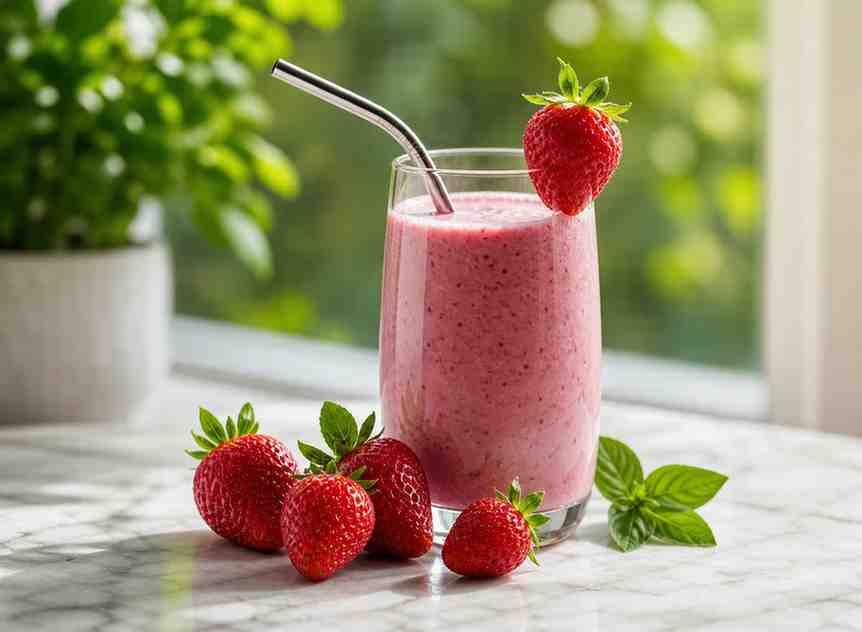
(10).Strawberry Banana Whey Classic
Beginner Friendly — General Fitness
Strawberries bring a nutrient that often gets overlooked in recovery nutrition: vitamin C. Your body uses vitamin C to produce collagen, the structural protein in your tendons, ligaments, and cartilage. Every time you work out, your connective tissues experience micro-stress alongside your muscles.
Adequate vitamin C intake speeds up their repair. Strawberries also provide ellagic acid, a polyphenol antioxidant shown to reduce exercise-related oxidative damage.
Whey protein is one of the fastest-digesting proteins known, with an extremely high leucine content, making it ideal for quick digestion right after a workout. Leucine is the specific amino acid that directly triggers muscle protein synthesis — it acts like a switch that tells your muscles to start rebuilding.
Research published in the NIH database has shown that an ideal post-workout supplement contains whey protein providing at least 3 grams of leucine per serving. Most commercial whey protein scoops meet or exceed this threshold. Combined with the banana’s fast carbs and the milk’s casein for slower sustained delivery, this smoothie covers all the recovery bases in the simplest possible way.
What to blend: 1 cup strawberries · 1 banana · 1 scoop whey protein · 1 cup milk · handful of ice
(11). Black Bean Chocolate Protein Shake
This one sounds strange. Beans in a smoothie? Bear with it, because the nutrition here is genuinely impressive — and you genuinely cannot taste the beans once everything is blended together.
Half a cup of cooked black beans contains 7–8 grams of protein plus 7 grams of fiber, folate, iron, and magnesium. For vegan or plant-based athletes trying to hit high protein targets without relying entirely on protein powder, black beans provide a whole-food protein boost that also carries complex carbohydrates for glycogen replenishment.
The fiber slows digestion just enough to create a sustained energy curve rather than a spike-and-crash.
Cocoa powder (unsweetened, natural) is not just flavor — it is one of the richest dietary sources of flavonoids, a type of antioxidant specifically linked to improved blood vessel function and reduced muscle soreness after exercise.
Oat milk provides the gentle base with its own slow-carb contribution, and the banana adds natural sweetness so you do not need added sugar, keeping this a low sugar option overall. Once blended smooth, this tastes like a chocolate milkshake. Nobody at the gym will believe you.
What to blend: ½ cup cooked black beans · 1 scoop chocolate protein · 1 banana · 1 cup oat milk · 1 tbsp unsweetened cocoa powder
(12). Almond Butter Date Shake
When you train first thing in the morning on an empty stomach, your glycogen stores are already partially depleted from overnight fasting. Your muscles have been running on near-empty for 7–8 hours before you even started the workout.
Medjool dates are nature’s most efficient fast-energy food, offering a natural energy boost. Two dates provide around 36 grams of carbohydrates — predominantly glucose and fructose — that absorb into the bloodstream very quickly, almost like a natural sports gel. But unlike a processed gel, dates also bring potassium, magnesium, and copper, which support muscle function and energy metabolism.
They are also exceptionally sweet and creamy, making the smoothie taste rich without any added sugar.
Almond butter adds healthy fat and protein (7 grams per 2 tablespoons) alongside vitamin E — an antioxidant that specifically protects muscle cell membranes from oxidative damage during intense exercise.
The pinch of sea salt is intentional: sodium is the primary electrolyte lost through sweat, and after a fasted morning workout, replacing it supports hydration and helps your body rehydrate properly, preventing the lightheaded feeling some people experience after early-morning training.
What to blend: 2 Medjool dates (pitted) · 2 tbsp almond butter · 1 scoop vanilla protein · 1 cup almond milk · pinch sea salt · handful of ice
Which Smoothie Is Best for Which Workout?
Not every workout is the same, and not every smoothie works equally well for all of them. These 12 post workout smoothie recipes give you different options depending on your training style and recovery needs. Use the table below to find the best match for your workout — whether you’re after a post workout recovery smoothie for a long run or the best post workout smoothie for muscle gain after a lifting session.
| Smoothie | Best Workout to Pair With |
|---|---|
| Banana Peanut Butter | Weightlifting / Resistance Training |
| Tart Cherry Recovery Blend | Heavy Leg Day / Sessions with high DOMS risk |
| Mango Turmeric | HIIT / CrossFit / High-intensity circuits |
| Spinach Avocado Protein Shake | Functional Fitness / General Strength |
| Watermelon Mint Cooler | Running / Cycling / Any long cardio |
| Beetroot Berry Blast | Endurance training / Races / Long runs |
| Chocolate Oat Recovery Shake | Bodybuilding / Mass gain phase |
| Pineapple Ginger Enzyme Smoothie | Yoga / Pilates / Flexibility & mobility work |
| Green Goddess Smoothie | Plant-based strength / Clean bulk |
| Strawberry Banana Whey Classic | Beginner fitness / General gym sessions |
| Black Bean Chocolate Shake | Vegan strength training |
| Almond Butter Date Shake | Morning fasted workouts |
Best Ingredients for Muscle Fatigue Recovery Shakes
A few simple ingredients with solid research behind them can provide the protein, carbohydrates, and nutrients your body needs after exercise — covering everything from muscle repair to hydration and antioxidants. These are consistently the best post workout smoothie ingredients across every recipe above.
- Banana is still the best fast-carb base for a post-workout smoothie. It replenishes glycogen quickly and adds potassium to prevent cramping.
- Whey protein is the gold standard for fast protein recovery because of its high leucine content, which directly triggers the muscle-building process.
- Greek yogurt adds a slow-protein layer (casein) that keeps feeding your muscles for hours.
- Tart cherry reduces soreness through its anthocyanin content.
- Leafy greens like spinach and kale bring magnesium and iron — both directly involved in muscle repair and oxygen delivery, and both essential vitamins and minerals for overall recovery.
- Chia and hemp seeds add omega-3 fatty acids for anti-inflammatory benefits without changing the taste.
- Almond butter provides healthy fats that reduce inflammation and also adds 7 grams of protein per two tablespoons.
- Coconut water is the best hydration base for heavy-sweat workouts because it naturally replaces electrolytes without artificial additives. And finally, turmeric with black pepper is arguably the most underused combination in recovery nutrition — the black pepper makes the curcumin actually absorb, which is the step most people miss.
How Much Protein Should a Post-Workout Smoothie Have?
For most active adults, getting around 20–40 grams of protein after a workout is a good target for supporting muscle recovery and growth. The exact amount you need can vary based on your body weight, age, workout intensity, fitness goals, and how much protein you eat throughout the day.
One scoop of whey or plant-based protein usually provides about 20–25 grams of protein. You can also add Greek yogurt or milk for an extra protein boost. There is no need to pack your smoothie with excessive protein—your overall daily protein intake matters just as much for recovery and muscle growth.
Are Post-Workout Smoothies Good for Weight Loss?
Post workout smoothies for weight loss can absolutely work when they are high in protein and fit within your daily calorie needs. Protein from Greek yogurt, whey, or plant protein can support muscle recovery while helping you stay full after exercise.
To keep calories under control, use moderate portions of fruit and choose water or unsweetened almond milk as the liquid base — a simple low sugar approach. Avoid adding too much honey, syrup, nut butter, oats, or dates together, as these can quickly increase the calorie content
If weight loss is your main goal, the Spinach Avocado Protein Shake or Green Goddess Recovery Smoothie tend to make some of the best post workout smoothies for weight loss because they’re high in protein and fiber relative to their calories, and a light post workout recovery smoothie for weight loss built around Greek yogurt and berries works well too.
What Should You Avoid in a Post-Workout Smoothie?
Avoid loading your post-workout smoothie with excessive added sugar, syrups, or oversized portions of calorie-dense ingredients. Nut butter, oats, dates, avocado, and seeds can be nutritious, but combining too many at once can make your smoothie surprisingly high in calories.
Also, avoid making your smoothie entirely from fruit. Adding a protein source such as whey, Greek yogurt, or plant protein creates a more balanced recovery drink by providing amino acids needed for muscle repair.
How Long Should You Wait After a Workout to Drink a Smoothie?
Try to drink your smoothie within 30–90 minutes after your workout. This is when your muscles absorb protein and carbs fastest for quick digestion, helping you recover quicker.
But don’t stress if you miss this window. The International Society of Sports Nutrition confirms that protein consumed up to two hours after training still supports muscle repair effectively. A 2013 meta-analysis by Schoenfeld and colleagues found that your total daily protein intake matters more than the exact minute you drink your smoothie.
Post-Workout Smoothies Without Protein Powder (Or Without Banana)
Not everyone wants — or can tolerate — a scoop of powder or a banana in their blender, and there’s a post workout shake recipe without protein powder for nearly every recipe on this list. Greek yogurt, cooked black beans, cottage cheese, and even oats can all replace a protein scoop while still hitting a meaningful protein target.
The Spinach Avocado Protein Shake, for instance, works well as a post workout smoothie no powder option if you swap the protein scoop for an extra half-cup of Greek yogurt.
If bananas aren’t your thing — or you’re watching your sugar intake — a post workout smoothie without banana is easy to build. Swap the banana in any recipe above for a small pear, extra berries, or a spoonful of oats for texture and slow-release carbs. This also makes for a good post workout smoothie no banana base for anyone with a sensitivity or just a personal preference.
And for anyone specifically looking to cut supplement powders entirely, most of the fruit-forward blends here — Watermelon Mint, Mango Turmeric, and Pineapple Ginger — convert easily into post workout smoothies without protein powder simply by leaning on Greek yogurt or milk for the protein instead.
Two Real-Life Examples
Example 1 — Riya (Morning Fasted Workouts): Riya wakes up at 6:00 AM and hits the gym without eating breakfast. She finishes at 7:15 AM and drinks her Almond Butter Date Shake by 7:30 AM. Because she hasn’t eaten since last night’s dinner, her body is running on empty.The natural sugars in the dates give her muscles the fast energy boost they desperately need.
Example 2 — Vikram (Afternoon Workouts): Vikram eats a big lunch at 1:00 PM and lifts weights from 3:00 PM to 4:30 PM. A work meeting runs late, so he can’t drink his Banana Peanut Butter Smoothie until 5:45 PM—about 75 minutes after his workout. Because he ate a solid lunch before training, his body still has plenty of nutrients to work with. Waiting an hour won’t hurt his recovery at all.
Note: These smoothies are high in protein. If you take any medications or have specific dietary needs, consult a healthcare professional to determine whether they fit your daily nutrition and protein requirements. You can also calculate your daily nutrition needs to better understand your protein and calorie intake.
Personal Experience
When I have an extremely hard leg day at the gym, my choice of post-workout drink is usually a banana peanut butter smoothie. Recently, however, I have been including a few ounces of tart cherry juice into my concoction, and it actually made a huge difference.
To put things into perspective, once I had one of the hardest squatting sessions ever, after which I was unable to walk properly for three consecutive days due to the immense pain. One week later, I decided to include some tart cherry juice into my smoothie, and surprisingly, by the second day, the level of pain in my legs greatly subsided.
Conclusion:
These 12 post workout smoothie recipes are made with simple, nutrient-rich ingredients that provide the protein, carbohydrates, and nutrients your body needs for protein recovery, glycogen replenishment, and lasting energy after exercise.
Start with the Banana Peanut Butter Smoothie if you are new to this. Add tart cherry if leg day is destroying you. Reach for Beetroot Berry Blast after your long runs. Let the Mango Turmeric Smoothie handle your HIIT recovery. The best smoothie is always the one you actually make and drink consistently.
And remember — timing matters, but not as much as you were told. Drink within two hours, hit your daily protein target, and trust the process. Recovery is just training in a different form.
Frequently Asked Questions
- Which of these 12 post workout smoothie recipes is best after a workout?The best choice from these 12 post workout smoothie recipes depends on your goal. Banana Peanut Butter is great for muscle recovery, while Tart Cherry helps reduce post-workout soreness.
- Is a smoothie a good post-workout meal?Yes, a smoothie can be a great post-workout meal as long as it combines protein with carbohydrates rather than being all fruit.
- What should you put in a post-workout smoothie?At minimum, aim for a protein source (whey, plant protein, or Greek yogurt), a fast-carb base (banana, mango, or berries), and a liquid (milk, almond milk, or coconut water). Beyond that, it depends on your goal — anti-inflammatory add-ins like turmeric or tart cherry for soreness, or extra oats and nut butter for a calorie-dense muscle-gain shake.
- Should I drink a post-workout smoothie immediately after exercise?Not necessarily. While the 30–90 minute window is ideal, research shows protein consumed up to two hours after training still supports muscle repair effectively.
- How much protein should I put in a post-workout smoothie?Aim for 20–40 grams of protein per smoothie, adjusted for your body weight, training intensity, and overall daily protein intake.
- What are the benefits of a post-workout smoothie?The core benefits of a post-workout smoothie are faster glycogen replenishment, reduced muscle soreness, improved hydration, and a convenient way to hit your protein target without needing a full meal right after training.
Author: I’m Nikhil, the founder of FitNova360. I have completed nutrition certification courses through Coursera and enjoy sharing evidence-based content on nutrition, fitness, weight management, and healthy living. My mission is to simplify complex health topics into clear, practical advice that helps readers make informed decisions and build healthier lifestyles.
To learn more about me, my certifications, and the vision behind FitNova360, visit the About Us page.
Sources & References
- International Society of Sports Nutrition — Protein timing and muscle repair:
gainful.com — When Is the Best Time to Drink a Protein Shake? - Schoenfeld B.J. et al. (2013) — Meta-analysis: Total protein intake vs. timing for muscle growth:
paleopro.com — Protein Shake Timing (citing 2013 meta-analysis) - NIH / NCBI — Protein timing and muscular hypertrophy review (leucine threshold, whey protein):
ncbi.nlm.nih.gov/pmc/articles/PMC3529694/ - NIH / NCBI — Meta-analysis: Protein before vs. after exercise (2024, RCT review):
ncbi.nlm.nih.gov/pmc/articles/PMC12250900/ - Cleveland Clinic — Registered Dietitian advice on post-workout protein shakes:
health.clevelandclinic.org — When to Drink Protein Shakes - Today.com / Registered Dietitian (DiBiasi) — 20–40g protein, 3–4 times per day for recovery:
today.com — Protein Shake Before or After Workout? - The Real Food Dietitians (RD-reviewed) — Post workout smoothie function (amino acids, glycogen, DOMS):
therealfooddietitians.com — Post Workout Smoothie - HUM Nutrition (Chelsey Amer, MS, RDN, CDN) — Watermelon L-citrulline, antioxidants for recovery:
humnutrition.com — Post Workout Smoothie Recipes - Yuri Elkaim — Almond butter protein content, leafy greens magnesium & iron in smoothies:
yurielkaim.com — Post Workout Smoothies - Our Plant-Based World — Chia seeds, flax, hemp omega-3 fatty acids and muscle recovery:
ourplantbasedworld.com — Post Workout Smoothie - Bulletproof — Whey protein, creatine, and 2017 study on protein metabolism and recovery:
bulletproof.com — Post Workout Smoothie Recipes
12 Post Workout Smoothie Recipes for Maximum Muscle Recovery
Discover 12 post workout smoothie recipes: Banana Peanut Butter, Tart Cherry, and Pineapple Ginger for muscle recovery and glycogen replenishment.
Type: Beverage
Cuisine: American
Keywords: Tart Cherry Recovery Blend, Mango Turmeric Smoothie, Spinach Avocado Protein Shake,Banana Peanut Butter Smoothie, Watermelon Mint Cooler,Beetroot Berry Blast,Chocolate Oat Recovery Shake,Pineapple Ginger Enzyme Smoothie.Green Goddess Recovery Smoothie, Strawberry Banana Whey Classic, Black Bean Chocolate Protein Shake,Almond Butter Date Shake
Recipe Yield: 1 serving
Calories: 320
Preparation Time: PT5M
Cooking Time: PT0M
Total Time: PT5M
Recipe Ingredients:
- Tart Cherry Recovery Blend
- Mango Turmeric Smoothie
- Spinach Avocado Protein Shake
- Banana Peanut Butter Smoothie
- Watermelon Mint Cooler
- Beetroot Berry Blast
- Chocolate Oat Recovery Shake
- Pineapple Ginger Enzyme Smoothie
- Green Goddess Recovery Smoothie
- Strawberry Banana Whey Classic
- Black Bean Chocolate Protein Shake
- Almond Butter Date Shake
5
Pingback: High Protein Foods at Low Cost: Affordable Protein Sources